


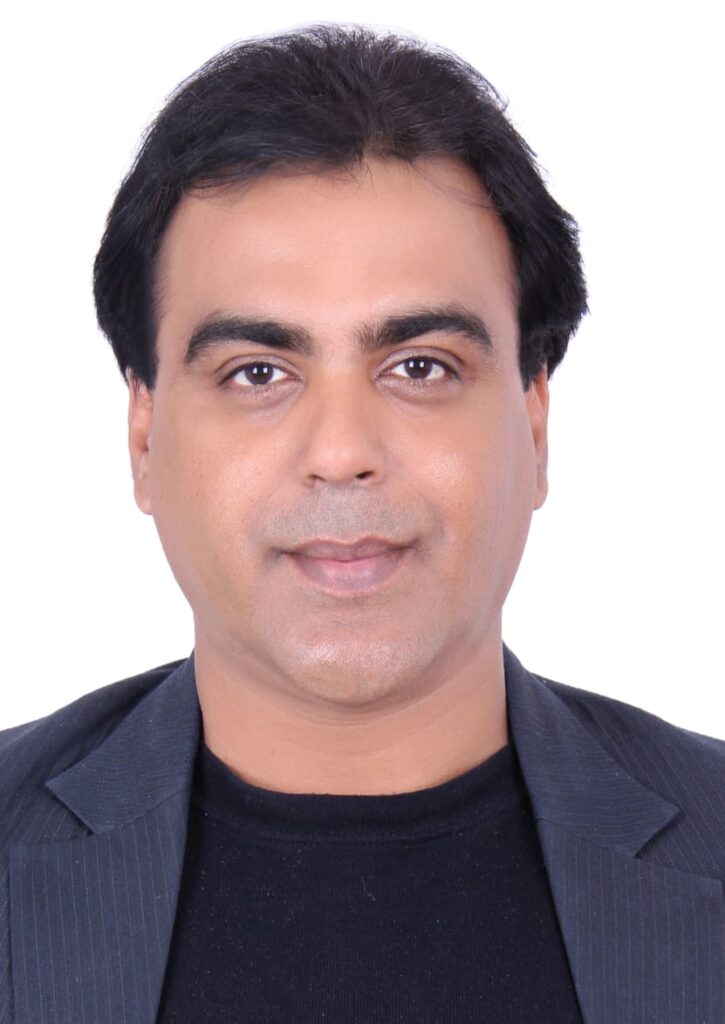
A Super Exclusive Feature by Amit Kakkar, Managing Editor
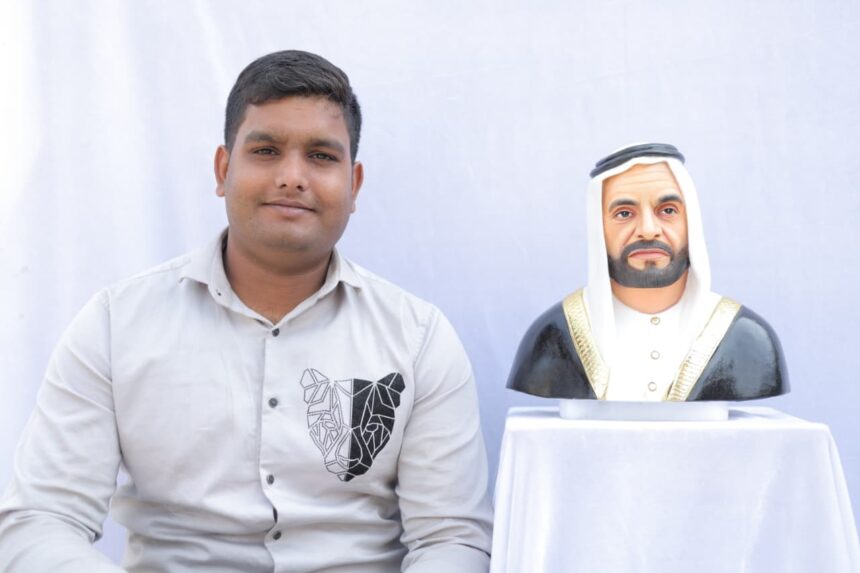
In the historic city of Jaipur (India), where artistry and craftsmanship have been passed down through generations, sculptor Aman Sharma continues a family legacy that transforms stone into emotion. A native of Rajasthan state for years, Sharma belongs to a lineage of traditional artisans, carrying forward his ancestral profession with pride and precision. Specializing in sculpting Hindu deities and lifelike human figures, his work reflects both heritage and extraordinary realism.
For Aman Sharma, sculpting is not merely a profession — it is an inherited calling. “This is my ancestral work,” he explains. “I have grown up watching sculptures take shape, understanding not just the technique but the devotion and patience required to create something timeless.”
Operating from his workshops in Shastri Nagar and Rojda in Jaipur, Sharma works alongside a team of 13 skilled artisans. While the collaborative effort forms the backbone of production, the final finishing — the stage that defines the sculpture’s character and expression — is a responsibility he personally undertakes. This meticulous attention to detail has become one of his distinguishing hallmarks.
What sets Aman Sharma’s sculptures apart is their striking realism. His creations are known to evoke a powerful sense of presence, often leaving viewers astonished. “When someone looks at the sculpture, it should feel alive,” he says. “The resemblance must be exact. A sculpture is not just an object — it becomes a memory, an emotion, a connection.”
Central to his craft is Makrana marble, one of India’s most celebrated and historically significant stones, renowned for its purity and durability. The same marble that contributed to iconic architectural wonders now forms the medium through which Sharma expresses his artistry. “Makrana marble allows for delicate detailing and longevity. It gives the sculpture a soul,” he remarks.
CONTD…..
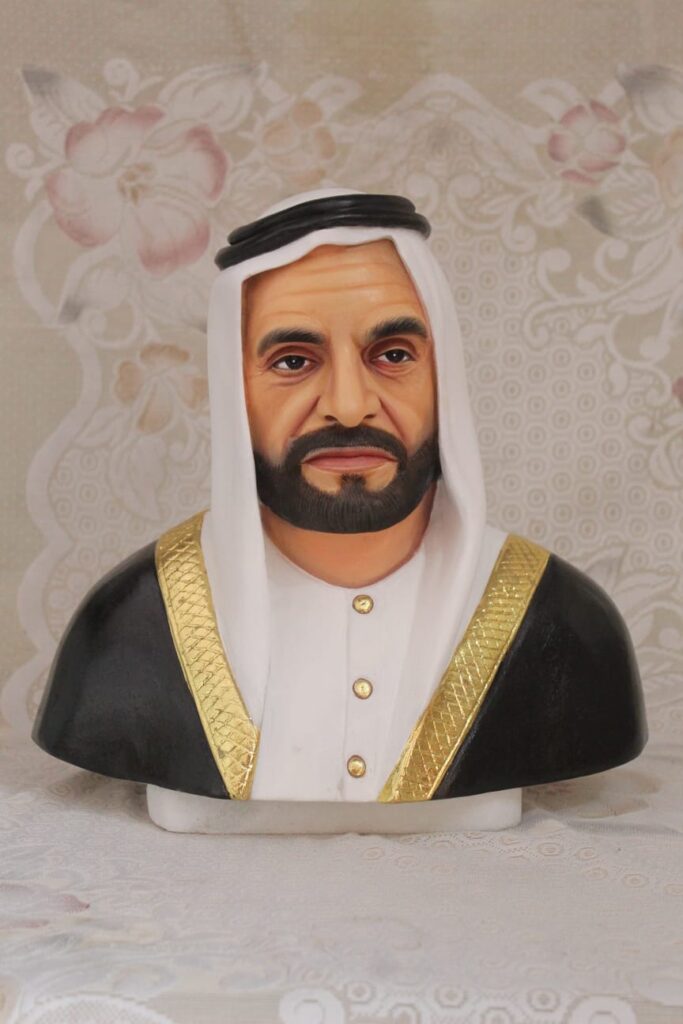
Among his most notable works is a sculpture of the UAE’s Founding Father, the late Sheikh Zayed bin Sultan Al Nahyan — affectionately revered as Baba Zayed by the people of the Emirates. The inspiration behind this creation came through a personal connection. The idea to sculpt Baba Zayed was inspired by his admiration for the UAE as a model nation and for its visionary leadership. Sharma shares. “It was a meaningful project and a great honor.”
Though he has never visited the UAE, he harbors a deep desire to experience the country up close.
The sculpture demanded not only technical mastery but also deep respect for the legacy of Sheikh Zayed, whose vision laid the foundation for the modern UAE. Aman Sharma dedicated four months to the piece, striving to capture both likeness and spirit. The result, by his account, was more than artistic achievement — it was a tribute.
Reflecting on the broader relationship between India and the UAE, Sharma speaks with admiration. “India and the UAE share a strong and positive bond. Both nations are progressing together through technology, skills, and cooperation. There is mutual respect, goodwill, and vibrant trade relations.”
Understanding the profound emotional connection UAE citizens hold with Sheikh Zayed, Sharma’s message carries warmth and reverence. “To regard Baba Zayed as a father figure is to acknowledge his blessings. His leadership and vision have shaped the prosperity and happiness the UAE enjoys today”, adds Aman Sharma.
Looking ahead, Sharma expresses a heartfelt desire regarding the sculpture’s future. “I would be honored to present this sculpture to the entire UAE especially to the great leadership of today,” he says, underscoring the symbolic significance of the gesture.
Beyond his work, Sharma nurtures a personal dream — a visit to Dubai. “Even if for just one day, I wish to experience Dubai, meet His Highness, and receive his blessings,” he reflects. “That would be a deeply meaningful moment in my life.”
In a world increasingly driven by digital expression, Aman Sharma’s craft stands as a reminder of enduring human artistry — where patience, tradition, and emotion converge in stone. His sculpture of Baba Zayed is not merely a work of marble, but a bridge between cultures, histories, and admiration that transcends borders.
editor@emiratesreporter.com