

By Tabrez Khan, Senior Journalist
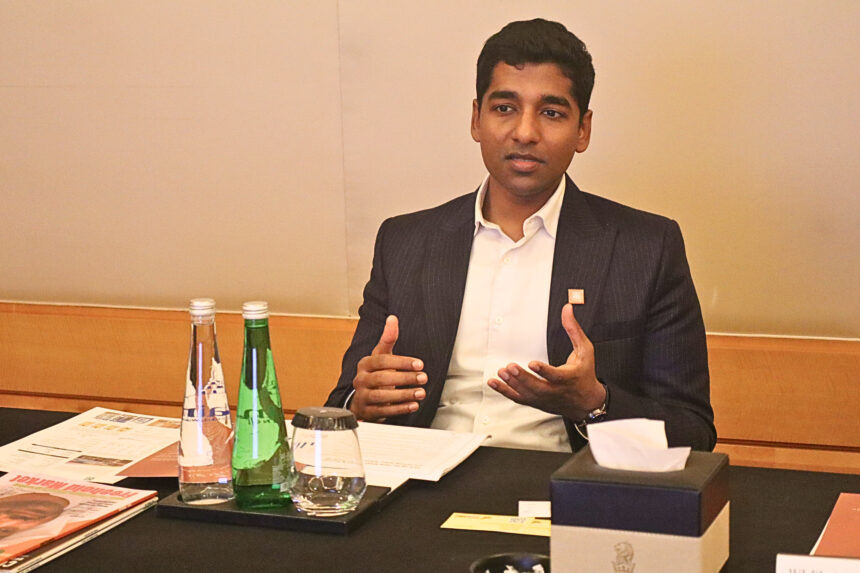
Grovy, a Dubai-based real estate developer behind landmark projects such as Alcove, Aria, and Aura, has rapidly gained prominence over the past decade for its innovation-led approach. The company recently won the Digital Developer of the Year award at PropTech Connect 2026 in Dubai. Speaking to senior journalist Tabrez Khan on the sidelines of the event, CEO Abhishek Jalan explained how digital tools are helping developers become more agile, more transparent, and more responsive to modern buyer expectations. Here is the full conversation.
Tabrez- How are digital building operations systems helping developers in reducing risks & cost escalations, and ensuring timely delivery of projects?
Abhishek- Digital building operations are no longer optional — they’re becoming essential for reducing delivery risk, improving reliability, and protecting long-term asset value.
It starts at the design stage. A BIM-driven (Building Information Modeling) approach allows all project stakeholders to work from a shared digital model. This early coordination significantly reduces clashes between systems and prevents costly surprises during construction.
Because teams collaborate on a single digital framework, documentation stays centralized and site teams work with consistent, verified data. The result is smoother sequencing, fewer errors, tighter timelines, and better cost control.
For example, on our AURA project, BIM clash detection helped prevent around 5–10% of typical construction rework by identifying coordination conflicts between exhaust ducting, HVAC, and sprinkler systems before construction even began. That kind of early visibility directly improves delivery outcomes.
Tabrez- How can digital operations improve transparency and service reliability in off-plan markets?
Abhishek- Transparency is critical in off-plan markets — buyers are investing based on trust and projected delivery. Digital systems make that trust measurable.
At Grovy, we use BIM coordination and structured digital documentation workflows across all project stakeholders. This allows real-time progress tracking, quality reporting, and centralized construction records.
Instead of fragmented updates, we maintain a clear, traceable digital trail of project progress. That gives buyers and partners greater visibility into timelines, quality benchmarks, and construction milestones — strengthening confidence and accountability.
Tabrez- How do you see buyer expectations evolving in the highly dynamic real estate and technology landscape?
Abhishek- Buyer expectations have evolved significantly over the past decade. Today’s buyer is not just purchasing a unit — they’re investing in long-term building performance and service quality.
They expect buildings to run efficiently after handover, with digital service platforms, responsive operations, and quick issue resolution. In other words, the relationship with the developer shouldn’t end at possession — it should transition into performance assurance.
Digital operations make this possible by continuing to deliver value long after handover through monitoring, service visibility, and faster problem resolution.
Tabrez- Cost rationalization is an essential aspect of business operations today. How do remote building operations cut overheads while improving asset performance?
Abhishek- Remote monitoring through Building Management Systems (BMS) and performance tracking changes maintenance from reactive to proactive.
Instead of relying on periodic inspections, systems are continuously monitored. Preventive and predictive maintenance becomes possible because decisions are based on real performance data, not guesswork.
This helps detect early warning signs, avoid emergency repairs, and extend the lifecycle of critical building systems.
But technology alone is not enough. We also equip facility management teams with the tools and digital records they need to act effectively, including performance dashboards, documentation, and clear escalation protocols. That ensures insights actually translate into action.
Remote operations also improve efficiency. Centralized monitoring reduces staffing requirements, speeds up response times, and resolves issues before residents are impacted, improving both service quality and asset care.
Tabrez- What does this digital shift mean for residents, sustainability goals, and long-term value?
Abhishek- Digital building operations create benefits across the board.
Residents experience more reliable services, fewer disruptions, and faster issue resolution. Investors and developers benefit from lower lifecycle costs and stronger asset value protection. Sustainability goals are also supported through data-driven energy optimization and reduced resource waste.
Most importantly, digital transparency builds genuine buyer confidence, especially in off-plan markets.
We see this as a mindset shift: buildings must not only be delivered but also continuously perform. The future of real estate lies in assets that are measurable, trackable, sustainable, and designed to deliver long-term value.
READERS ALSO CHECK: