

As the GCC rapidly strengthens its position as a global financial and investment powerhouse, industry leaders are increasingly looking at the region as the next major centre for capital, innovation, and cross-border dealmaking. From energy and AI to commodities and emerging markets, the Gulf is reshaping the future of global investments through strategic vision, institutional strength, and long-term economic planning.
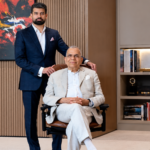
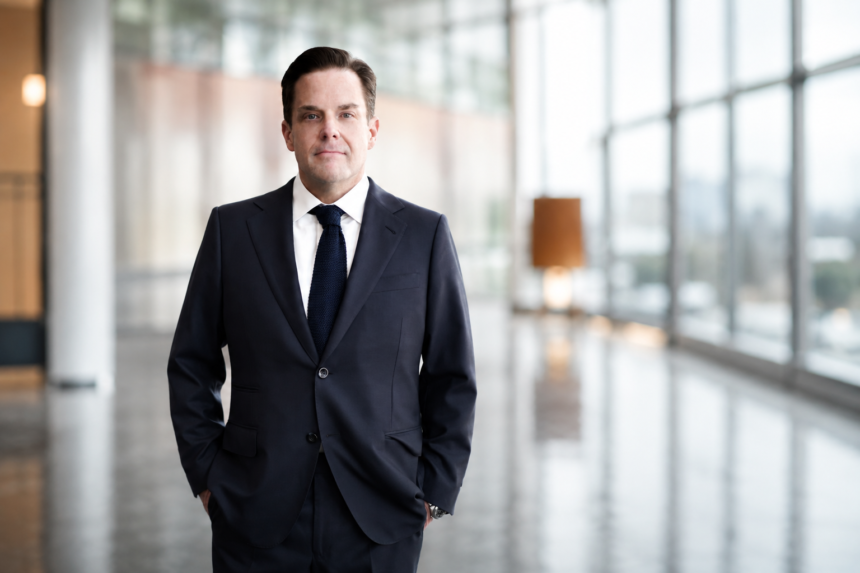
In an exclusive conversation with EmiratesReporter.com, Paul Scribner, CEO of General Holdings Limited, DIFC Dubai, shares powerful insights on the GCC’s rise as a global investment hub, the future of AI and commodities, cross-border capital flows, and why the region is becoming a preferred destination for global investors and international businesses.
E.R- The GCC region is seeing rapid economic growth and diversification. Which sectors do you believe offer the biggest investment opportunities in the coming years?
Paul Scribner– The biggest opportunities sit at the intersection of physical economy and applied technology. Three sectors stand out for the next five to ten years.
First, energy and traditional hydrocarbons with operational and structural upside. Oil and gas isn’t going away on the timeline most people assume, and the real value is shifting toward platforms that can operate efficient assets in markets where capital and operational expertise are both scarce. At GHL, we see this directly through our oil and gas platform in Trinidad and Tobago, where we are working on a refinery restart and an upstream programme in partnership with local institutions. The GCC is well-positioned because it has both the capital and the technical know-how to deploy globally into this space.
Second, the technology layer on physical commodities. Verified provenance, on-chain settlement, programmable trade finance, and embedded compliance are converging into a new infrastructure stack for one of the largest and least digitally transformed parts of the global economy. Our joint venture with AI Block, Smart Holdings, is building exactly this kind of platform across the Physical, Risk, and Finance layers of the commodities markets.
Third, applied AI for industry and design. The headline conversation focuses on general-purpose models, but the investment returns are coming from specialised, vertical applications that solve concrete operational problems. The capital is moving accordingly: Mubadala alone deployed USD 12.9 billion into AI and digitalisation in 2025, and MGX, the Mubadala-G42 joint AI vehicle, launched with a USD 100 billion commitment to AI infrastructure, semiconductors, and core applications. GHL participates in this space through General Design Corp, which is anchored on engineering and industrial design workflows.
The common thread is that these are not speculative sectors. They are large, real-economy markets where technology can improve how capital, information, and operations move. That is exactly the type of opportunity the GCC is increasingly well positioned to underwrite.
E.R- How do you see the UAE and the wider GCC becoming more attractive for global investors and international businesses?
Paul Scribner– The shift is broader than just one country. The UAE has led, but the wider GCC is now moving in the same direction.
For the UAE specifically, the formula is well-understood: free movement of capital, full currency convertibility, English common law frameworks through DIFC and ADGM, an institutional regulatory environment paired with real execution speed, and stability of long-horizon government policy. As traditional centres have softened, the UAE has absorbed a substantial portion of mobile capital from London, Hong Kong, and Singapore. The numbers tell the story. UAE inbound FDI reached AED 167.6 billion (approximately USD 45.6 billion) in 2024, a 48.5 percent increase year on year, putting the country among the top 10 global recipients. The talent flow has tracked the capital flow: Henley’s Private Wealth Migration Report projects 9,800 millionaires relocating to the UAE in 2025, against 16,500 projected to leave the UK over the same period. The recent Treasury Sukuk auctions confirm the same trend in market terms; the April 2026 issuance was oversubscribed by 4.7 times with the 7-year tranche pricing only 10 basis points above comparable US Treasuries, and the February 2026 inaugural issuance of that tenor actually priced below US Treasury yields.
Saudi Arabia is now executing a parallel transformation through Vision 2030, the development of the Riyadh financial district, and growing depth in domestic capital markets. Bahrain continues to evolve as a niche financial services centre. Qatar remains an important capital allocator. The competitive dynamic across the GCC is itself a feature; it pushes each jurisdiction to be sharper, faster, and more sophisticated.
For global investors and international businesses, the proposition has moved beyond tax or geography. It is about access to a region that combines capital surplus, talent depth, regulatory sophistication, and political continuity in a way that is genuinely difficult to find anywhere else.
E.R- Cross-border investments are increasing between the GCC, Africa, Asia, and the US. What trends are you currently seeing in global capital flows?
Paul Scribner– The most striking trend is that capital flows are becoming genuinely multi-directional. The old narrative was that capital moved from West to East and from developed to emerging markets. That is no longer how the world works.
What we see in our own activity is the GCC sitting at the centre of multiple corridors simultaneously. Capital deploying outbound from Gulf institutions into Africa, the United States, Asia, Latin America, and selected European assets. Capital arriving inbound from Asia (particularly India), from a relocating European wealth base, and from emerging-market allocators looking for a stable financial centre.
Several flows are particularly worth watching. The GCC to Africa corridor is structural and accelerating, driven by the Gulf’s strategic interest in food security, critical minerals, and energy partnerships. The GCC to Americas flow, historically portfolio in nature, is now increasingly principal and direct; GHL’s energy programme in Trinidad and Tobago is partly an expression of that thesis, with Gulf-domiciled capital deploying into a Caribbean operational platform. The GCC to Europe corridor is similarly evolving: Mubadala acquired two leading European asset managers in September 2025, and PIF opened a Paris office and announced plans to double its European investments. And capital is moving in the other direction as well. ADIA and Mubadala participated in the USD 8.3 billion acquisition of Newland Commercial Management in China, alongside continued inbound flow from Indian family offices, Chinese strategics, and Japanese institutional allocators rebalancing what was historically an Anglo-American capital base in the region.
The wider point is that the GCC is no longer simply a destination or a source for capital. It is becoming a hub through which capital moves between other markets.
E.R- What are the biggest challenges companies face when doing cross-border investment deals in emerging markets?
Paul Scribner– The honest answer is that cross-border investing in emerging markets is harder than glossy presentations suggest. The capital pool deploying out of the GCC is large and sophisticated; the five largest Gulf sovereign wealth funds accounted for 61 percent of total SWF investment volume globally in 2024 at approximately USD 180.3 billion. Scale, however, does not eliminate friction. Five challenges are persistent.
First, counterparty diligence. Local partners are essential, but verifying capability, alignment, and integrity at distance is non-trivial. We spend disproportionate time on counterparty work before committing capital.
Second, the legal and regulatory environment. Common law jurisdictions or robust international arbitration clauses materially reduce risk. If those structures are not available, the deal economics need to compensate. Our preference is to anchor every transaction in a recognised legal framework, which is part of why we domicile our investment vehicles in DIFC.
Third, political and policy risk. Emerging market governments change, and so do priorities. In our Trinidad and Tobago programme, working with state institutions and a labour partner requires real on-the-ground engagement, time, and willingness to navigate a complex stakeholder environment. That cannot be managed from a screen.
Fourth, execution and operational depth. Many cross-border opportunities look attractive on paper but require operational capability that the local market cannot supply. The investor often has to either bring or build that capacity, which extends timelines and increases cost.
Fifth, exit pathways. Capital that goes in needs a credible route out. In emerging markets, liquidity events are scarcer and more idiosyncratic than in developed markets. The right exit thesis has to be designed at entry, not improvised later.
The point is not that emerging markets are too hard. The point is that the returns reward operators who actually do the work.
E.R- Many investors are now looking beyond traditional sectors like oil and real estate. Which new industries or technologies are attracting the most attention from your company?
Paul Scribner– Two areas are getting the bulk of our attention.
The first is the technology layer on physical commodities. The commodities sector has been one of the largest and least digitally transformed parts of the global economy. Verified provenance, on-chain settlement, programmable trade finance, and embedded compliance reporting are converging into a new infrastructure stack. Our joint venture with AI Block, Smart Holdings, is building exactly this kind of platform across the Physical, Risk, and Finance layers of the commodities market, with field deployments already running in Tanzania and Brazil.
The second is applied AI for industry and design. The headline AI conversation tends to focus on general-purpose models and consumer-facing applications. The numbers confirm it: sovereign-owned investors globally put USD 66 billion into AI and digitalisation in 2025. The investment opportunity, in our view, is more interesting in vertical, applied AI that solves real operational and engineering problems. GHL is active here through General Design Corp, a Delaware-based company building applied AI capability anchored on engineering and industrial design.
Both bets share a thesis. They take large, slow-moving sectors and apply a technology layer that genuinely changes how value flows through them. That is a more durable opportunity than chasing whichever consumer technology happens to be fashionable in a given quarter.
E.R- Looking ahead, what is your long-term vision for the GCC’s role in the global investment and financial landscape?
Paul Scribner– The GCC will become a genuine third pole of global capital and finance, alongside the United States and the broader Asia-Pacific complex.
This is not a slogan. The numbers are striking. The five largest Gulf sovereign wealth funds collectively managed approximately USD 4.1 trillion in AUM as of 2023, with the regional total across nineteen funds projected to reach USD 7.6 trillion by 2030. In 2025, Gulf wealth funds accounted for 43 percent of all capital invested by state-owned investors globally at USD 126 billion, a historical maximum.
Beyond the capital, the region is building institutional financial infrastructure (DIFC, ADGM, the Saudi capital markets, Bahrain) that is increasingly competitive with established centres. It is developing a sovereign yield curve in dirhams that international institutions are now bidding for at tight spreads to US Treasuries. It is attracting talent and operators at a pace not seen in any other financial centre. And it is doing all of this while maintaining functional working relationships across the major global blocs at a time when many other jurisdictions are being forced to take sides.
Ten years from now, I expect the GCC to be a place where major global deals are originated, structured, and financed rather than simply funded as one of many sources. The shift from being a capital provider to being a capital platform is already underway. The next decade will make that visible at scale.
E.R- How important is political stability and government policy when your company decides to invest in a country or region?
Paul Scribner– It is central, not peripheral. Cross-border investment decisions are made on five-year, ten-year, and twenty-year horizons. If political and policy continuity cannot be relied on across those horizons, the underwriting becomes very difficult.
The UAE and the wider GCC offer something that is increasingly rare globally: stability of leadership, predictability of policy direction, and an institutional commitment to long-horizon planning. The rules do not reset every four or five years. When a regulatory framework or a strategic initiative is set, it is followed through. The recent evidence is clear. The UAE was removed from the FATF grey list in February 2024 after a multi-year compliance drive. In March 2025 the Cabinet approved the National Investment Strategy 2031, with an explicit target of more than doubling foreign investment inflows to USD 65.3 billion by 2031. And the same month, the UAE committed to a 10-year, USD 1.4 trillion bilateral investment framework with the United States focused on AI, frontier technologies, energy, and manufacturing. Each of those is a structural, long-horizon commitment that lets investors underwrite accordingly.
That predictability is not just comfortable. It is economically valuable. It allows investors and operators to commit capital that they would not otherwise commit, on terms they would not otherwise accept, into projects that take time to mature.
When we evaluate any cross-border opportunity at GHL, the question of political and policy stability is one of the first we run. It does not need to be perfect, but it does need to be intelligible and durable. The GCC clears that bar more reliably than most regions, and that is one of the reasons we are headquartered here.
E.R- Do you believe GCC investors are becoming more confident in taking leadership roles in major international investment deals and partnerships?
Paul Scribner– Yes, and the more interesting question is why this is happening.
What we are seeing is a structural shift. For decades, GCC investors participated in major international deals primarily as limited partners in Western-managed funds. That model is changing. Increasingly, GCC institutions and operators are taking principal roles, leading consortia, structuring transactions, and bringing both capital and strategic thesis to the table. The clearest single example was the USD 55 billion take-private of Electronic Arts announced in September 2025 by a consortium led by PIF with Silver Lake and Affinity Partners: a Gulf-anchored principal transaction in the heart of US public markets in a sector that sits at the intersection of media, technology, and consumer. Weeks later, MGX, the Mubadala-G42 joint AI vehicle, joined a BlackRock/GIP-led consortium in the USD 40 billion acquisition of Aligned Data Centers. These are not portfolio allocations to Western managers; they are principal positions, either leading the deal or taking a direct seat at the table alongside major Western platforms. And they are part of a much broader pattern: sovereign wealth-linked acquisition value reached USD 145.9 billion across 115 deals by December 2025, with just under half originating from the Gulf region.
Three things are driving this. First, the capital base has matured. Sovereign wealth funds, family offices, and private investment platforms in the region now have decades of cross-border experience and the internal capability to underwrite directly. Mubadala alone deployed approximately USD 29.2 billion across 52 separate deals in 2024. Second, the talent base has deepened. The professionals running these institutions today are highly capable, often with significant international experience, and they bring real operational and structuring capability. Third, the regulatory and legal infrastructure (DIFC, ADGM, common law frameworks, modern dispute resolution) now supports direct principal investing at scale in a way that did not exist a generation ago.
GHL is one of many platforms operating in this space, and we see this shift across our own activities in energy, commodities, and applied technology. The leadership posture is not something that requires assertion. It is showing up in the deal flow, in the counterparty conversations, and in the way GCC capital is increasingly setting terms rather than accepting them.
- AS TOLD TO EMIRATESREPORTER.COM. THE VIEWS EXPRESSED ARE SOLELY THOSE OF THE GUEST/INTERVIEWEE.
- Your Skills, Our Spotlight. Email editor@emiratesreporter.com to Get Featured.