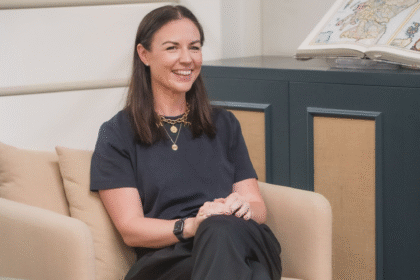



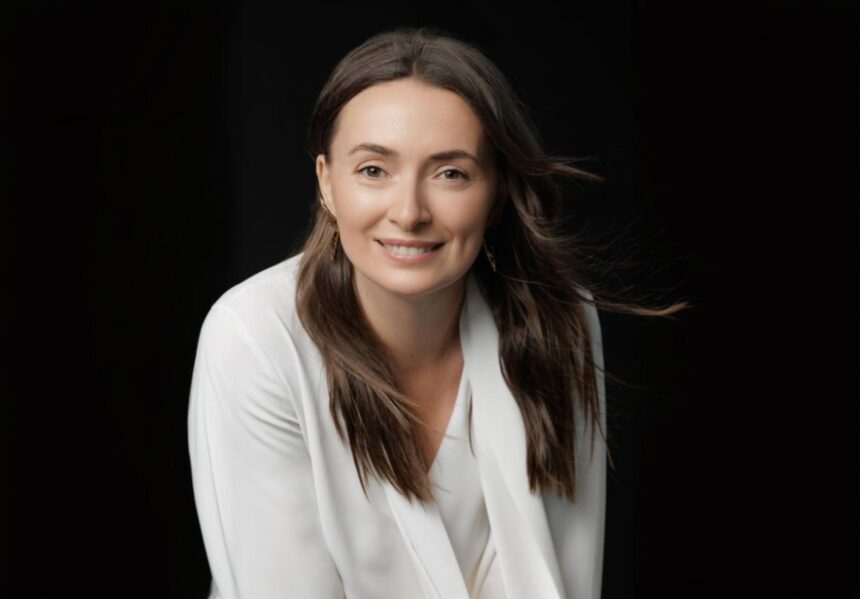
Olga Sukhanova is founder of COLABB, a Dubai-based commercial real estate investment and creative development firm. After more than a decade in Moscow and closing over $300 million in real estate sales, Olga launched her own venture. She moved to Dubai to explore and expand opportunities and bought commercial property in DIFC before the boom. That vision led to CODE, a premium corporate coworking space in DIFC, where Olga serves as Development Partner and Managing Director. She wants people to see buildings not only as assets, but as platforms for ideas and culture. Olga also leads COLABB’s hospitality division, overseeing the upcoming Lunar project.
In an Exclusive conversation with Emirates Reporter, Olga Sukhanova shares more about her work and vision. Here is the full interview for our readers.
ER– The name COLABB suggests collaboration – is that the core philosophy behind combining real estate investment, interior design, and digital strategy under one roof?
OLGA– Yes, collaboration is truly at the heart of COLABB. We believe in the power of synergy. The future belongs to teams that complement each other’s strengths. New ideas are born at the intersection of disciplines, tools, and perspectives.
The “LAB” in our name reflects a mindset. A laboratory for ideas, hypotheses, and creative experiments. A place where architects, strategists, and investors meet to co-create, shaping projects that connect vision with real impact. That’s why we enjoy working across fields and offering our clients full-cycle solutions that unite investment, design, and digital strategy.
ER– Let’s talk about Dubai’s commercial real estate landscape. DIFC has established itself as a world-class financial hub – how is this impacting the office market and what opportunities do you see for investors?
OLGA– DIFC has become a benchmark for Dubai’s commercial real estate.
It’s home to key international headquarters and Grade A towers, creating a strong foundation for global business. Obtaining a license in this zone requires additional approvals and documentation, which means companies here have already proven their credibility.
We see DIFC as a dynamic, fast-evolving ecosystem that actively supports business growth and fosters collaboration. It’s also a place where trends are set — shaping Dubai’s position as one of the most attractive markets for international investment in commercial real estate.
ER– We’re seeing more international companies choosing Dubai as their regional headquarters. What’s driving this trend, and how does COLABB position itself to capitalize on this growing demand?
OLGA– We’re witnessing a clear strategic shift.
The UAE has set an ambitious goal to become one of the world’s top financial centres, and Dubai, led by DIFC, plays a central role in that transformation. The government is creating an ecosystem where capital, talent, and innovation converge — supported by world-class infrastructure, transparent regulation, and technology-driven systems that attract both private and institutional investors.
DIFC’s framework, rooted in English common law, ensures global-standard governance and investor protection. It now hosts over 7,700 active companies and USD 700 billion in assets under management, positioning Dubai among the top 12 global financial hubs. Initiatives such as the Funds Centre, Family Wealth Centre, and AI Campus demonstrate the UAE’s commitment to supporting private capital, innovation, and sustainable investment.
For COLABB, this growth opens major opportunities. As more international companies relocate their regional headquarters to Dubai, we help them navigate the local real estate landscape — connecting business goals with spaces that reflect their brand and strategy. Our role is to link investment, interior, and digital directions so that new market entrants can scale with confidence in a fast-evolving financial environment.
ER– . For our investor readers, what’s the key difference between investing in commercial versus residential property in Dubai right now?
OLGA– Commercial and residential real estate serve very different goals and investor mindsets.
Commercial property is about creating work environments — offices, retail, or mixed-use spaces that contribute to the growth of business districts and the city’s overall economy. It’s a strategic investment that offers higher entry thresholds but also stronger long-term impact and potential for institutional partnerships.
Residential property, on the other hand, is more personal, often focused on lifestyle, capital appreciation, or rental yield. Both segments require different strategies, timing, and levels of capital engagement
ER– Looking at risk versus opportunity in Dubai’s office market – what should investors be aware of, and where do you see the biggest upside potential?
OLGA– The main risk is choosing the wrong location, and that risk is minimal in DIFC.
Investors should always study the area’s potential, infrastructure, and future development plans before making a decision. It’s essential to prepare several investment strategies. From short-term leasing to long-term ownership, structure the deal under the most favorable terms.
The upside potential remains strong in established business zones like DIFC and in emerging innovation districts, where demand is driven by international companies relocating their regional offices. These areas combine stability, liquidity, and growing rental yields, making them attractive for strategic investors focused on long-term value.
ER– One piece of advice for international investors looking at Dubai’s commercial real estate market in 2025?
OLGA– Choose the right location and have a clear strategy. Dubai rewards those who plan with vision. Understand the rhythm of the city, find the right partners to work with, see where growth is moving, and build your story there.