


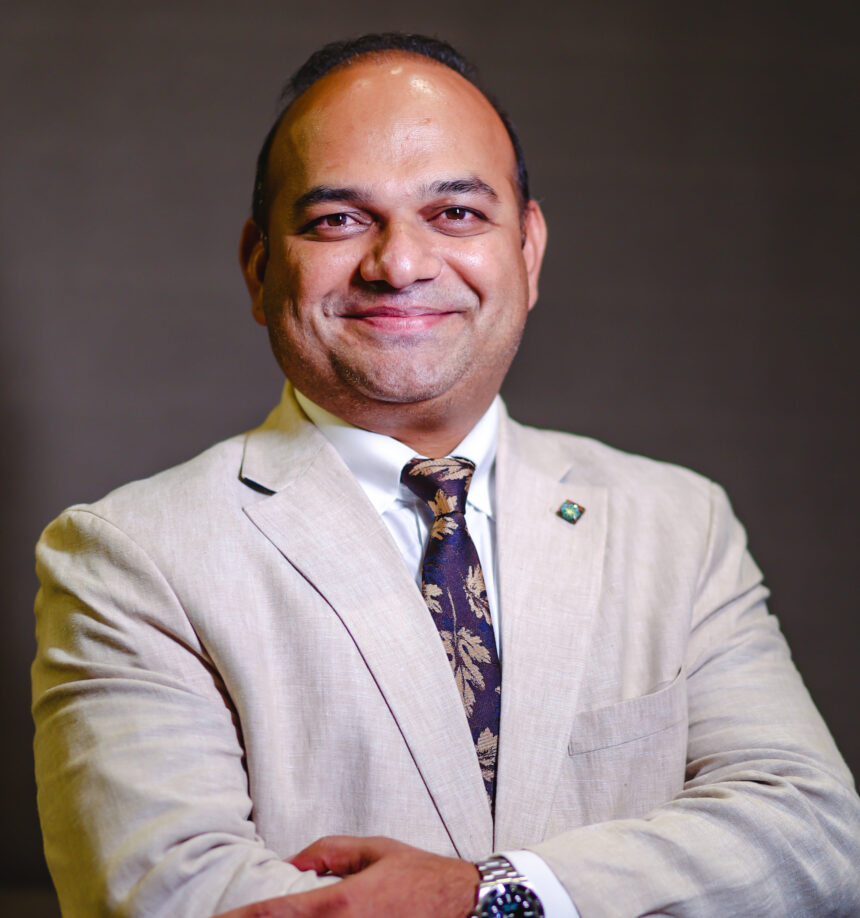
Since the establishment of its events division in 2012, QnA International has grown into a globally respected B2B platform, recognized for curating high-impact summits and strategic industry forums across four continents. In this exclusive interview, the company’s leadership shares insights on QnA International’s evolution from event organizer to strategic ecosystem architect—driving collaboration between governments, industry leaders, and innovators worldwide. The conversation highlights the company’s continued focus on innovation, digital transformation, and purpose-driven leadership as it sets new benchmarks in global business engagement.
An E.R EXCLUSIVE with Sidh NC, Co-Founder & Managing Director, QnA International
ER- QnA International has grown into a globally respected B2B platform under your leadership. What was the original vision behind the company, and how has it evolved over the years?
SIDH NC- When we first established the events division of QnA International in 2012, our vision was shaped by a simple but ambitious purpose — to curate B2B congresses and forums where business decision-makers, sector specialists and public-sector partners could exchange high-quality insights, meaningfully connect, collaborate and do business. From the outset, the motto “Quality & Assurance” (Q & A) was chosen deliberately: we promised less hype, more substance.
Over the years, the company has matured from delivering stand-alone conferences into designing curated ecosystems of summits, roundtables and invitation-only gatherings across multiple industries and geographies. We have grown from organising a single event in one region to executing multiple annual platforms across four continents. In doing so, our promise of delivering value has remained constant, but the scale, sophistication and strategic ambition have risen.
This evolution means we now work not just as event-organisers but as strategic architects of sector-specific marketplaces for thought-leadership, networking and deal-flow. Through every step of growth, we have remained anchored to our founding vision of convening people who make things happen—while expanding our capability to serve new industries, new geographies
ER- You’ve hosted summits across four continents and partnered with governments, tourism boards, and industry leaders. What’s been the key to building such impactful global collaborations?
SIDH NC-The essential foundation of those global collaborations is trust and shared purpose. We believe you cannot simply “invite” a national tourism board or government agency and expect success. Instead, one has to listen to their strategic imperatives, understand their ecosystem, and craft an event proposition that aligns with their goals, rather than imposing a template.
For example, by aligning our platforms with destination-partners, tourism authorities or regional governments, we co-create value: the destination receives visibility and economic benefit, our delegates receive exclusive access and insight, and our sponsors gain differentiated exposure. The deep engagement of governments arises from our willingness to engage early, listen to the brief, integrate the public-sector narratives, and deliver an experience that serves multiple stakeholders.
The other key is rigour in execution — the “one-on-one meetings”, high-calibre content, relevant senior delegates and genuine business outcomes. With these ingredients, we transcend the superficial trade-show model and build events that are both strategic and operational.
Finally, building a global collaborator network means being locally present and culturally intelligent. We do not simply parachute into a market—we build partnerships, respect local nuances, and bring global best practices adapted to local contexts.
ER- Events like the Destination Wedding Planners Congress and HR Tech MENA Summit have become industry benchmarks. How do you ensure each platform continues to drive innovation and meaningful outcomes?
SIDH NC- Keeping our platforms benchmark-worthy requires three disciplines: content innovation, participant curation and outcome orientation.
On content innovation: we are constantly scanning for emerging trends, disruptive technologies and new business models. For instance, in the wedding-destination space we examine how experiential, multi-gen-travel, luxury-micro weddings or AI for designing are impacting planners. In HR tech we probe how AI, analytics and talent ecosystems are evolving. By building fresh themes into our agendas, we ensure each edition is forward-leaning.
On participant curation: we treat our events as invitation-only or through pre-qualified registration, thereby ensuring that each delegate is relevant, engaged and decision-making. Our programmes include pre-scheduled one-to-one meetings, high-level panels, and networking designed for impact rather than volume.
On outcome orientation: the goal is not merely networking, but actual tangible business results—whether that’s new partnerships, investments, policydialogues or new service launches. We track feedback and ROI from delegates and sponsors, and we refine each event to ensure the next edition raises the bar.
The result is that each platform maintains its reputation and continues to attract high-quality participants and sponsors who expect more than just “another event”.
ER- The events and knowledge-sharing landscape is rapidly changing with digitalisation, AI, and hybrid formats. How is QnA International adapting to this new era of global engagement?
SIDH NC- We have highlighted digitalisation and hybrid formats as strategic imperatives for QnA International. From the early days, our events were live and in-person, but in recent years we have introduced virtual/ hybrid models, enriched digital content, and community platforms to extend engagement beyond the event dates. However, over the decade one thing remains irreplaceable in organising events: the power of human connection or face to face meetings. No digital platform can replace that experience of doing business.
On AI and digital content: we integrate digital-first formats (webinars, digital lounges, peer exchanges) ahead of or following the live event so delegates continue to engage, network, and harvest insights. AI tools are used for matchmaking, delegate profiling, agenda-recommendation, and analytics. For example, our recent travel-and-luxury event emphasised how “AI-powered personalisation” will redefine guest experience.
On hybrid formats: we curate hybrid experiences where global participants can join virtually, local hubs connect in-person, and pre-/post-event digital networking is embedded. This ensures reach beyond geography and flexibility for sponsors and delegates.
Finally, we are increasingly focusing on data-driven event design: profiling delegates, measuring engagement, and tracking post-event outcomes. This allows us to optimise experiences and offer sponsors measurable value in this new era of global engagement.
ER- QnA International’s portfolio spans diverse industries—from finance and travel to technology and HR. How do you balance specialization with a global, cross-sector approach?
SIDH NC- Balancing specialization with breadth is a deliberate strategic posture for us. Each industry vertical (e.g., travel & tourism, destination weddings, human resources, technology) has its own ecosystem, challenges, and language—so specialization matters. We develop deep domain expertise in each vertical: we engage sector-specific advisory boards, tap into specialist content, build vertical network,s and curate events accordingly.
At the same time, the broader cross-sector capability gives us scale, flexibility, and the ability to transfer insights and best practices across industries. For example, lessons from technology disruption in HR might inform how destination-wedding planners use AI analytics; travel-industry insights might inform luxury-event business models in other sectors.
In practice, we operate multiple “vertical brands” under the QnA International umbrella, each led by a dedicated team but supported by our global infrastructure. The result is high specialization in each vertical, combined with the reach, resources, and global cross-pollination that a wider portfolio enables.
ER- As a leader passionate about mentoring emerging professionals, what qualities do you believe define the next generation of industry leaders?
SIDH NC- The next generation of industry leaders will be defined by a combination of three core qualities: adaptability, global mindset, and purpose-driven leadership.
Adaptability: In a world of rapid change—whether from digital disruption, global macro shifts or emergent business models—leaders must be comfortable in ambiguity, embrace learning, and pivot quickly.
Global mindset: Regardless of home market, business is now globally interconnected. Emerging leaders must understand different cultures, markets, and value systems. They should build networks that cross regions and sectors.
Purpose-driven leadership: It is no longer sufficient to merely deliver profit. Tomorrow’s leaders will focus on sustainable value creation, stakeholder impact, ethical business and social contribution.
In mentoring emerging professionals, I place special emphasis on curiosity, integrity, empathy, and the willingness to collaborate. The next generation must lead by example, not only manage by instruction.
ER- Looking ahead, which regions or themes do you see becoming the next frontiers for QnA International’s growth and influence?
SIDH NC- Looking ahead, we believe several regions and thematic domains offer strong growth opportunities for QnA International.
Regionally, the Middle East with a big spotlight on Abu Dhabi with its perfect blend of cultural heritage to the modern era and the Kingdom of Saudi Arabia under Vision 2030 remains a major frontier: with its large investment in tourism, events, technology and talent, we see the region continuing to accelerate. We are already active there and will deepen our footprint. We recently did our 11th Annual of DWP Congress in Jordan and strongly believe that the country has so much potential for wedding tourism growth.
In Asia and the Indian sub-continent, markets such as India for MICE and luxury travel remain highly dynamic (we already run our MILT Congress in Goa). Europe and Southeast Asia offer further cross-border expansion potential.
Thematically, areas such as future-of-work (AI, talent analytics, HR-tech), wellness, experiential luxury travel, destination weddings in new markets, tech ecosystems (cybersecurity, cloud, AI), and sustainability-led business models are all key frontiers for us.
In summary, our strategy is to stay ahead of thematic trends, enter markets where investment and growth are happening, and continue to offer differentiated value by combining global scale with local execution.