


In this E.R. Special Insight, Olympic silver medallist and World Champion Samantha Murray looks beyond the scoreboard to explore how sport reflects national ambition, investment, policy and global influence. Her central message is that government investment in sport goes far beyond athletes and competitions, shaping tourism, infrastructure, economic development, international influence and national identity. Read on.

By Samantha Murray – Olympic silver medallist, world champion, and broadcast journalist
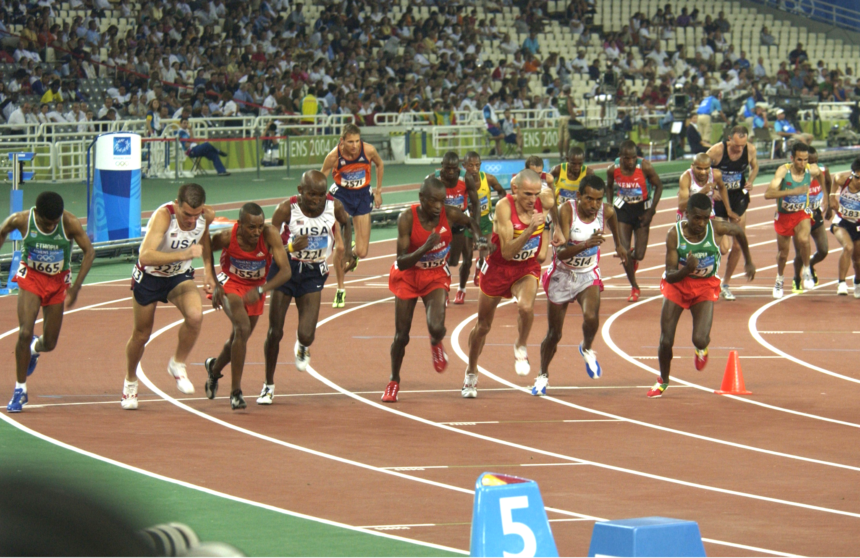
Dubai, UAE- In 1996, Great Britain left the Atlanta Olympic Games 36th in the medal table, with just one gold medal. Sixteen years later, at a home Olympic Games in London, Team GB finished third in the world, behind only the United States and China, winning 65 medals, including 29 golds. That transformation did not happen by accident.
After Atlanta, Britain made a strategic decision to invest in elite sport. National Lottery funding was introduced for Olympic and Paralympic athletes, alongside significant government investment. Money was channeled through UK Sport and increasingly targeted towards the sports and athletes considered capable of winning medals. By London 2012, Britain had developed one of the most sophisticated high-performance systems in the world, with clear medal targets and investment attached to delivering them.
Illustrative Image
It is one of the clearest examples of what can happen when sporting ambition becomes public policy. Perhaps this is why sport deserves to be viewed as something much bigger than entertainment. Follow where governments invest in sport and you can often see where a country wants to go. Sport can tell us about economic priorities, international ambition, infrastructure, diplomacy and how nations want to position themselves on the world stage.
Few countries demonstrate that more clearly today than Saudi Arabia. The Kingdom’s investment across football, boxing, golf, Formula 1, tennis and esports has attracted enormous international attention. But viewing each investment simply as a sporting story misses the much bigger picture. Sport sits within Vision 2030, Saudi Arabia’s programme of economic and social transformation, alongside tourism, entertainment, infrastructure and the development of new industries.
The 2034 FIFA World Cup will make that relationship even more visible. Hosting a tournament of this scale is about football, but it is also about airports, hotels, transport, stadiums, construction, employment, tourism and foreign investment. It brings legitimate questions around labour, governance, public spending and accountability too. Sport provides a very visible lens through which all of these developments can be examined.
Illustrative Image
Indeed, a glance back to Qatar’s hosting of the 2022 World Cup dramatically increased the global visibility of a relatively small Gulf state, while simultaneously putting its labour policies, human rights record and geopolitical influence under intense international scrutiny. The UAE has built a global sporting footprint spanning football, Formula 1, cricket and major events alongside its ambitions in aviation, tourism, investment and international business.
China used the 2008 Beijing Olympics to showcase infrastructure, economic development and international ambition. The United States, meanwhile, is hosting the 2026 FIFA World Cup before Los Angeles stages the Olympics in 2028, where sport intersects with enormous commercial interests, security, transport, immigration and public policy. The motivations may be different, but the principle is remarkably similar. Sport rarely operates in isolation.
Governments invest in sport for multiple and often overlapping reasons: economic growth, tourism, public health, national identity, diplomatic influence, commercial return and international prestige. At the same time, that investment creates legitimate questions about where money is coming from, where it is going, who benefits and who is making the decisions.
Illustrative Image
Sport also provides something few other industries can: enormous audiences, emotional connection and global visibility. Billions of people may watch a World Cup or an Olympic Games. Athletes become some of the most recognisable people on the planet. Political leaders, business executives and investors increasingly gather around these events too.
Perhaps, then, we need to stop thinking of sport as something that sits neatly on the back pages. Some of the most revealing stories about where countries are investing, how governments are making policy and where global power is shifting are playing out in stadiums, arenas and sporting boardrooms. Follow the sport and, increasingly, you follow the money, the policy and the power.
Editorial Note: The views expressed in this feature are those of the guest contributor and are based on information and insights shared with EmiratesReporter.com. Illustrative images also used. Editor-Recommended Article.