



By Amit Kakkar, Managing Editor, EmiratesReporter.com
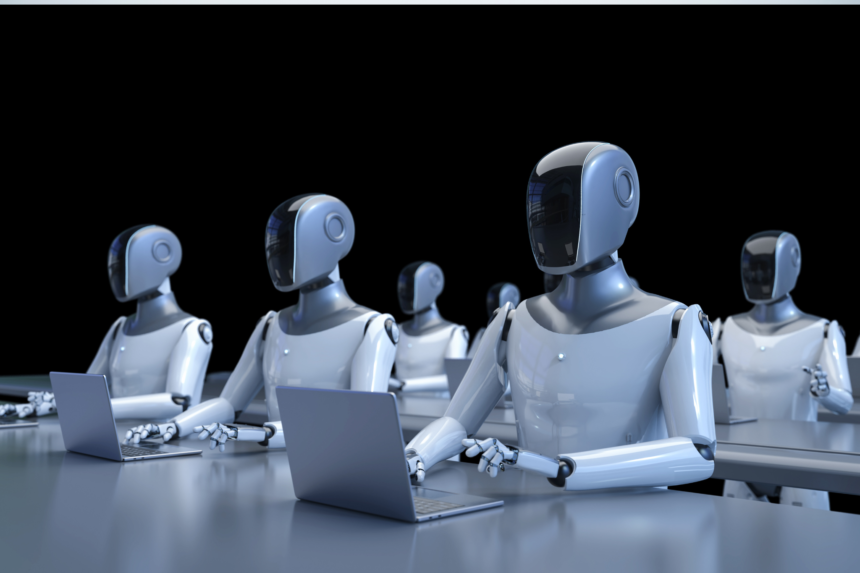
Dubai, UAE- Artificial intelligence (AI) has moved from being a futuristic idea to becoming part of everyday life. It is writing, translating, analyzing data, assisting doctors, supporting teachers, helping engineers and increasingly becoming part of the machines and systems around us. But as AI becomes more capable, one principle deserves to remain non-negotiable: technology must remain under meaningful human control.
That principle has now entered the highest levels of international diplomacy. During Chinese President Xi Jinping’s state visit to Washington on September 24, 2026, Xi told U.S. President Donald Trump that the United States and China have both the capability and responsibility to develop and manage AI for good and ensure that its development remains under human control and serves people’s well-being. Trump also identified artificial intelligence and “super intelligence” as subjects for discussion during the summit.
The significance is not that Washington and Beijing have suddenly agreed on every question surrounding AI. They have not. Reporting from the summit shows differences over how much regulation or “guardrails” should apply to advanced AI. But the fact that AI safety, control and international communication are being discussed between two of the world’s major technology powers demonstrates how important the subject has become.
The debate is often presented in frightening terms: AI will take people’s jobs, machines will replace professionals and human workers will eventually become unnecessary. The evidence, however, is more complicated.
The International Labour Organization’s 2025 research found that one in four workers globally are in occupations with some exposure to generative AI, but concluded that transformation of jobs is more likely than wholesale replacement because most occupations still contain tasks requiring human involvement. The World Economic Forum’s Future of Jobs Report 2025 similarly projected that technological and other structural changes could create 170 million jobs globally by 2030 while displacing 92 million, producing a projected net increase of 78 million jobs.
That does not mean nobody will lose work. Routine and repetitive tasks face genuine disruption. But history suggests that major technologies also create new occupations, new industries and new forms of work. The important question is therefore not simply whether AI will replace jobs, but how humans will redesign jobs around AI.
Consider medicine. AI and robotics can help doctors plan procedures, analyse information and perform highly precise movements. The U.S. Food and Drug Administration explains that robotically assisted surgical systems can support minimally invasive procedures, but they are controlled by surgeons and cannot perform surgery without direct human control. The lesson is important: the machine can extend human capability without replacing human responsibility.
The same principle applies to automobiles. Advanced driver-assistance and automated-driving technologies are developing rapidly, but the U.S. National Highway Traffic Safety Administration states that even the highest level of driving automation currently available to consumers requires the driver’s full engagement and attention. AI can see, calculate and react extremely quickly, but responsibility for safety cannot simply disappear into software.
Education presents another powerful example. UNESCO says AI can support personalised learning and smarter lesson planning, while stressing a human-centred approach. Teachers remain essential because education is not merely the delivery of information; it involves judgement, encouragement, creativity, social development and critical thinking.
The future, therefore, should not be framed as humans versus AI. It should be humans using AI responsibly.
AI can become an extraordinary assistant: helping a surgeon see possibilities, helping an engineer identify risks, helping a teacher personalise learning, helping a driver avoid danger and helping workers complete routine tasks faster. But the final responsibility in consequential decisions should remain with accountable people and institutions.
The Trump–Xi discussion gives the world an important opportunity to think beyond the race to build ever more powerful AI. Competition may continue, and countries will pursue their own technological interests. Yet communication about dangerous AI incidents, safety and human oversight can still serve a common global interest. Reports indicate that U.S. and Chinese officials have also discussed a possible mechanism for communicating about serious AI incidents.
The goal should not be to stop AI. Nor should it be to surrender to it.
The better future is one in which AI becomes more powerful while human responsibility becomes stronger. Machines can calculate. Algorithms can predict. Systems can assist. But values, accountability, compassion and the ultimate decision to act must remain human.
DISCLAIMER: This editorial is based on publicly available information and reports and reflects the author’s views for general information and discussion purposes. It is not intended as professional advice or as a definitive prediction of AI’s future impact.
READERS, DO NOT MISS-