


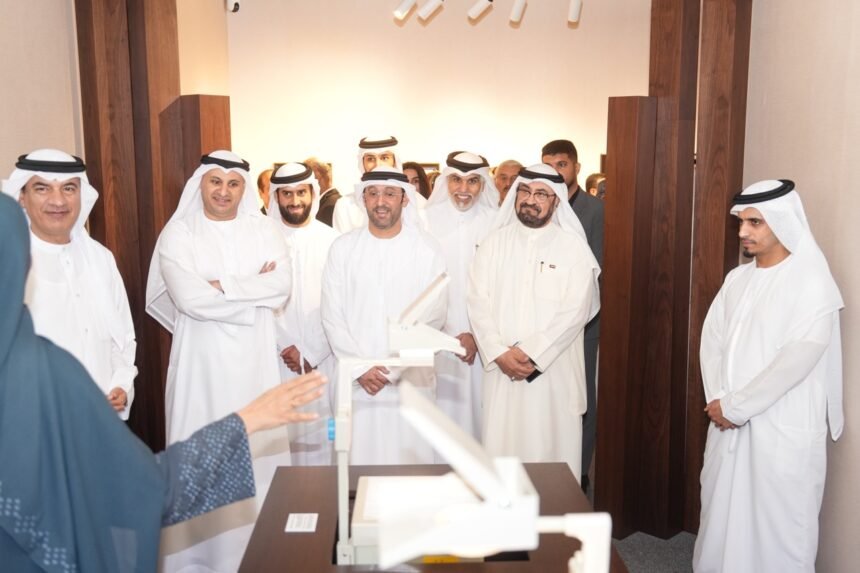
SHARJAH, UAE- The House of Wisdom (HoW) in Sharjah has opened “In Due Measure: From Dot to Meaning”, an exhibition exploring the geometric and aesthetic foundations of Arabic calligraphy and the precise principles of measurement and proportion that shape Arabic letters, from the dot, the alif and the circle to the formation of words and sentences.
Through calligraphic artworks, reproductions of historic Qur’an manuscripts, traditional writing tools and interactive experiences, the exhibition offers visitors an opportunity to discover the principles of this art form and practise writing Arabic letters themselves.
Abdullah bin Mohammed Al Owais, Chairman of the Sharjah Department of Culture attended the opening, alongside H.E. Ahmed Obaid Al Qaseer, CEO of Sharjah Investment and Development Authority (Shurooq); and Mohammed Ibrahim Al Qaseer, Director of the Directorate of Cultural Affairs at Sharjah’s Department of Culture and Director of the Sharjah Calligraphy Biennial, alongside cultural and artistic figures.
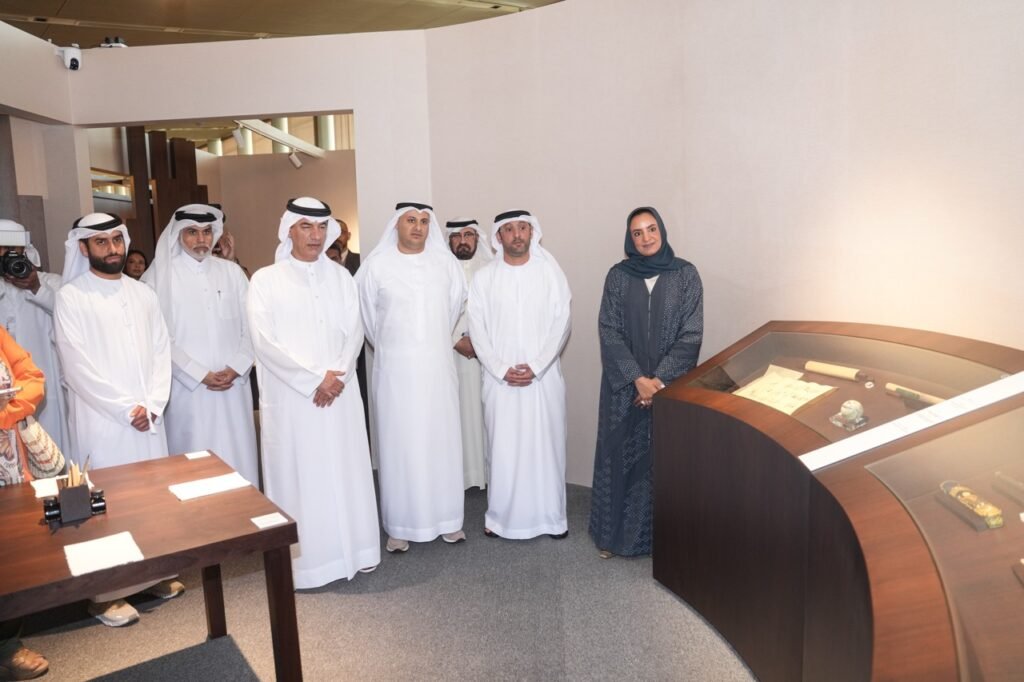
Running until 24 January 2027, the exhibition marks the final stop of the 12th Sharjah Calligraphy Biennial, organised by the Sharjah Department of Culture under the theme Balance. It is organised by the department’s Cultural Affairs Directorate and HoW, in collaboration with the Holy Quran Academy in Sharjah, Sharjah Museums Authority, Khawla Art and Culture Foundation and Barjeel Art Foundation.
The exhibition features works by Her Highness Sheikha Khawla Bint Ahmed Bin Khalifa Al Suwaidi, calligraphers Khalid Al Jallaf, Khalifa Al Shimi and Humaid Al Saadi, and contributions by Ali Al Hammadi, alongside a sculpture by Nasser Al Salem from the Barjeel Art Foundation collection.
The exhibition also introduces visitors to the contributions of some of the most influential pioneers of Arabic calligraphy, particularly Ibn Muqla, who is associated with establishing the foundations of proportional calligraphy and codifying the geometric proportions of Arabic letters. It also highlights Ibn al-Bawwab and Yaqut al-Musta’simi, who contributed to the development of the art form and the consolidation of its traditions, demonstrating the continuity of Arabic calligraphy from its historical foundations to the work of contemporary artists.
Arabic Calligraphy between rules and creativity
Marwa Al Aqroubi, Executive Director of HoW, said: “We believe that preserving cultural heritage begins with a deeper understanding of its value and significance. Through In Due Measure, we aim to introduce younger generations to Arabic calligraphy and help them discover the knowledge, precision and skill behind the art, strengthening their appreciation of this heritage and encouraging them to explore it further.”
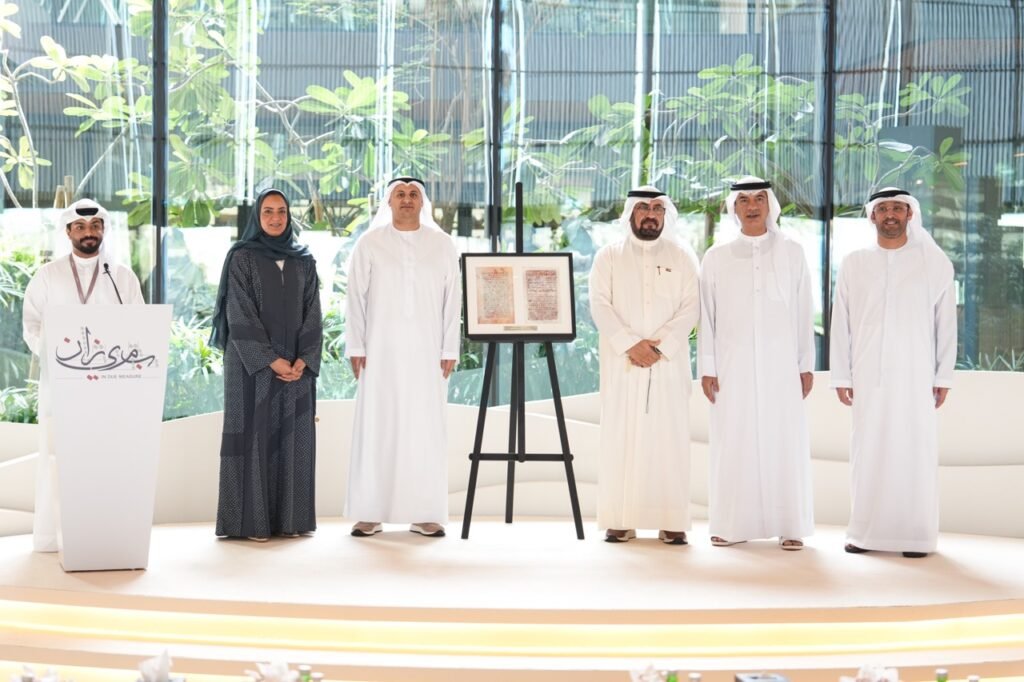
She added: “We want HoW exhibitions to leave a lasting impression, sparking curiosity, encouraging questions and inspiring visitors to continue exploring long after their visit. We hope this experience will give visitors a new perspective on the letters they use every day and a greater appreciation of the artistic and cultural richness of their language.”
Mohammed Ibrahim Al Qaseer, Director of the Directorate of Cultural Affairs at Sharjah’s Department of Culture and Director of the Sharjah Calligraphy Biennial, said: “In Due Measure takes visitors on an artistic journey from the dot to the letter, the word and ultimately meaning, revealing the balance between geometric precision and creative freedom. Arabic calligraphy is part of our cultural memory, and this exhibition offers an opportunity to share its beauty and heritage with new generations and visitors. We value our collaboration with House of Wisdom, which brings the arts closer to the public through exhibitions that combine knowledge with visual experiences and deepen appreciation for art and its creators.”
Five sections: From dot to meaning
The exhibition begins with The Dot: Unit of Measurement, which explains how the dot determines letter proportions, including the height of the alif, through enlarged visual examples and explanatory displays. It also features reed pens, sharpening knives, inkwells, pen cases and paper burnishers from the Sharjah Calligraphy Museum, part of Sharjah Museums Authority, alongside explanations of ink and paper preparation.
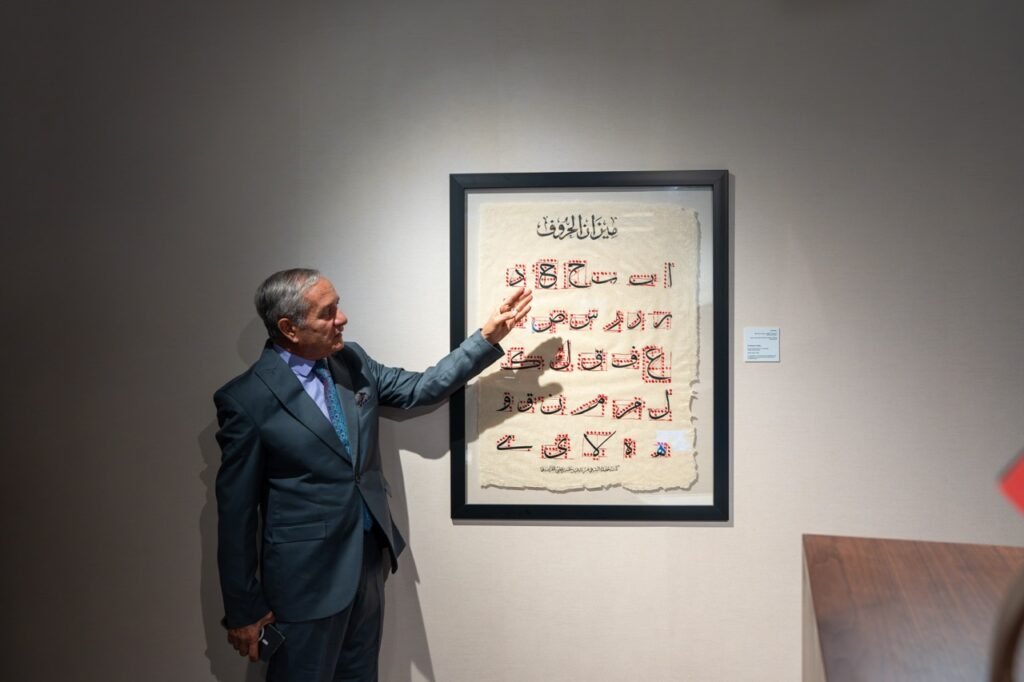
The Letter: Geometry of Beauty explores how letterforms are shaped by their dimensions, curves and surrounding spaces, and how writing styles have evolved. It features The Measure of Letters by Khalifa Al Shimi, rendered in red Thuluth script to illustrate the measurements and proportions of Arabic letters.
The third section, The Word: Rhythm and Composition, explores the arrangement of letters and spaces within words through ten ink-on-paper artworks created by Her Highness Sheikha Khawla Bint Ahmed Bin Khalifa Al Suwaidi between 2012 and 2020. Among them is an artwork titled Sharjah Shines with the Light of Its Lord, and Sultan Illuminates Its Culture, presented as a gift to His Highness Sheikh Dr Sultan bin Muhammad Al Qasimi, Supreme Council Member and Ruler of Sharjah.
The Sentence: From Composition to Meaning features nine works by Khalifa Al Shimi incorporating Qur’anic verses on measure, destiny, proportion and balance, exploring the relationship between calligraphic composition and textual meaning.
The final section, Beyond Measure: Contemporary Practices, features eight works by Iraqi calligrapher Humaid Al Saadi and Nasser Al Salem’s sculpture And Whoever Fears Allah, He Will Make for Him a Way Out, from the Barjeel Art Foundation collection. The works reinterpret traditional calligraphic principles through contemporary artistic approaches.
Historic Quranic manuscripts and calligraphic works
The exhibition also introduces visitors to the legacy of Arabic calligraphy pioneers and the artistic traditions passed down and developed by calligraphers across generations. Images provided by the Rampur Raza Library & Museum in India include Surah Al-Fatihah and verses from Surah Al-Baqarah featuring calligraphy attributed to Ibn Muqla, and Surah Al-Fatihah featuring calligraphy attributed to Yaqut al-Musta’simi. The Holy Quran Academy in Sharjah has also contributed a reproduction of a Qur’an manuscript by Yaqut al-Musta’simi, alongside images of reproduced pages from Qur’an manuscripts by Yaqut al-Musta’simi and Ibn al-Bawwab.
Also on display is a 2015 King Saud University edition of Jāmiʿ Maḥāsin Kitābat al-Kitāb wa Nuzhat Ūlī al-Baṣāʾir wa al-Albāb (The Compendium of the Art of Writing and the Delight of the Insightful and Discerning) by Muhammad ibn Hasan al-Taybi. The displayed pages illustrate letterforms in Ibn al-Bawwab’s style, alongside a calligraphic artwork by Khalid Al Jallaf drawing on texts from the book.
Interactive experiences and educational videos
At The “Dot and Pen Table”, visitors can draw dots of different sizes to explore letter proportions. The Letter-Writing Table offers video demonstrations by Ali Al Hammadi on tablets, followed by guided writing exercises.
Educational videos include an AI-assisted introduction to Ibn Muqla’s life and legacy and two presentations by Khalid Al Jallaf explaining the dot’s role in measurement and how letterforms change according to their position within words.
Throughout the exhibition, HoW will organise workshops and artistic activities for children and young people in collaboration with the Sharjah Department of Culture and specialist organisations, introducing different Arabic calligraphy styles and techniques through practical activities.