



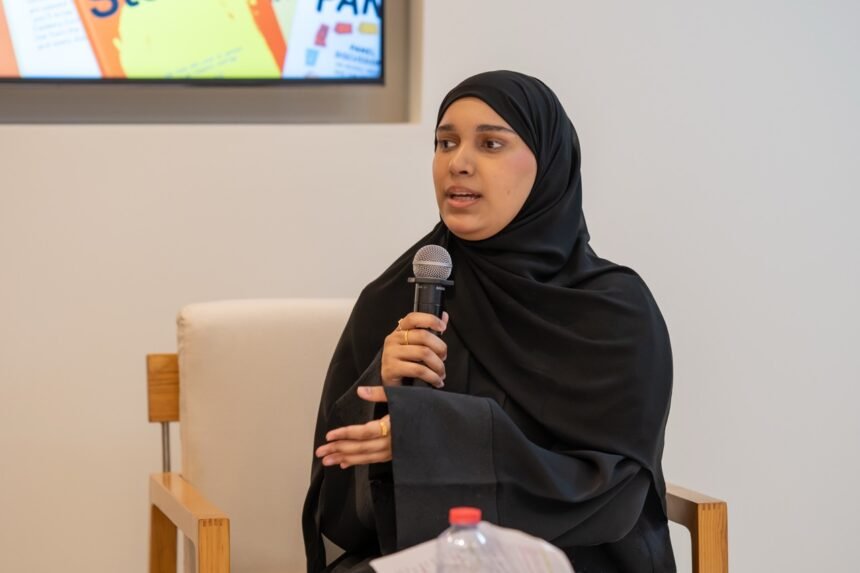
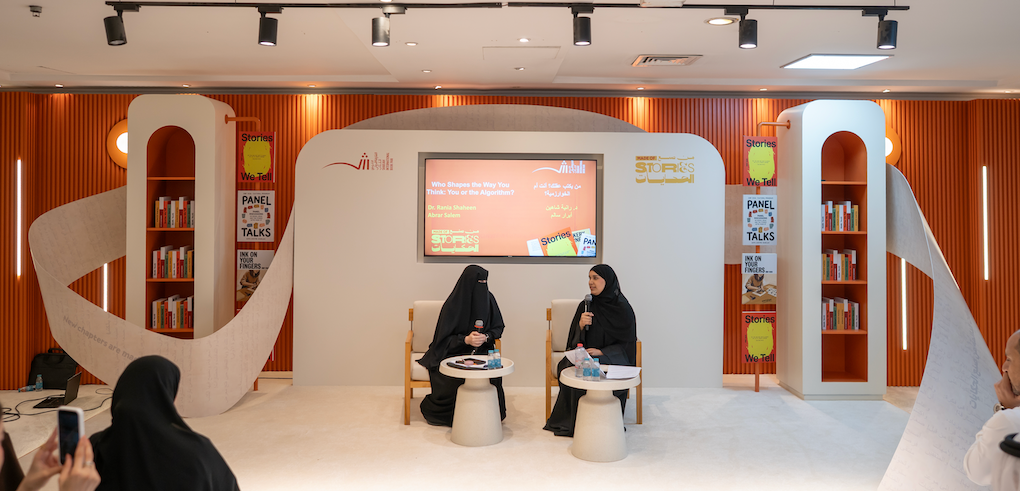
SHARJAH, UAE- As digital platforms increasingly determine what people read, watch and discover, questions arise about who ultimately shapes their thinking. At the 45th Sharjah International Book Fair (SIBF 2026), Dr Rania Shaheen and Abrar Salem took part in a conversation titled ‘Who Shapes the Way You Think? You or the Algorithm?’, examining how algorithms influence intellectual choices, research directions and everyday engagement with knowledge.
The discussion explored the role of algorithms in directing users towards particular information and research topics, and the broader implications of personalised content for independent thinking and intellectual curiosity.
When recommendations become intellectual boundaries
Dr Shaheen warned that algorithms can gradually confine users to familiar opinions and ideas, creating bubbles that reinforce existing beliefs while limiting exposure to alternative perspectives.
“Algorithms risk trapping people in a bubble of opinions and thoughts that conform to their beliefs,” she explained, noting that such patterns can keep readers from discovering viewpoints beyond their immediate intellectual interests.
She acknowledged that personalised recommendations can be beneficial when they introduce users to subjects related to their interests. However, the problem emerges when these suggestions become the principal source of information, repeatedly directing people towards similar content.
“What algorithms suggest and what the reader watches or reads constantly is likely to shape the way people think,” Dr Shaheen said, emphasising the influence of repeated exposure on intellectual habits and perceptions.
Abrar Salem echoed a similar position on algorithm influence, saying, “Even when we believe we are choosing what to read or research independently, the recommendations we receive can shape our curiosity, the questions we ask, and the sources we explore. This can limit our exposure to different ideas and perspectives if we rely too heavily on what platforms suggest.”
Taking back control of our thinking
Dr Shaheen cautioned that staying within these bubbles can allow algorithms to shape not only what people consume but also how they approach ideas and form opinions.
“In this sense, failing to escape the bubble means delegating thinking and biases to algorithms,” she said, stressing the importance of questioning personalised recommendations rather than accepting them as neutral sources of knowledge.
To move beyond these limitations, she recommended returning to traditional sources of knowledge, particularly printed books, which can introduce readers to unfamiliar ideas and perspectives beyond algorithmically curated content.
The discussion highlighted the importance of intellectual independence, encouraging readers to remain curious, explore unfamiliar perspectives and take responsibility for shaping their own understanding of the world.
Organised by the Sharjah Book Authority, the 45th Sharjah International Book Fair (SIBF 2026) runs from November 4 to 15 at Expo Centre Sharjah under the theme ‘Made of Stories’, with the Sultanate of Oman as Guest of Honour. The fair brings together 3,212 publishers and exhibitors from 126 countries, showcasing more than 1.7 million titles. Its programme features 1,500 cultural, creative and artistic events, with 106 guests from 25 countries.