



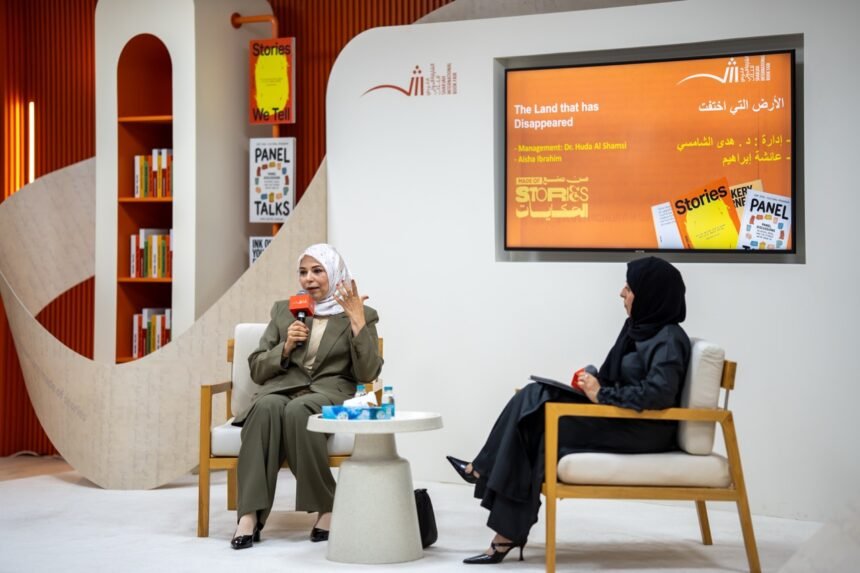
SHARJAH, UAE- “The novel is a tool for preserving historical memory and the burden of preserving this spatial memory falls upon the novelist,” said Libyan novelist Aisha Ibrahim during a discussion titled ‘The Land That Has Disappeared’ at the 45th Sharjah International Book Fair (SIBF 2026).
In conversation with Emirati academic and writer Dr Huda Al Shamsi, Ibrahim, author of Qasil and The War of the Gazelle, emphasised that a novelist’s responsibility extends beyond storytelling to safeguarding the memory of places and communities threatened by disappearance.
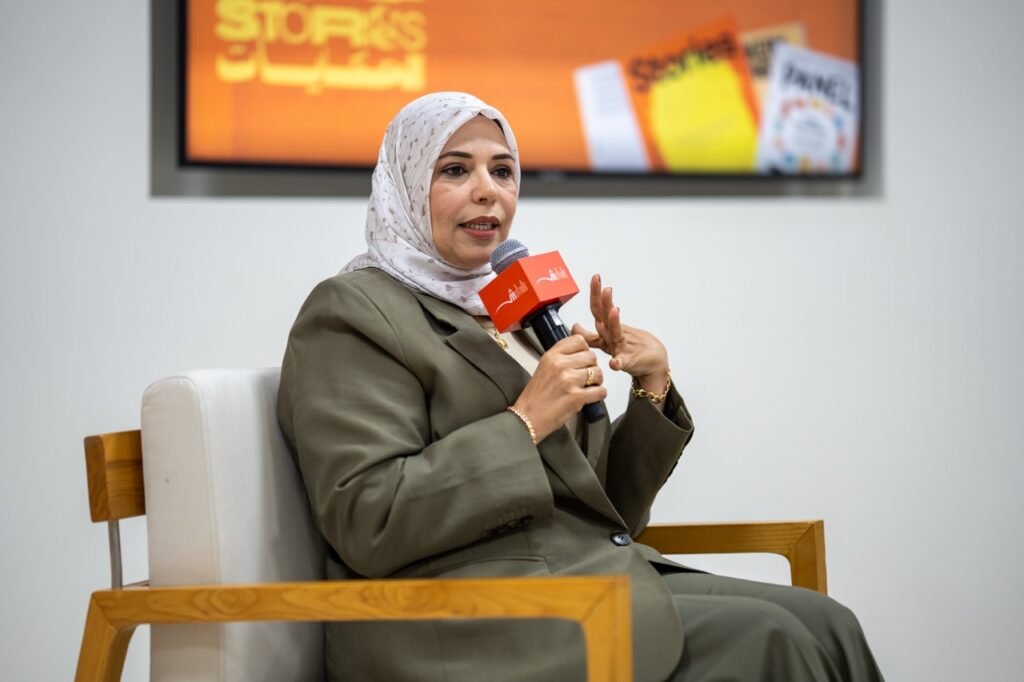
Aisha Ibrahim
“I do not treat places merely as a stage for events but rather as a character in a novel because it carries people’s memory and identity,” she said.
Her debut novel, Qasil, explores the history and transformation of her hometown, Bani Walid, in northwestern Libya during the late 1970s. Ibrahim lamented the disappearance of a fertile village and its centuries-old mosque as modern structures replaced older landmarks following the discovery of oil.
Her historical novel The War of the Gazelle, set in prehistoric southwestern Libya, reconstructs a vanished world through the story of a fictional tribal queen whose gazelle is stolen by a rival tribe.
Ibrahim explained that prehistoric rock paintings in Libya and Algeria, documented by Italian explorer Fabrizio Mori, helped her imagine this lost environment. Depictions of wildlife, including elephants and giraffes, offered insights into a time when parts of the Sahara supported a greener landscape.
“When we lack written historical documents, literature grounded in visual evidence becomes the document that restores life to what has been lost,” she said.
Citing Naguib Mahfouz’s Cairo Trilogy and Gabriel García Márquez’s One Hundred Years of Solitude, with its fictional town of Macondo, Ibrahim reflected on literature’s ability to preserve a sense of place and belonging, particularly for communities affected by displacement.
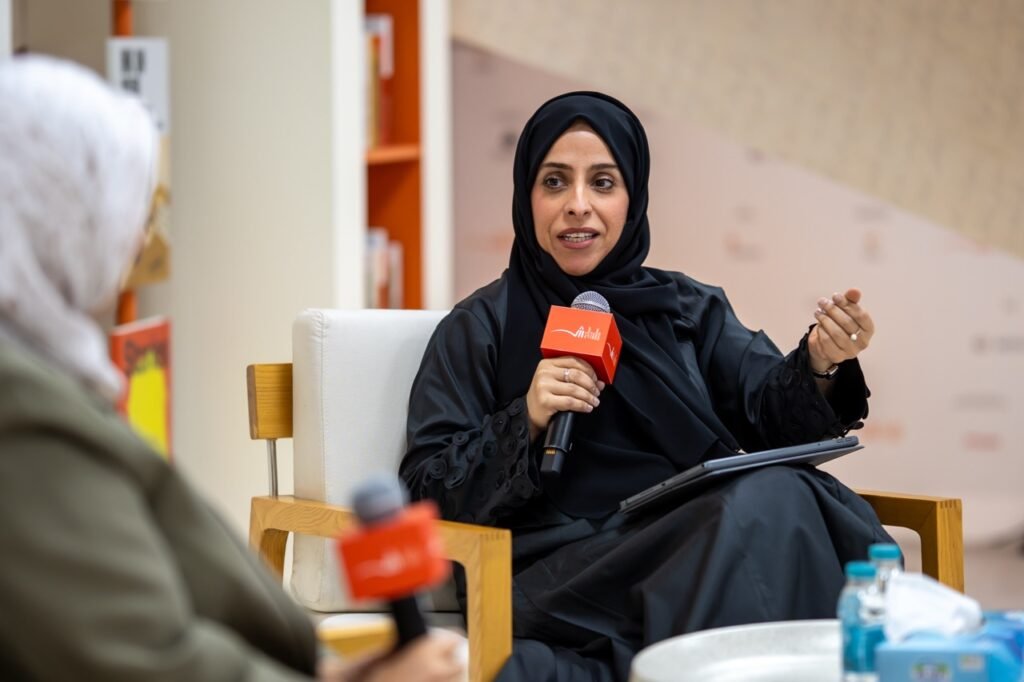
Dr. Huda Al Shamsi
Literature as a voice for environmental awareness
Turning to ‘green literature’, Ibrahim observed that environmental themes have long featured in Western literature and are gaining attention in Arabic writing amid growing concerns about climate change and desertification.
“The strength of eco-fiction lies in sounding the alarm and giving a message without turning preachy. It is not necessary for the novel to offer solutions for preserving the environment,” she said.
She argued that storytelling can encourage readers to develop an emotional connection with threatened landscapes and a stronger sense of responsibility towards the natural world.
Organised by the Sharjah Book Authority, the 45th Sharjah International Book Fair (SIBF 2026) runs from November 4 to 15 at Expo Centre Sharjah under the theme ‘Made of Stories’, with the Sultanate of Oman as Guest of Honour. The fair brings together 3,212 publishers and exhibitors from 126 countries, showcasing more than 1.7 million titles. Its programme features 1,500 cultural, creative and artistic events, with 106 guests from 25 countries.