


PM Modi’s Masterstroke: India Brings UAE, Iran Together in New Delhi
By Advocate Anjana Bhatia D.I, Consulting Editor, EmiratesReporter.com
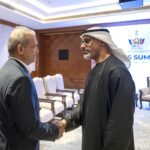
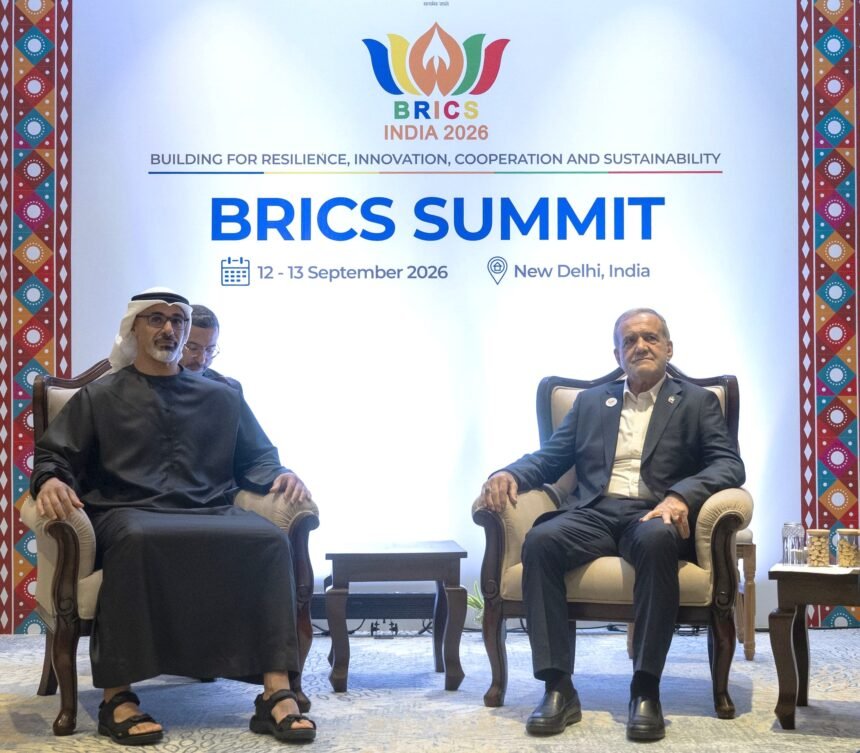
His Highness Sheikh Khaled bin Mohamed bin Zayed Al Nahyan, Crown Prince of Abu Dhabi, has arrived in India to lead the UAE delegation attending the 18th BRICS Summit, taking place in New Delhi from 12-13 September 2026, on behalf of His Highness Sheikh Mohamed bin Zayed Al Nahyan, President of the UAE.
New Delhi, INDIA / Dubai, UAE- The 18th BRICS Summit in New Delhi arrives at a defining moment for global diplomacy, with India, the United Arab Emirates and Iran sharing the same multilateral table despite an extraordinary deterioration in UAE-Iran economic relations following the war involving Iran, the United States and Israel. For India and Prime Minister Narendra Modi, this is far more than the hosting of another international summit. It is a powerful demonstration of India’s growing ability to bring major powers and countries with sharply different interests into one diplomatic space. With Russian President Vladimir Putin, Chinese President Xi Jinping and Iranian President Masoud Pezeshkian participating alongside the expanded BRICS membership, New Delhi has become the stage on which the changing balance of global economic and geopolitical power is being displayed.
“The 18th BRICS Summit takes place on September 12–13, 2026, at the Bharat Mandapam in New Delhi, India“
The India-UAE-Iran dimension makes this year’s BRICS gathering particularly significant. The three countries have long had important economic, geographical and strategic connections, but those relationships operate at very different levels. India has traditionally maintained deep commercial and people-to-people links with the UAE, while also retaining important strategic interests in Iran, including connectivity through Chabahar and access to Central Asia. The UAE, meanwhile, has historically been one of Iran’s most important commercial gateways and re-export centres. Yet the regional war has dramatically changed that economic equation. In August 2026, the UAE announced that all trade, commercial exchanges and financial transactions with Iran had been halted until further notice. The decision followed renewed regional military escalation and represented a major rupture in an economic relationship that had previously been highly significant to both sides.
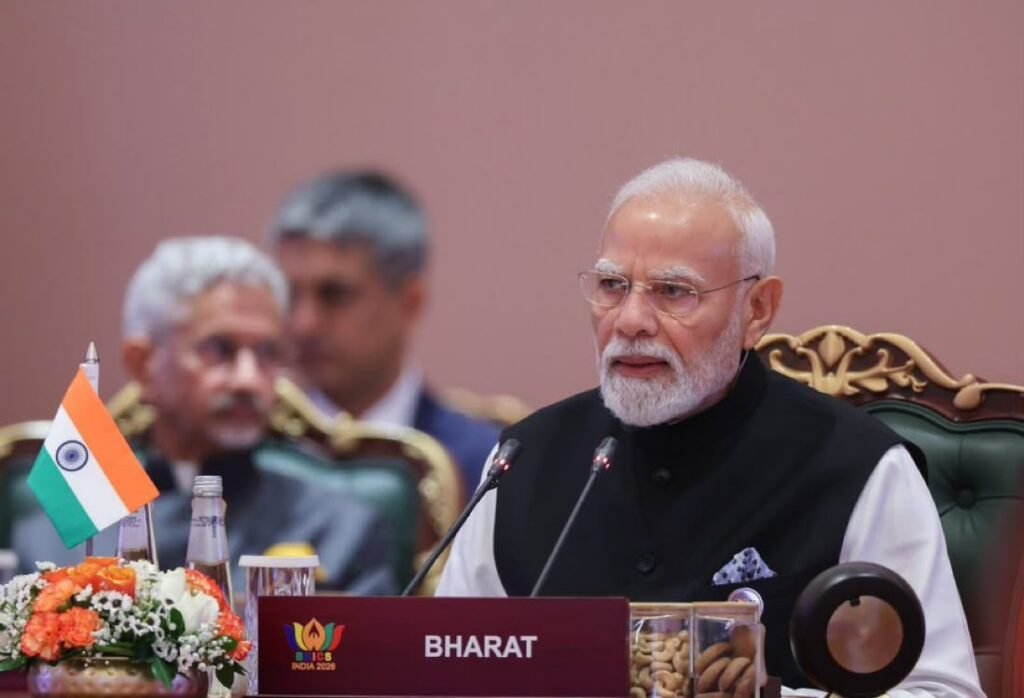
And yet, despite that bilateral rupture, the UAE and Iran remain together inside BRICS. That is precisely where the New Delhi summit acquires its deeper diplomatic importance. A multilateral forum does not erase bilateral disagreements, but it creates a platform where communication remains possible. The UAE can defend its national security interests, Iran can present its position, and India can continue engaging with both. The very fact that these countries remain around the same table demonstrates why institutions such as BRICS can matter in an increasingly divided world. At a time when financial channels, trade routes and diplomatic relationships are being disrupted by conflict, keeping a channel for dialogue open becomes an achievement in itself. Reuters has described the Iran-UAE divide as one of the major tests of BRICS unity at the New Delhi summit.
For India, this is also a demonstration of strategic autonomy. New Delhi has cultivated relationships with countries that do not necessarily have good relations with one another. India has a strategic partnership with Russia, an increasingly important relationship with the United States and the West, a complex but essential relationship with China, deep economic and diaspora ties with the UAE and wider Gulf, and longstanding strategic interests in Iran. Managing these relationships simultaneously requires diplomatic confidence. Prime Minister Narendra Modi’s decision to keep engagement open with different sides gives India an unusual position: it can speak to countries that may not be able or willing to speak to each other directly. His meetings with both Putin and Pezeshkian immediately before the summit underline this approach, with discussions covering bilateral relations, regional developments, energy, security and the need for dialogue.
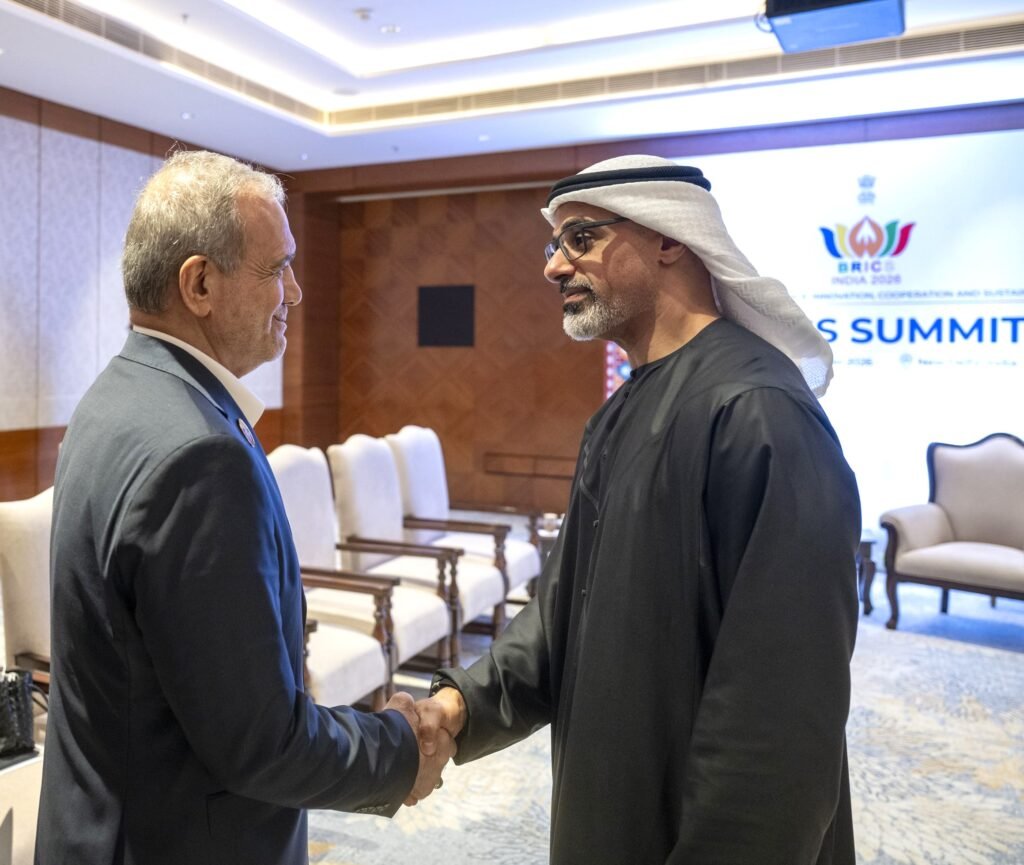
This is where the presence of Iran at the BRICS table becomes especially important for India. Tehran remains strategically significant to New Delhi because of geography, energy, connectivity and India’s longstanding interest in access to Central Asia and Afghanistan. At the same time, India has no interest in allowing the regional conflict to destabilise the Gulf, where millions of Indians live and work and where India’s economic interests are enormous. The safety of shipping routes, energy supplies, expatriate communities and commercial networks directly affects India. Consequently, stability in the Gulf is not a distant foreign-policy concern for New Delhi; it is an economic and national priority.
The UAE occupies an equally important position in India’s strategic calculations. The India-UAE relationship has expanded dramatically in recent years across trade, investment, infrastructure, energy, technology, finance and connectivity. The UAE is one of India’s most important economic partners in the Gulf and a major destination for the Indian diaspora. For India, therefore, having the UAE at the BRICS table is not merely a consequence of the Emirates’ membership. It reflects the broader rise of the UAE as an influential global economic and diplomatic centre. The presence of the UAE alongside Iran also gives New Delhi an opportunity to demonstrate that its relationship with Abu Dhabi does not prevent it from maintaining dialogue with Tehran.
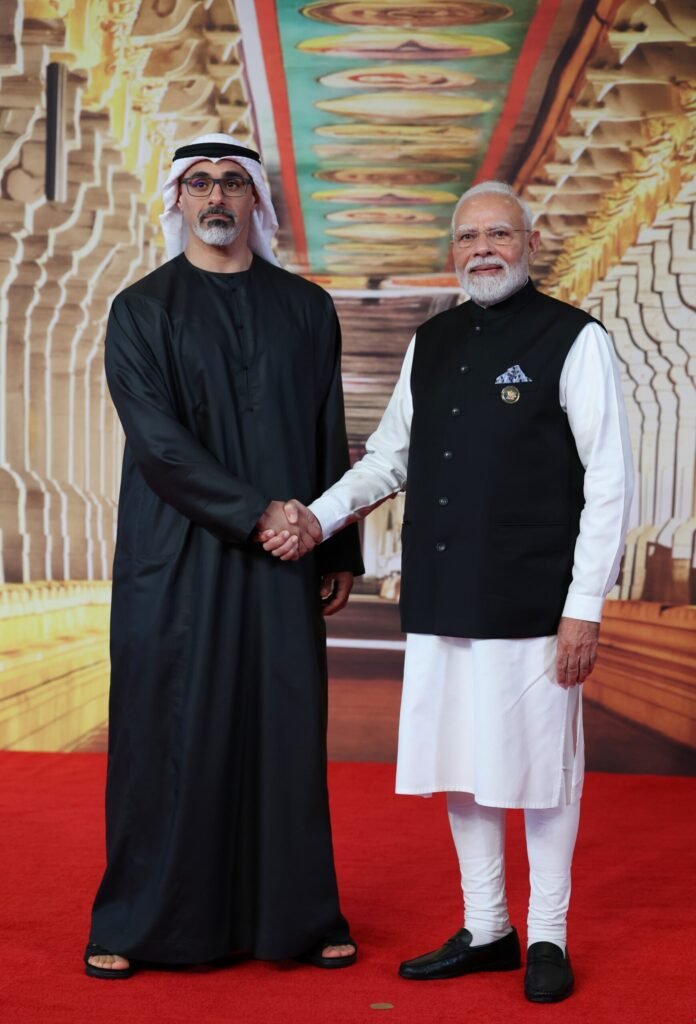
That balancing act is perhaps the strongest illustration of India’s changing global role. India is no longer approaching international affairs simply as a developing economy seeking a larger voice. It increasingly operates as a major power with interests that span the Indo-Pacific, the Gulf, Europe, Africa and Central Asia. Its enormous consumer market, technology sector, manufacturing ambitions, space programme, digital infrastructure, military capabilities and global diaspora have strengthened its economic and strategic influence. India’s ability to host a summit involving Putin, Xi and Pezeshkian, while also providing a platform for the UAE and other major emerging economies, reflects that transformation.
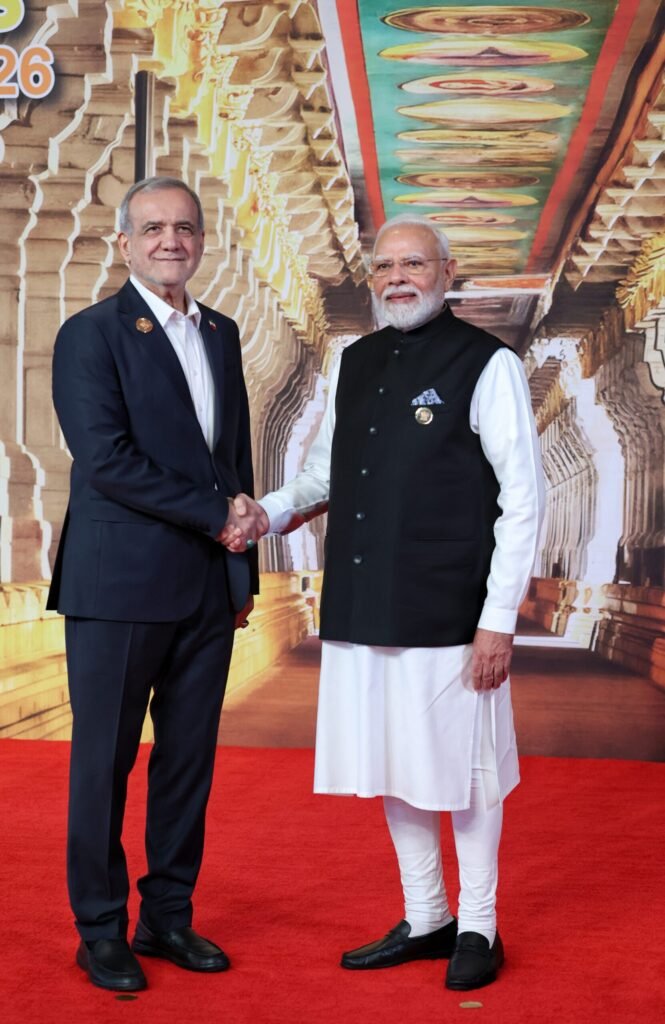
BRICS itself has travelled a remarkable distance since the term was first coined in 2001 to describe Brazil, Russia, India and China as major emerging economies. The first BRIC summit was held in 2009, South Africa joined in 2010, and the grouping subsequently expanded to include Egypt, Ethiopia, Iran, the UAE, Indonesia and Saudi Arabia. It has evolved from an economic concept into a broad platform for cooperation among major countries of the Global South. The enlarged BRICS now represents close to half of the world’s population and around 40 per cent of global economic output by purchasing-power measures, giving it considerable weight in discussions about global governance, trade, development and finance.
The presence of Putin and Xi makes India’s hosting role even more consequential. Russia remains an important energy and defence partner for India, and Modi and Putin have again reinforced their strategic relationship on the eve of the summit. India and Russia are seeking to increase bilateral trade substantially, while energy cooperation remains central to the relationship. China’s Xi Jinping, meanwhile, brings another layer of significance. India and China remain strategic competitors, but dialogue between their leaders is essential to managing their differences. Xi’s participation places New Delhi at the centre of an extraordinary convergence of Russian, Chinese, Iranian, Gulf and Global South interests.
What makes Modi’s leadership particularly noteworthy is that he is not attempting to make every participant agree on every geopolitical question. Instead, India’s approach is to create the space for competing interests to coexist and for practical cooperation to continue where common ground exists. That is a more realistic form of diplomacy in a fragmented international system. The proposed BRICS initiatives on startups, innovation, supply chains and logistics demonstrate that the organisation can pursue concrete economic cooperation even while its members disagree on major geopolitical questions.
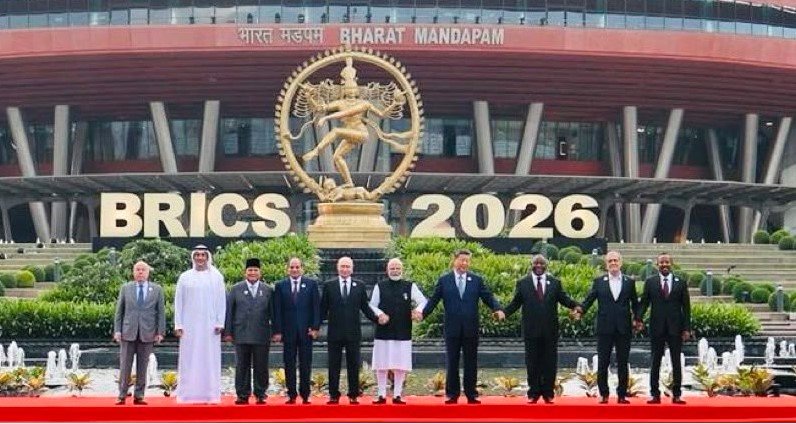
For the UAE and Iran, New Delhi therefore represents more than a summit venue. It represents a diplomatic environment in which two countries whose financial and commercial relationship is currently suspended can nevertheless remain part of the same international conversation. India, positioned between its important relationships with both Abu Dhabi and Tehran, can potentially contribute to keeping communication alive without compromising its own national interests or taking sides in the bilateral dispute.
The significance of BRICS 2026 ultimately lies in this delicate balance. The summit shows that today’s global power structure is becoming increasingly multipolar, with India, the UAE, Iran, Russia, China and other emerging powers playing increasingly important roles. New Delhi’s ability to host these countries at the same table is a reflection of India’s own rise. Modi’s achievement is not simply bringing famous leaders to India; it is demonstrating that India has acquired enough economic weight, strategic importance and diplomatic credibility to become a meeting point for countries whose interests often collide.
At a time when war is disrupting trade, finance, energy and diplomatic relationships, India’s message through BRICS is particularly powerful: disagreement does not have to mean the end of dialogue. The UAE and Iran may currently be divided by conflict and suspended financial relations, yet both remain part of the same BRICS framework. India can engage the UAE, maintain dialogue with Iran, work with Russia, manage competition with China and deepen partnerships with the West. That breadth of engagement is increasingly becoming India’s greatest geopolitical strength.
BRICS 2026 is therefore not simply a summit about emerging economies. It is a demonstration of India’s emergence as a global power centre and of New Delhi’s ability to convene countries at a moment when the international system is under extraordinary pressure. With the UAE and Iran sharing the BRICS table despite their current economic rupture, and with Putin and Xi bringing enormous geopolitical weight to the gathering, India has been given a rare diplomatic stage. Prime Minister Modi now has the opportunity to show that India’s greatest power may not only be its economy or its strategic strength, but its ability to bring different worlds together when those worlds are struggling to find common ground.
PICTURES COURTESY: WAM & https://www.brics2026.gov.in/