




Dubai, UAE- EmiratesReporter.com recently spoke with Dr. Madhurima Deshmukh, a renowned Health, Wellness and Fitness Coach with over 20 years of experience in lifestyle medicine and preventive healthcare. Having worked with leading healthcare institutions in India and the UAE and positively impacted more than 10,000 lives through screenings, webinars and wellness programs, Dr. Madhurima joins us as a special guest to explain an important topic: ‘How Positive Pressure Helps Us Thrive’ and why the right kind of stress can bring out the best in us.
E.R- Can stress actually be good for us?
Dr. Madhurima- It can… many people may find it strange! We’ve been taught to think of stress as something entirely negative, but stress is actually a natural part of being human. Stress is a reaction or response to any kind of change, it is a physical and emotional response to particular situations which are perceived as new, frightening, exciting or tiring. But in the right amount, it can help us stay alert, motivated, and even perform better.
Think about a student before an exam. A little nervousness can encourage them to study. Or imagine giving a presentation at work. That slight tension can make you prepare more thoroughly and stay sharp during the presentation. Without any stress at all, we might not feel motivated to take action.
E.R- Is there an ideal amount of stress?
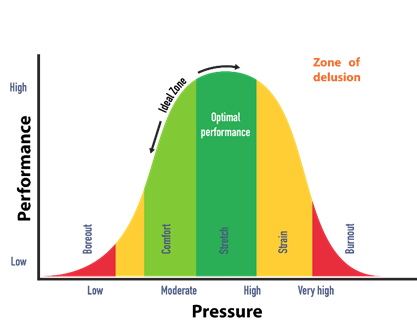
Dr. Madhurima- Yes. Psychologists have known for years that performance tends to improve as stress rises—up to a point. Imagine a bell-shaped curve. When stress is very low, we may feel bored, distracted, or unmotivated. As stress increases moderately, we become more engaged and productive. This is called as Eustress – the “sweet spot.”
But if stress keeps increasing, it leads to Destress & performance starts to drop. We become anxious, overwhelmed, forgetful, and more likely to make mistakes.
E.R- What actually happens when we’re stressed?
Dr. Madhurima- Stress places demands on both the mind and body. Your heart beats faster, muscles tense up, and your brain becomes more alert. This response evolved to help us deal with challenges and threats. In short bursts, it’s very useful.
The problem begins when stress doesn’t switch off. If we’re constantly worrying, rushing, or feeling overwhelmed, the body remains on high alert. Over time, this can affect sleep, energy levels, mood, immunity, and overall health.
E.R- That sounds worrying. Should people try to avoid stress altogether?
Dr. Madhurima- Not really. A stress-free life isn’t realistic, and it wouldn’t necessarily be healthy. Challenges help us learn, grow, and adapt. What is life with no excitement, and no opportunities to grow. It might sound relaxing for a few days, but eventually it would become unfulfilling & you may rust out. The goal isn’t to eliminate stress but to manage it well.
Think of stress like carrying a backpack. A light load can help build strength of muscles but if you keep adding weight and never put the backpack down, eventually you will hurt your back. The same applies to stress – We need both effort and rest, work and play.
E.R- What are some of the situations where positive stress can help us?
Dr. Madhurima- Positive stress often shows up during exciting life events like – Starting a new job, learning a new skill, launching a business, speaking in public or even Planning a wedding or vacation
These experiences challenge us, but they also help us grow. Often, the moments we’re most proud of required us to step outside our comfort zone.
E.R- Many people say they work best under pressure. Is that true?
Dr. Madhurima-To some extent, yes. A deadline can help us focus and avoid procrastination. But there’s a difference between healthy pressure and constant pressure.
A deadline next week may motivate you to complete a project. Living with multiple deadlines every day for months can lead to exhaustion and burnout. The body needs periods of recovery.
E.R- How do we know when we’ve crossed the line from helpful stress to harmful stress?
Dr. Madhurima- Usually, your body starts sending signals. You may notice – Trouble sleeping, Constant fatigue, Frequent headaches, Backache, Irritability, Difficulty concentrating, Digestive issues, Feeling overwhelmed by small problems
When stress stops helping you perform and starts interfering with daily life, that’s a sign you’ve moved beyond the optimal zone.
E.R- What’s the best way to stay in that healthy stress zone?
Dr. Madhurima-The goal is to recognize your personal sweet spot and think of recovery as seriously as you think about productivity.
Regular exercise, adequate sleep, nutritious food, spending time with loved ones, hobbies, mindfulness practices, and simply taking breaks all help the body return to balance.
Elite athletes understand this well. They don’t get stronger during training alone—they get stronger during recovery. The same principle applies to stress in everyday life.
Takeaway:
Don’t aim to eliminate stress. Aim to manage it.
Stress isn’t always the enemy. Like salt in a recipe, too little can leave life flat, too much can ruin the dish, but just the right amount can bring out the best in us.
CONTACT DR. MADHURIMA, MOB: +971 555476175, EMAIL: madhurima.prolife@gmail.com
Visit : www.Madhurima.life