


By Muna Al Sumaiti, Consulting Editor- Lifestyle, Travel, Fashion & Beauty, EmiratesReporter.com
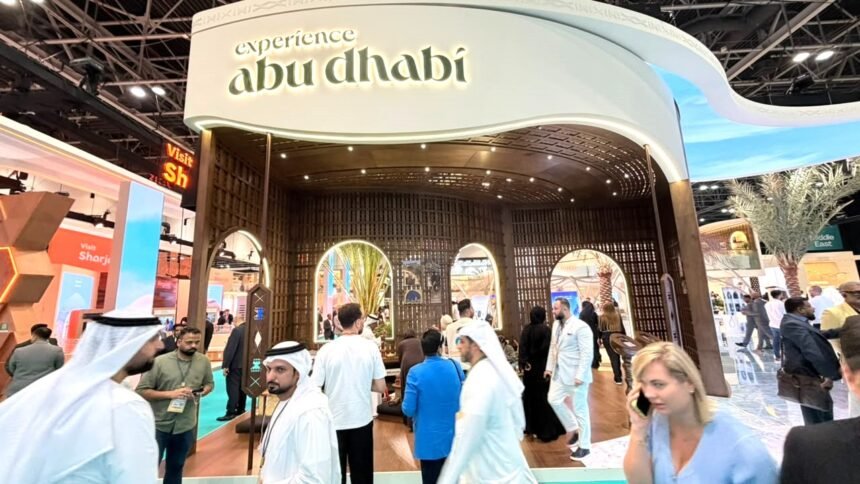
Dubai, UAE- Arabian Travel Market 2026 Special- Among the futuristic displays, international destinations and conversations about how technology will transform travel, two distinctly Emirati stories quietly captured attention at Arabian Travel Market 2026.
One could be seen in the golden lines of the traditional Emirati burqa. The other could be recognised before it was even seen—in the familiar scent of dukhoon, musk and perfume.
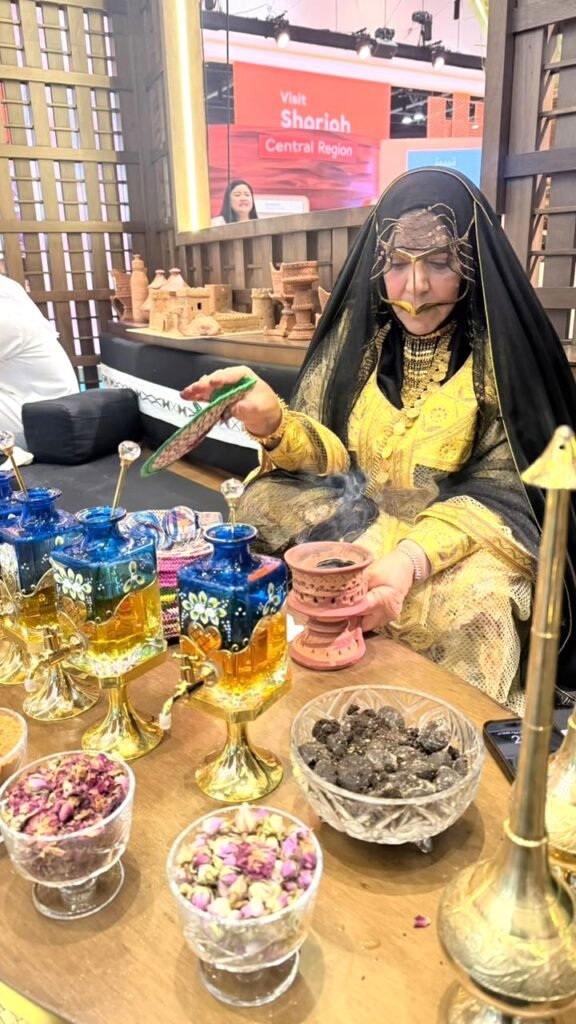
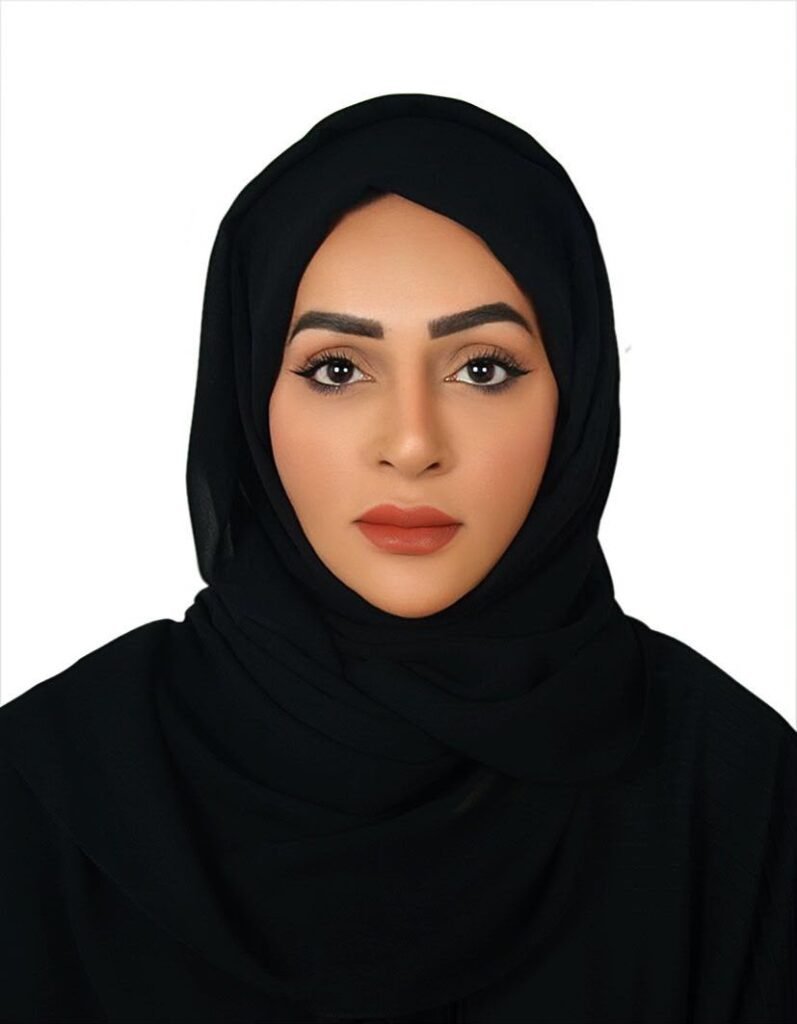
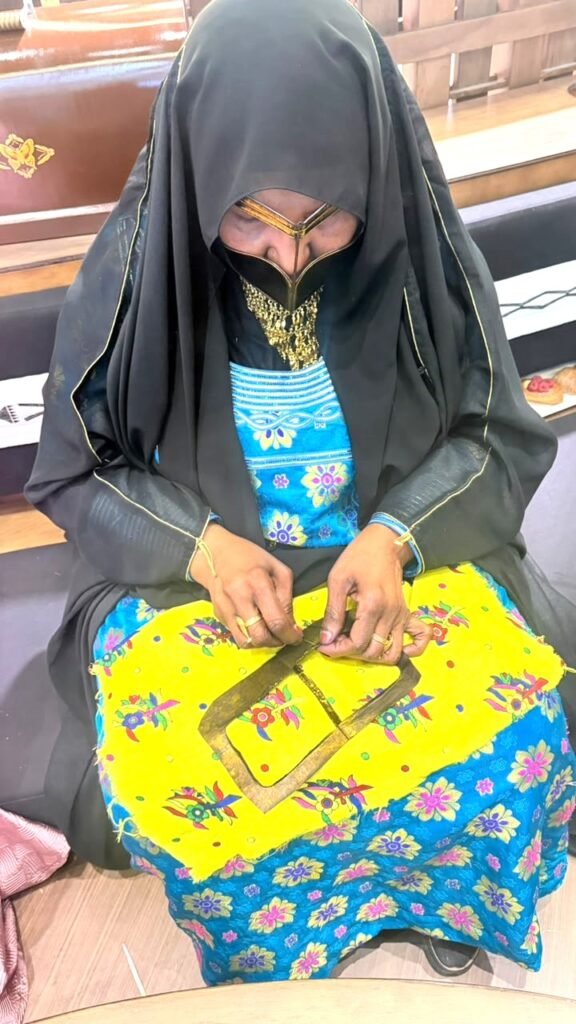
Behind them were two Emirati women, Subha Al Dhaheri, known as “Umm Obaid,” and Aisha Al Dhahouri, known as “Umm Mohammed.” During interviews with Emirates Reporter at ATM 2026, they shared how they are keeping traditions inherited from earlier generations alive while adapting them to contemporary life.
Their stories offered another way of looking at tourism. A destination is not remembered only for its hotels, landmarks or attractions. Sometimes, what stays with a visitor is a scent, a traditional craft or a conversation that reveals something about the people who call that destination home.
A burqa that carries generations of stories
For Umm Obaid, the traditional Emirati burqa is much more than a familiar image from the past.
It represents modesty, privacy and a social tradition that was once part of the everyday lives of generations of Emirati women.
“I am participating with the burqas because I want to display them before they are forgotten,” she told Emirates Reporter. “Women do not wear them as much as they did in the past. Today, they are mainly worn by our older mothers and grandmothers.”
Although the burqa is now less common in daily life, it continues to appear during national, cultural and family occasions, including Eid Al Etihad, Emirati Women’s Day, henna nights, weddings and the traditional bridal preparations known as the zahba.
For Umm Obaid, preserving the burqa also means preserving an understanding of what it originally represented.
“The burqa is about modesty, not decoration,” she explained. “It should not reveal the whole nose or be too open around the cheeks. Its original purpose is to give the woman privacy and modestly cover her face.”
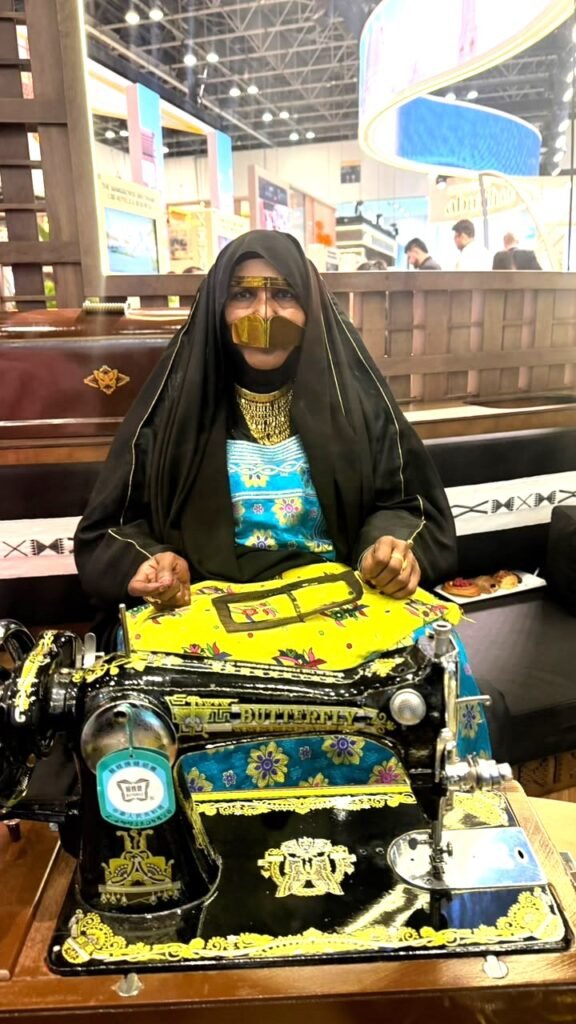
Her display demonstrated how the burqa itself has evolved. Different designs vary in shape, colour, width, material and eye openings.
Older fabrics could sometimes leave traces of colour on the face or hands, while newer golden materials offer a more practical alternative while retaining the distinctive appearance of the traditional burqa.
It is a small evolution, but one that reflects a much larger idea: heritage does not have to remain unchanged in order to remain authentic.
When visitors remember their grandmothers
Perhaps the strongest reaction to the burqa came through memory.
Umm Obaid said visitors frequently asked whether women in the UAE still wear it. For many Gulf visitors, seeing the traditional designs immediately brought back memories of mothers and grandmothers.
International visitors approached the display differently, asking how the burqa is made and worn and, in some cases, comparing it with traditional garments from their own cultures.
Those conversations turned a heritage display into a cultural exchange.
Umm Obaid hopes the next step will be to take the craft directly to younger generations through workshops in schools.
“I would love to organise workshops for girls in schools,” she said. “I want to teach them how to make the burqa step by step. The most important thing is for a girl to recognise this part of her heritage, even if she does not wear it every day.”
The scent of an Emirati home
If the burqa tells its story through sight, Umm Mohammed’s heritage is experienced through scent.
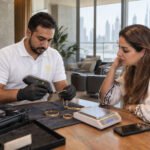
Travelling from Al Ain to participate at ATM, she brought with her handcrafted perfumes and dukhoon inspired by fragrances deeply associated with Emirati homes, family gatherings, weddings and hospitality.
“I am participating with perfumes and dukhoon so that visitors can see our products and learn about the craftsmanship of earlier generations,” she said.
“Everything I display is made by me. Each perfume has its own spirit and a different scent.”
Her collection includes perfumes carrying female names such as Aisha, Shamma, Ghalia, Reem, Shamsa and Ghala.
The names give the fragrances a personal character, almost as though each scent carries its own story.
Using traditional aromatic ingredients including musk, sandalwood, rose and mashmoom, Umm Mohammed creates the blends herself. Similar ingredients may appear across different perfumes, but changes in proportion and blending allow each fragrance to develop its own identity.
Mahleb and forgotten beauty rituals
The experience also introduced visitors to mahleb, an ingredient associated with traditional beauty preparations and wedding customs.
Umm Mohammed explained that mahleb is different from fenugreek, although the two are sometimes confused.
Combined with saffron, it can be used to prepare mukhamariya, a scented mixture traditionally used by women to perfume their hair and bodies, particularly around weddings and special occasions.
“The mahleb I display is especially used for mukhamariya and is mixed with saffron in the way our grandmothers used it,” she explained.
Showing visitors the ingredient both whole and ground allowed the conversation to go beyond fragrance. It became an opportunity to explain how women prepared and used these ingredients in earlier generations.
Dukhoon changes with the generations
Tradition is also evolving in the way dukhoon is prepared and presented.
Umm Mohammed explained that it was once commonly kept in larger pieces in trays, with smaller amounts taken when required.
Today, lifestyles have changed, and many people prefer smaller, ready-to-use pieces.
“In the past, dukhoon was kept in large pieces in trays,” she said. “Today, people prefer smaller pieces that are easier to use. I kept the original mixture but changed its form to suit the way people live now.”
The scent remains rooted in tradition. The way it reaches a new generation has simply changed.
That distinction is important. Heritage survives not only because it is preserved, but because people continue to find a place for it in their lives.
Heritage becomes part of the travel experience
At a global tourism exhibition, the presence of the burqa, perfumes and dukhoon may seem far removed from discussions about aviation, hotels, destinations and travel technology.
In reality, they are closely connected.
Modern travellers increasingly seek experiences that allow them to understand the culture behind a destination. A traditional craft, a family custom or even a familiar local scent can create a connection that goes beyond sightseeing.
At ATM, visitors could examine the details of a burqa, smell traditional ingredients and hear directly from the women preserving these practices.
For some, the experience created curiosity. For others, particularly visitors from the Gulf, it awakened memories.
Both reactions demonstrate the role heritage can play in tourism—not simply as something to observe, but as something to experience.
Looking forward without leaving the past behind
Arabian Travel Market 2026 was largely about looking ahead: new technologies, changing traveller expectations and ideas that could define the future of tourism.
Yet the conversations with Umm Obaid and Umm Mohammed offered an equally important perspective.
The future of travel may be driven by innovation, but the identity of a destination is still shaped by its people, culture and stories.
Preserving the Emirati burqa does not mean asking younger generations to return to the lifestyle of their grandmothers. Keeping traditional perfume and dukhoon alive does not mean resisting modernity.
Instead, both women are showing how heritage can evolve while remaining recognisable.
One preserves a tradition through fabric, shape and craftsmanship. The other preserves it through scent, ingredients and memories.
Together, their stories reflect an Emirates that continues to move confidently towards the future without losing sight of where it came from.
And perhaps that is one of the most meaningful lessons for modern tourism: technology can change how we travel, but culture is what makes us remember where we have been.
——————
ABOUT MUNA AL SUMAITI: With more than 14 years of experience in the UAE media industry, Our Consulting Editor, Muna Al Sumaiti, has worked closely with some of the country’s most recognized media brands, including Dubai TV, Sama Dubai, Dubai One, Al Bayan, Emarat Al Youm, Dubai Radio, Noor Dubai, Emirates 24/7, and Dubai Post. Her extensive background in media, marketing, partnerships, audience engagement, and brand development has made her a respected name in the industry. She is also the Founder of RSV Communications, a UAE-based consultancy specializing in strategic communications, reputation management, and brand growth.
All Images Courtesy: Muna Al Sumaiti