



SHARJAH, UAE- How did sailors find their way across vast oceans without GPS? And how did physicians study the human body centuries before modern medical technology? A remarkable collection of rare manuscripts displayed at Oman’s Guest of Honour pavilion is attracting considerable interest among visitors to the 45th Sharjah International Book Fair (SIBF 2026), with many stopping to examine the exhibits and discover the answers.
Displayed open in illuminated glass cases, the manuscripts offer a journey through centuries of Omani scholarship, revealing how generations of thinkers, navigators and physicians recorded their discoveries and passed their knowledge to those who followed.
Finding the way before GPS
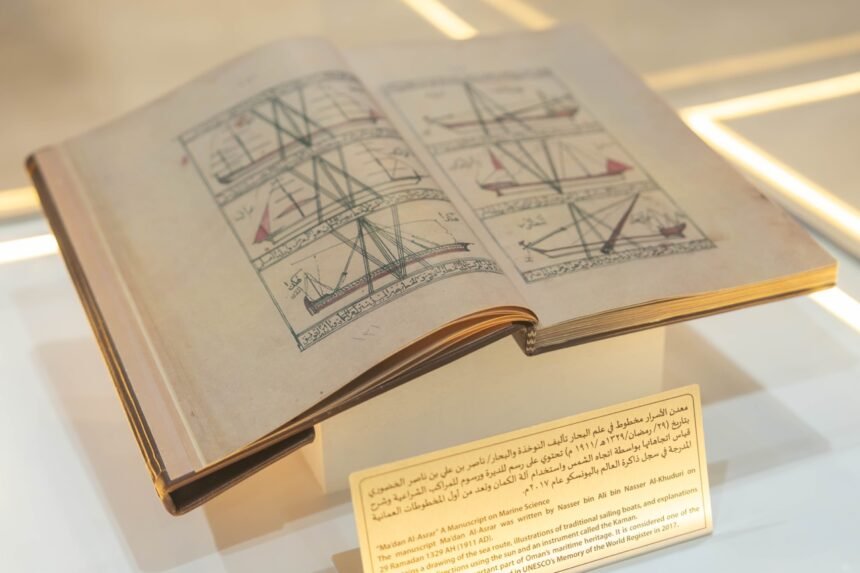
Long before satellites transformed navigation, Omani sailors relied on the sun and traditional instruments to find their way across the seas.
A glimpse into this world survives in Ma’dan Al-Asrar, a maritime manuscript written in 1911 by Nasser bin Ali bin Nasser Al-Khuduri. Its pages feature detailed drawings of traditional sailing vessels, complete with masts, rigging and sails, alongside illustrations of sea routes.
The manuscript explains how sailors determined direction using the sun and a traditional navigational instrument known as the Kaman. According to the exhibition display, the manuscript was included in UNESCO’s Memory of the World Register in 2017.

Exploring the human body
Centuries before modern medical imaging, Omani physicians were documenting their understanding of the human body through anatomical drawings and written observations.
Among the exhibits is a medical manuscript by Rashid bin Amira bin Thani Al-Rustaqi, an Omani physician who lived between the 10th and 11th centuries AH.
One of its most striking features is the combination of science and poetry. Alongside anatomical illustrations annotated in Arabic, the manuscript contains verses that describe various parts of the human body and methods of dissection, offering visitors a glimpse into how medical knowledge was recorded and taught centuries ago.
Nearly nine centuries of history
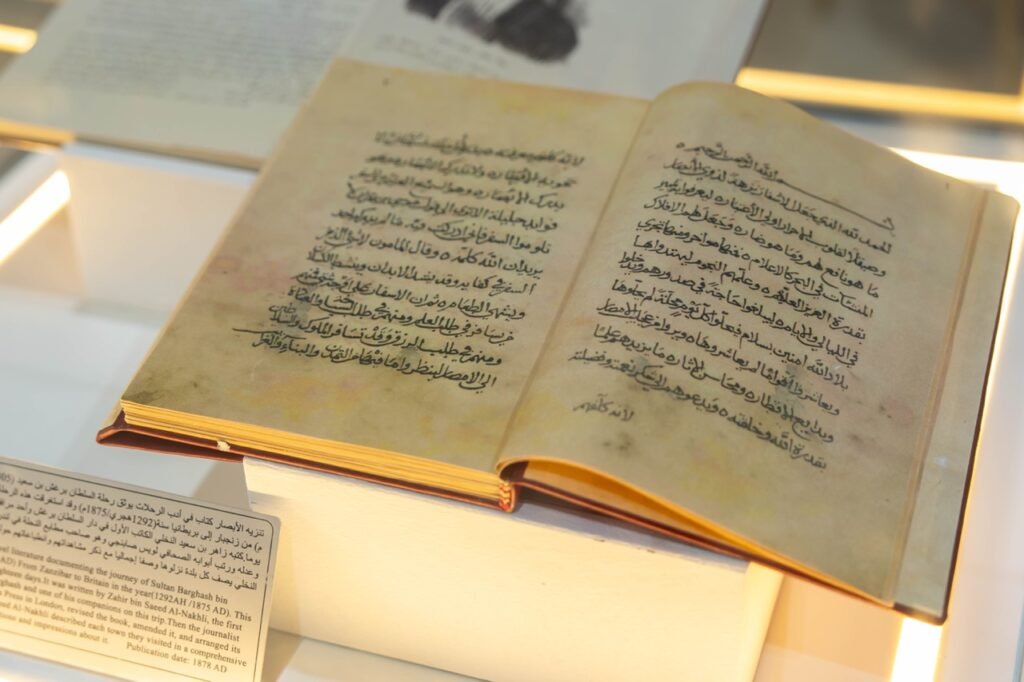
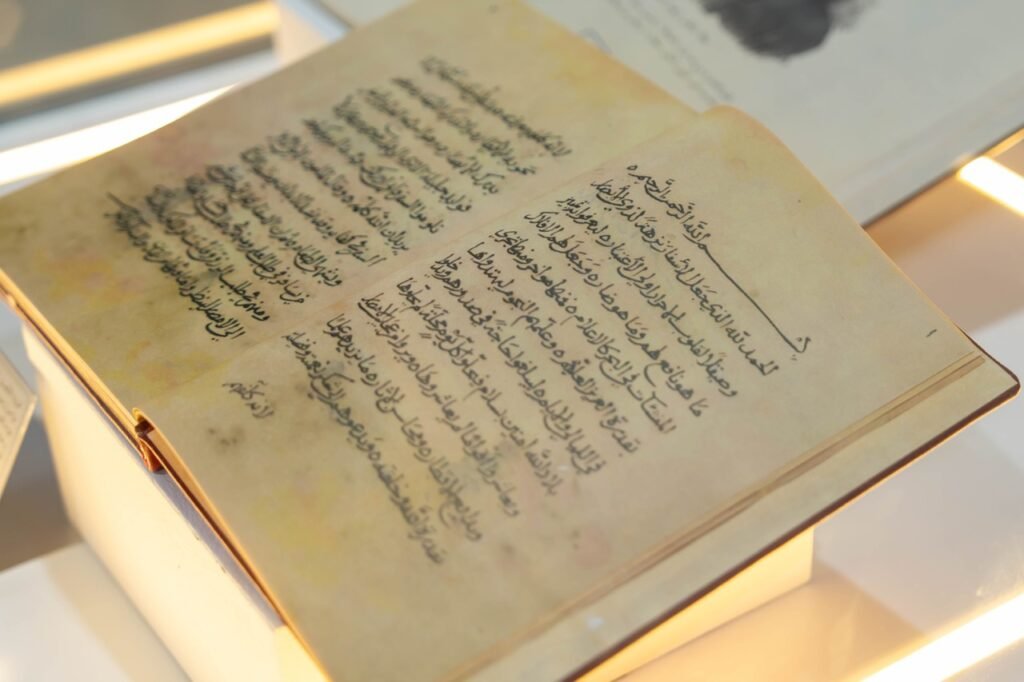
Taking visitors even further back in time is Majmoa Alsyar wa Aljawabat, a manuscript dated 531 AH (1136–1137 AD), which the exhibition describes as the oldest Omani manuscript discovered to date.
Its open pages are filled with densely written Arabic text, preserving a collection of biographies and answers that offers a rare connection to Oman’s intellectual past nearly 900 years ago.
Journeys recorded in ink
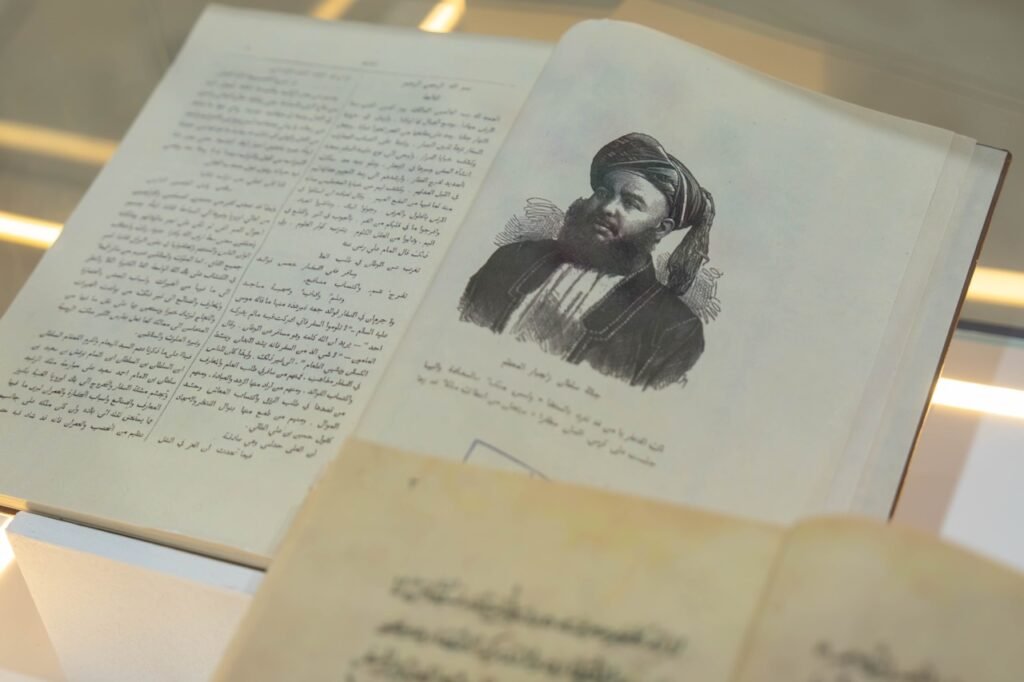
The collection also includes Tanzih Al-Absar, a travel account documenting Sultan Barghash bin Said’s journey from Zanzibar to Britain in 1875, a voyage lasting four months and 18 days.
Written by Zahir bin Said Al-Nakhli and published in 1878, the account records the places visited and observations made during the journey.
Another exhibit is a handwritten Quran dating to 1736, featuring an unusual decorative arrangement in which the opening and final lines of each page begin with the same letter.
Together, the manuscripts offer visitors a close look at the drawings, writings and historical records preserved by generations of Omani scholars.