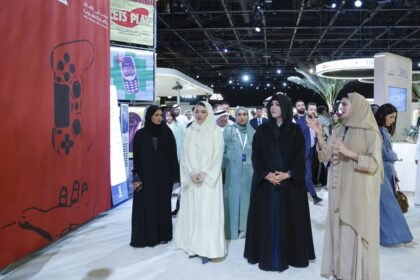



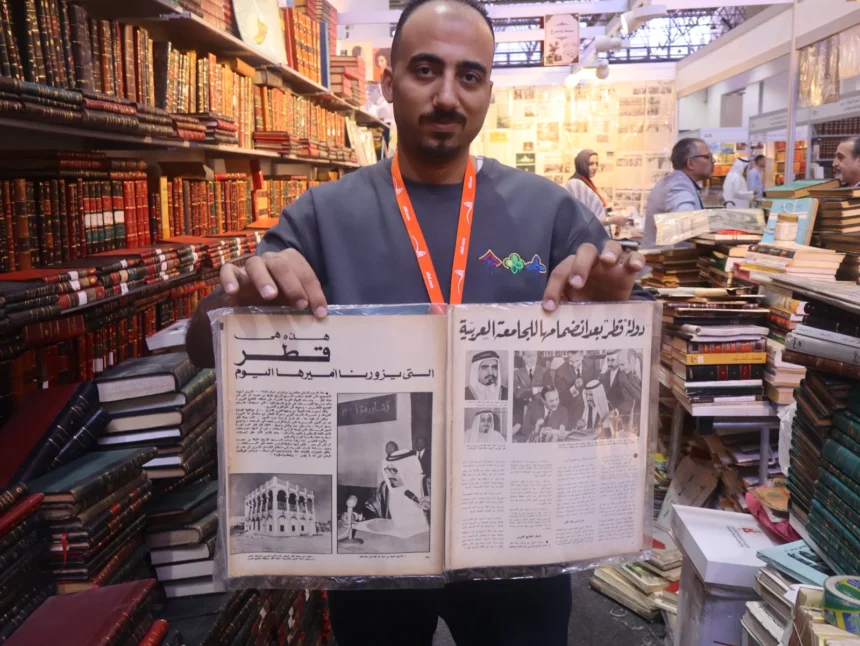
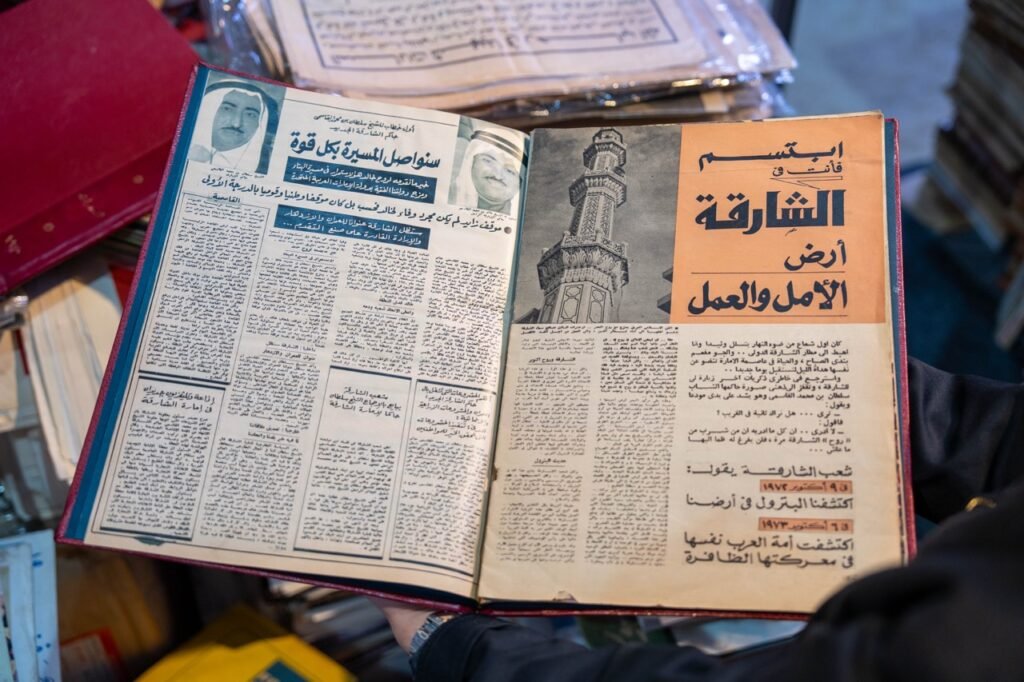
SHARJAH, UAE– A rare magazine carrying an early speech by His Highness Sheikh Dr. Sultan bin Mohammed Al Qasimi, Supreme Council Member and Ruler of Sharjah, is among the historical treasures on display at the 45th Sharjah International Book Fair (SIBF 2026), offering visitors a glimpse into the vision that has shaped the emirate for more than five decades.
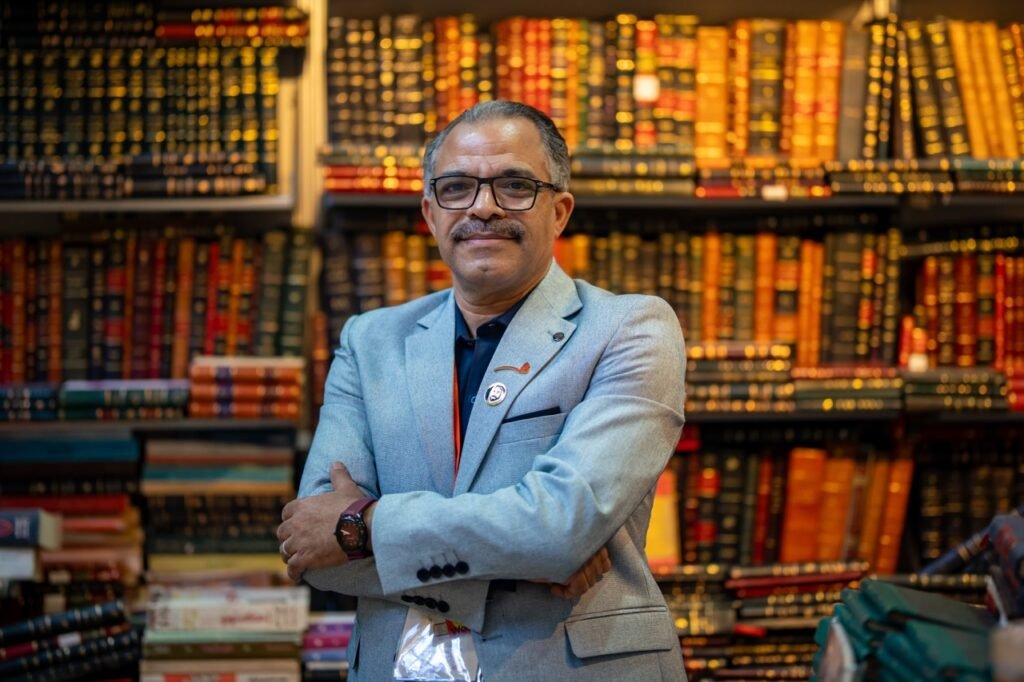
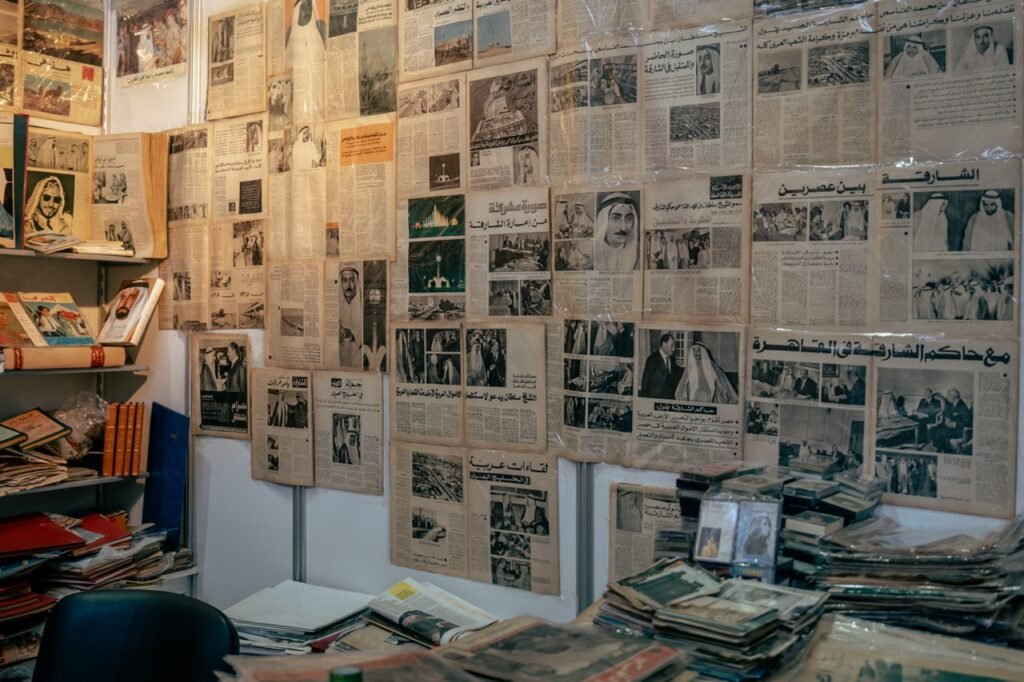
The magazine “Akher Sa’ah” is part of a collection assembled by Egyptian archivist Mohamed Sadiq, Director of the Arab Heritage Archive Foundation in Egypt. With records dating back to 1954, the collection traces Sharjah’s transformation through original newspapers, magazines, books, and photographs from several countries.
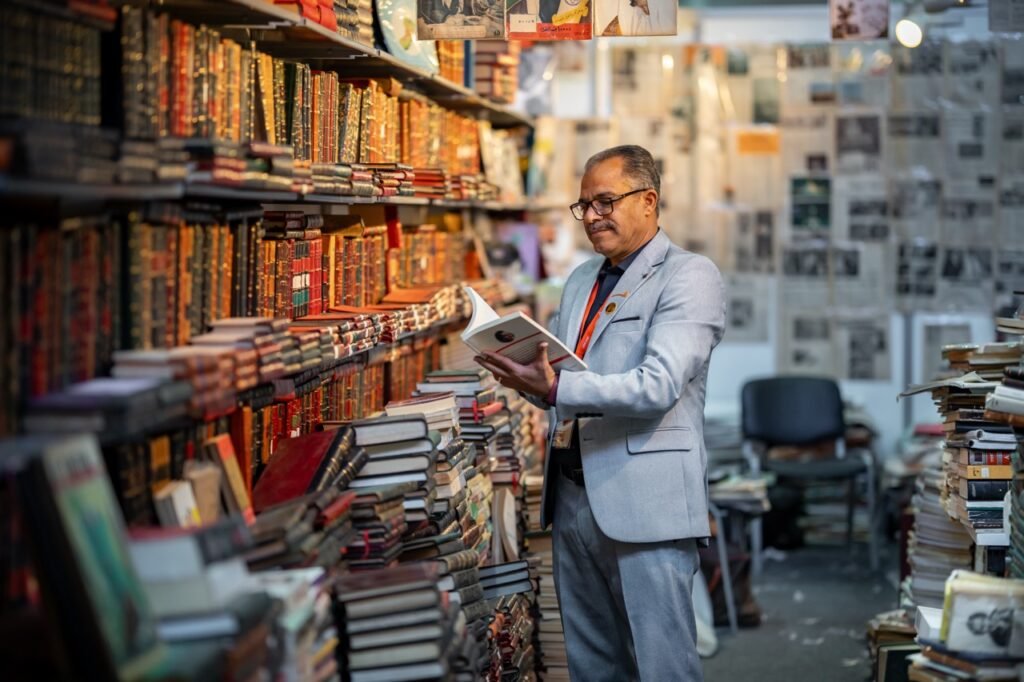
Participating in the fair for the fourth time, Sadiq has brought together historical accounts that reveal how Sharjah’s development has been guided by an enduring emphasis on culture, education, heritage and investment in people.
“When His Highness Sheikh Dr Sultan assumed power in 1972, he spoke about building an ideal city, Islamic architecture and investing in people,” Sadiq recalled, adding: “Building people was the most important thing.”
For Sadiq, that vision is closely tied to the emirate’s enduring cultural identity. “Sharjah is a land of heritage that preserves its heritage,” he said.
A city’s history preserved in print
Sadiq has spent years searching for publications documenting Sharjah’s history, gathering material from the UAE, Egypt, Jordan, Syria, Palestine, Sudan, France and beyond.
Published in Arabic, English and French, the records capture official visits, educational milestones, major projects and defining moments in the emirate’s development.
“This year, I decided to bring the history of Sharjah over the past 60 years,” he said, describing the extensive research behind his collection.
“It is the story of a city built from A to Z. The history and archives I have, tell that story,” he said.
The publications also document Sharjah’s recognition of scholars, intellectuals and cultural figures, offering a record of how its cultural identity has developed over the years.
Childhood memories across generations
Sadiq’s display also takes visitors back to their childhoods through vintage newspapers, photographs, books and popular children’s publications, some nearly a century old.
Among them are comics featuring Mickey Mouse, Superman, Tarzan, Samir and Majid, inviting parents to revisit the stories and characters that shaped their childhoods.
“A father comes with his children and shows them what he used to read when he was young,” Sadiq explained, describing how the publications spark intergenerational conversations as parents share their childhood memories and introduce their children to the stories they once loved.
The collection also includes historical material on women in the UAE, the establishment of universities, the unification of the Armed Forces and other chapters in the UAE’s history.
History through many voices
For Sadiq, the value of these records lies in preserving how events were reported at the time. Drawing on publications from different countries and languages allows future generations to explore history through multiple perspectives.
Each surviving page offers a window into another era, allowing visitors to discover the ideas, decisions and achievements that shaped Sharjah, and the history that continues to inspire its people.