



SHARJAH, UAE- Stories have survived centuries of change, adapting to new audiences, technologies and ways of communicating. But with shrinking attention spans, declining reading habits and education systems increasingly focused on science and technology, is storytelling losing its place in contemporary life?
At the 45th Sharjah International Book Fair (SIBF 2026), a panel titled ‘Who Is Killing the Story?’ challenged that premise, arguing that storytelling is not dying but evolving. Held in the presence of H.E. Charkrienorrathip Sevikul, Consul General of Thailand in Dubai, the session featured Thai writer Rewat Panpipat, Tunisian novelist Dr Nizar Chakroun, and Dr Hasan Al Naami. Moderated by Louis Denham, the discussion explored the pressures facing literature and the enduring human need for stories.

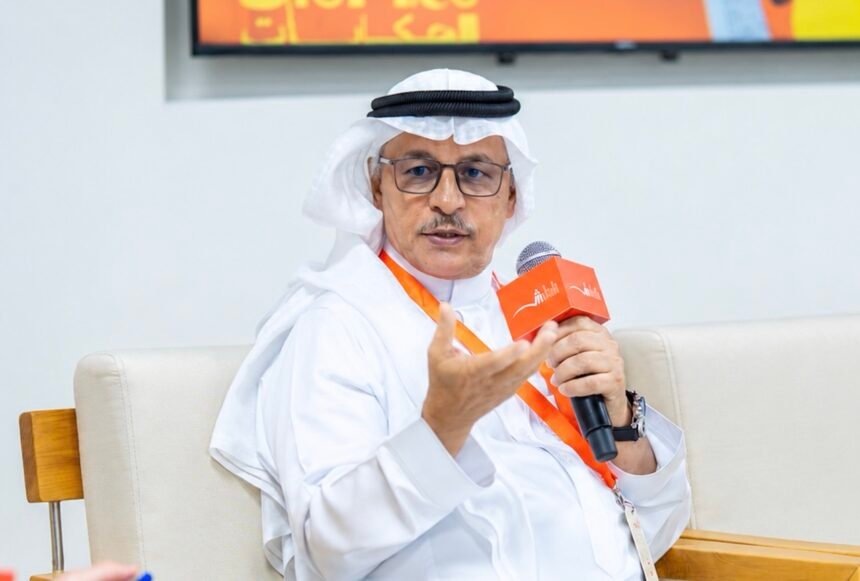
Dr Nizar Chakroun
Dr Al Naami rejected the notion that storytelling was disappearing, tracing its evolution through Arab literary traditions, from folk narratives and travel literature to One Thousand and One Nights.
“No one is killing the story. It is alive; it is simply transforming to keep pace with the world we live in,” he said.
Dr Chakroun questioned the session’s premise, arguing that asking who is killing the story assumes a crime has already been committed.
“This fear is not new. Every generation has worried that something new would bring an end to storytelling,” he said, recalling how the invention of photography once raised concerns that images would replace imagination and human memory.
“Today, we are exaggerating the idea of storytelling’s death. As long as humanity exists, stories will continue to exist,” he added.

The changing place of literature in education
Panpipat expressed concern about literature’s declining presence in schools as education increasingly prioritises STEM subjects and applied sciences.
Recalling how reading at school nurtured his love of literature, he warned that children could miss out on opportunities to discover storytelling and develop their imagination.
“When literature disappears from the classroom, we risk losing one of the earliest opportunities for children to discover the pleasure of reading and the power of imagination,” he suggested.
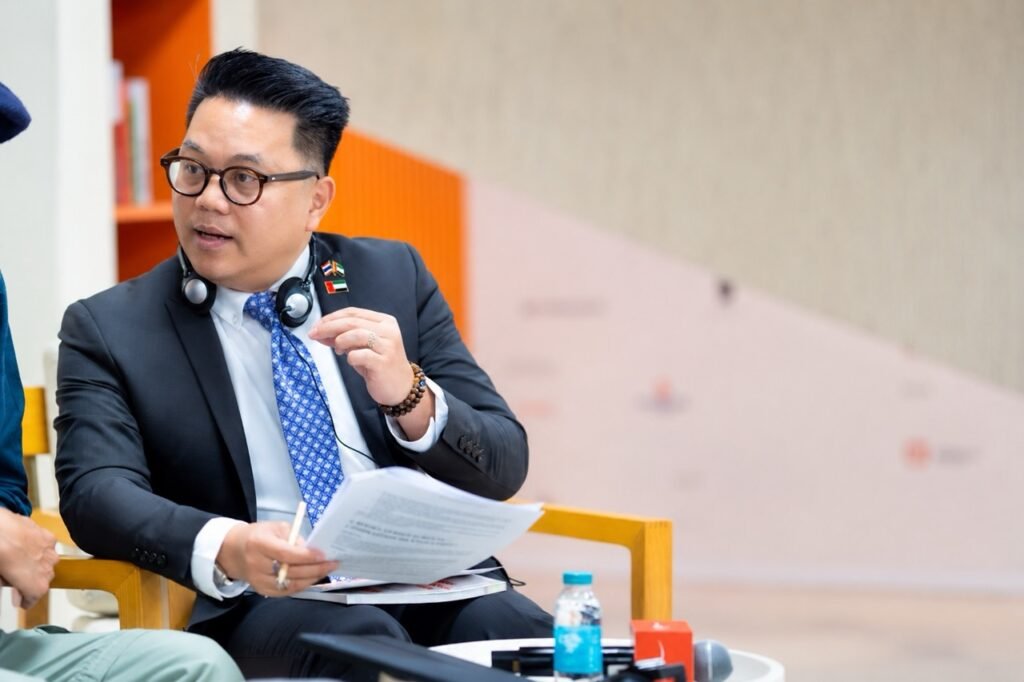
Consul General Shakir Sevikul
Stories, memory and technology
Dr Al Naami also highlighted the importance of place and belonging in storytelling, observing that constant movement in modern life can weaken people’s connections to the memories and experiences that inspire narratives.
“Storytelling needs a sense of place. It draws on memories, belonging, and the experiences we accumulate over time. When people are constantly moving, maintaining those connections becomes more difficult,” he said.
Addressing technology’s influence, Dr Chakroun acknowledged the challenges of diminishing attention spans but remained optimistic.
“We are facing a real challenge in the age of technology, but storytelling is an epic that will outlive these changes. The novel and other literary forms still have many years ahead of them,” he said.
He also warned that neglecting the humanities in education could weaken future generations’ imaginative and creative abilities.
Dr Al Naami concluded that while storytelling platforms may change, the story itself will endure.
“The novel will remain, but perhaps its expression will move increasingly from the printed page to the screen. The story itself will never disappear; only the forms through which we tell it will change,” he said.
The 45th Sharjah International Book Fair (SIBF 2026), organised by the Sharjah Book Authority, runs from November 4 to 15 at Expo Centre Sharjah under the theme ‘Between You and a Book’. Bringing together publishers, authors, intellectuals and cultural institutions from around the world, the fair features an extensive programme of literary discussions, cultural activities, workshops and book signings, reaffirming Sharjah’s position as an international centre for publishing and cultural exchange.