



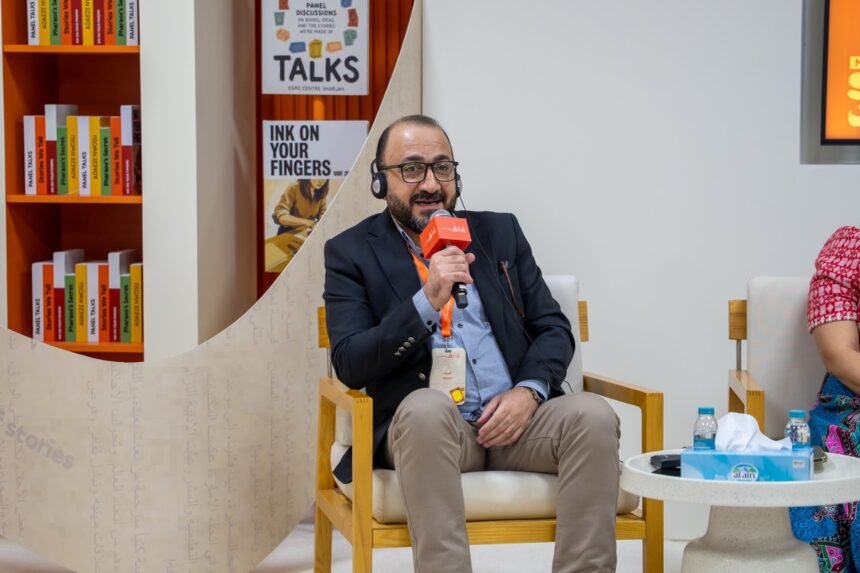
SHARJAH, UAE- The concept of ‘Women’s Fiction’ as a genre often categorises literary works by women into a reductive box, according to Filipina author Claire Betita de Guzman, Lebanese author and researcher Iman Humaydan, American journalist and author Hafsa Lodi, and Iraqi author Azher Jirjis, who addressed the issues of misrepresentation in the publishing sphere at the 45th International Book Fair (SIBF 2026).
Moderated by author and producer, Daniela Tully, the session titled ‘Does It Matter Who Wrote It?’ brought together these four literary figures to analyse the methods undertaken when publishing novels written by different authors across diverse circumstances.
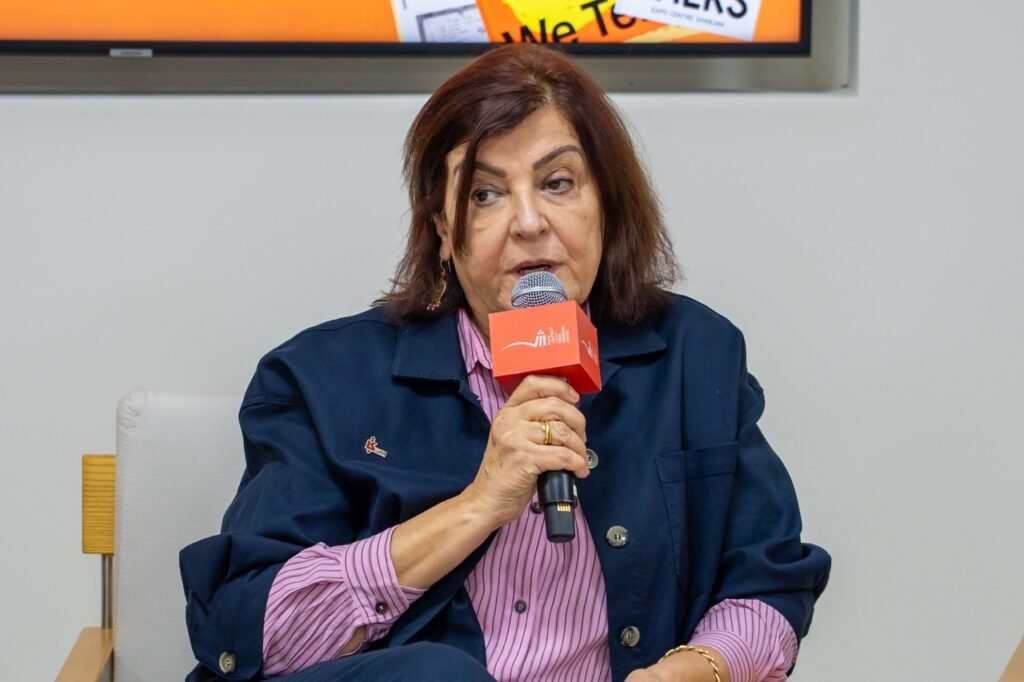
Iman Humaydan
Literary works of female authors have often been categorised under the identity of ‘chick-lit’ or ‘women’s fiction’. The panellists observed that book covers of female-authored books are designed to fit a classification, whereas works by male authors have been granted the liberty to be represented in whichever category or genre that is appropriate.
According to Guzman, who is known for works such as No Boyfriend Since Birth (2003), Sudden Superstar (2023), and more, her first book received a significant amount of praise from Filipina readers, whilst at the same time her novel was not considered ‘serious’ or ‘high-brow’ enough to be considered a successful novel.
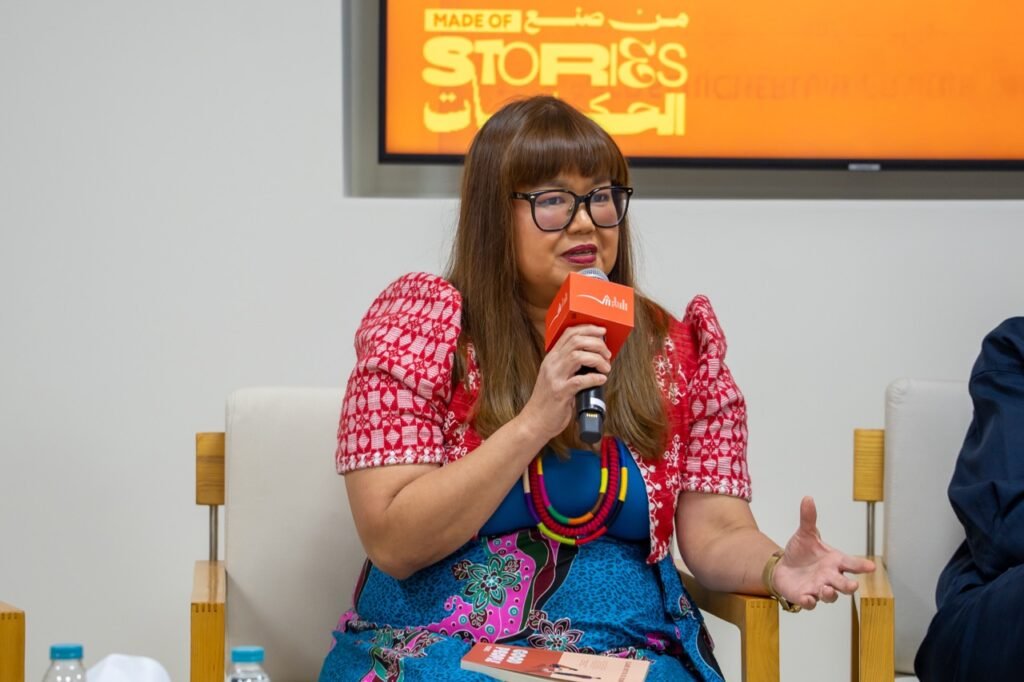
Claire Betita de Guzman
“I would hear that my debut novel is ‘light reading’, or that it’s ‘just for girls’, whilst I had several readers write to me saying that they were inspired by my book,” she said.
Humaydan, who is known for novels such as B as in Beirut, Wild Mulberries, and more, talked about being boxed in female-dedicated categories, and about not being represented accurately with works that are translated. She highlighted that when books reach international spaces, there is the risk of them losing their original meaning.
“The greatest translation is when text imposes its original essence,” she said.
The Lebanese author additionally stated that historical fiction by female authors often gets sidelined into the category of ‘women’s fiction’, in turn negating the nuance meant to be attached to the novel.
Lodi, who is known for works such as Modesty: A Fashion Paradox (2020) and Turbulence (2026), said that she is disgruntled with questions probing female authors about the similarities between the protagonist and the author.
“When such questions are asked, it feels more like a dig into the lives of the author than an interest in the narrative,” she said.
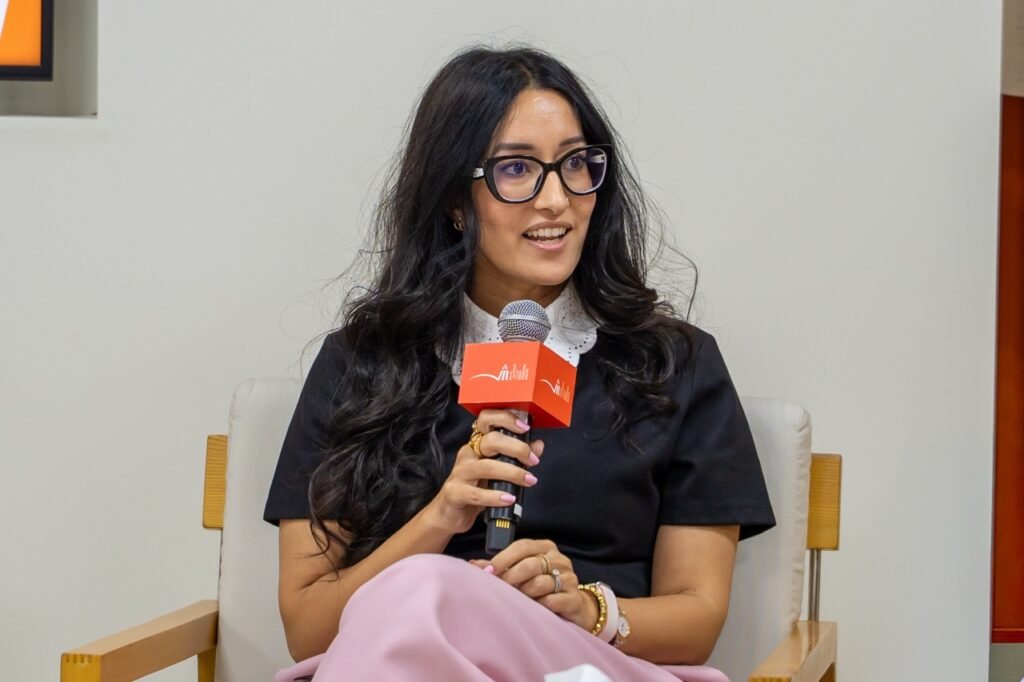
Hafsa Lodi
Iraqi author, Jirjis, emphasised the importance of judging a book by its quality, and not the external characteristics attached to it.
The discussion concluded by underscoring that literary works should be evaluated on their artistic merit, themes and ideas, rather than being confined to categories determined by the writer’s gender.
Organised by the Sharjah Book Authority, the 45th Sharjah International Book Fair (SIBF 2026) runs from November 4 to 15 at Expo Centre Sharjah under the theme ‘Made of Stories’, with the Sultanate of Oman as Guest of Honour. The fair brings together 3,212 publishers and exhibitors from 126 countries, showcasing more than 1.7 million titles. Its programme features 1,500 cultural, creative and artistic events, with 106 guests from 25 countries.