


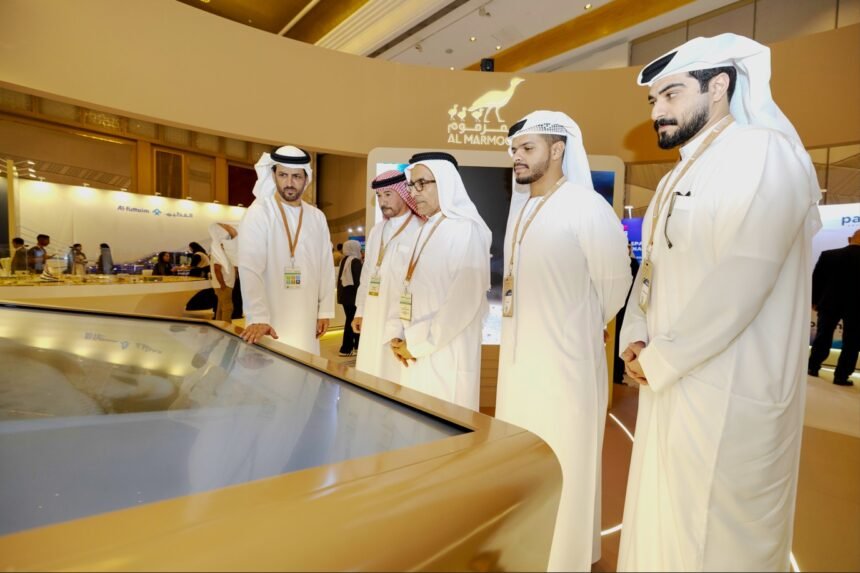
Focus on Marine Conservation, Biodiversity, Air Quality, Climate Resilience and Water Security
Dubai, UAE- The inaugural Dubai Environment Conference & Exhibition (DECE 2026) concluded this afternoon following two days of expert discussions examining the UAE environment and the challenges facing the wider Middle East, from marine conservation and biodiversity to air quality, climate resilience, and water scarcity.
Hosted by the Dubai Environment and Climate Change Authority (DECCA), the event at Grand Hyatt Dubai brought together more than 60 speakers from across the Emirates and wider regional environmental community. Panellists included, among others, representatives from UAE Government entities, academics from New York University Abu Dhabi (NYUAD) and the Kuwait Institute for Scientific Research, representatives of environmental organisations such as Emirates Nature-WWF and the International Union for Conservation of Nature (IUCN), and ESG specialists from Emirates NBD and Al-Futtaim Group.
Across two days of panel discussions and expert sessions, speakers explored the pressures facing the Arabian Gulf’s marine ecosystems, the importance of protecting biodiversity, the health and economic implications of air quality, and the need to diversify water sources, while highlighting the need for continued research, cross-sector collaboration, and international cooperation.
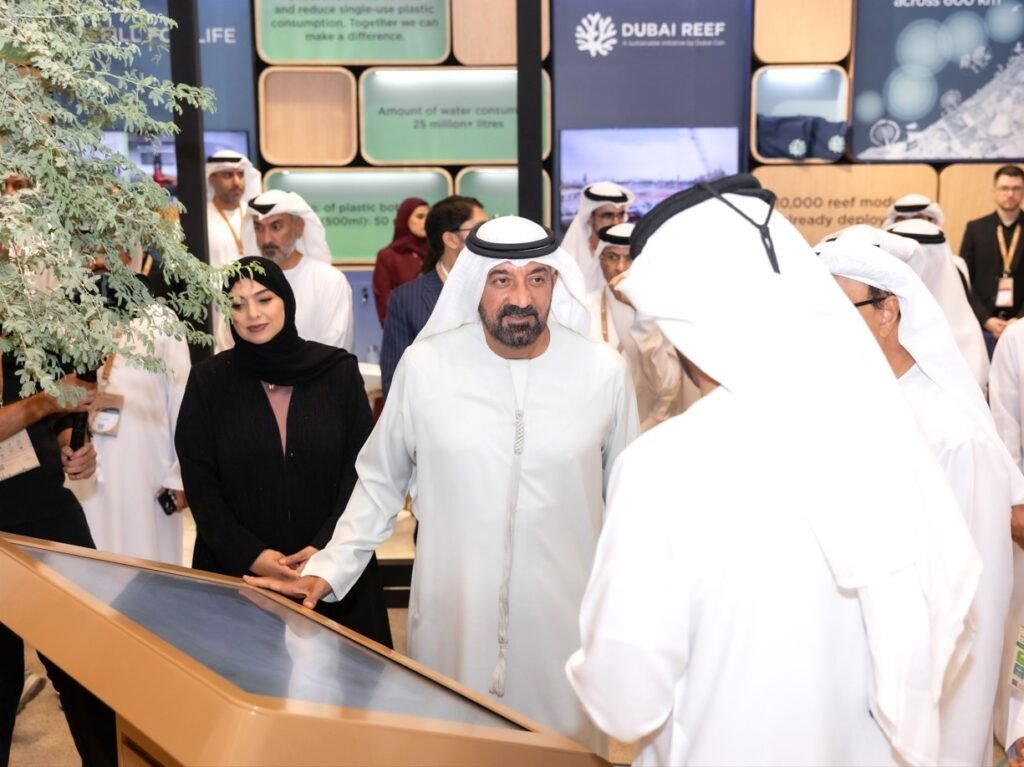
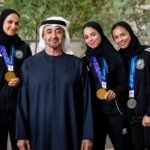
H.H. Sheikh Ahmed bin Saeed Al Maktoum, Chairman of the Dubai Supreme Council of Energy, inaugurated the first edition of the Dubai Environment Conference and Exhibition (DECE 2026)
DECE 2026 – described by Peter Farrington, DECCA’s Principal Environmental Research Specialist, as a “monumental occasion” and “the first of many” – kicked off with a panel discussion exploring marine conservation, titled “One Ocean Connecting Us: Conserving Coastal Marine Ecosystems”, where Professor John Burt, Director, Mubadala Arabian Centre for Climate & Professor of Biology at NYUAD outlined both the attractions and vulnerabilities of the Arabian Gulf, calling it “one of the world’s most interesting seas”. He explained that not only is it home to four per cent of the planet’s seagrass beds, but also its most heat-tolerant coral reef, able to survive temperatures of 36 degrees Celsius.
“For us, the Arabian Gulf represents an important natural laboratory to try and understand how organisms cope with and respond to extreme environmental conditions – questions that are incredibly important as our climate continues to change globally,” said Professor Burt. “We can look at the systems here and use the insights to try and forecast what might happen in other parts of the tropics as the water there becomes more Gulf-like in the coming decades.”
During a session on biodiversity, attendees heard how the Emirates’ bird population of 320 species is not far off Canada’s 393, despite the latter being the second-largest country in the world by area. Featuring Her Excellency Hiba Al Shehhi, Undersecretary Biodiversity at the Ministry of Climate Change and Environment (MOCCAE), and Dr Hany El Shaer, Regional Director ROWA at the International Union for Conservation of Nature, the discussion emphasised the need for international cooperation, especially for the wellbeing of migratory species such as dugongs and sea turtles, and constant evolution of the regulations protecting the environment.
“In the UAE, we have worked on anchoring biodiversity in our national development policies and developed a strategy specifically for this,” said HE Al Shehhi. “We’ve also worked heavily on updating our legislation regarding wildlife trading. Luckily, with the amazing leadership we have, we were able to increase the penalties for people who are trying to smuggle wildlife species 40-fold. We are talking about a comparison between six months in prison to 15 years under the new law; from Dh50,000 fines to fines of Dh2 million. This is one of our ways to show we have zero tolerance when it comes to wildlife trafficking.”
Taking place on the International Day of Blue Skies, Monday’s opening afternoon session was a panel talk entitled The Air Around Us: Managing Air Quality for Healthier Cities, in which Dr Oriol Teixidó, Air Quality Associate Director at WSP Middle East, argued that as much as the quality of air is a question of public safety, it must also be seen through an economic lens.
“Air quality is a health issue – unfortunately, every year 7-8 million people die around the world because of poor air quality,” said Teixidó. “The UAE acknowledges it and it is why they are working hard on it. But it also makes economic sense because the business case is very clear: The United States Environment Protection Agency did an assessment and found that for every US$1 they invested in air quality, they got US$30 of societal benefit. I don’t know about you, but there is no bank that gives me that return of investment, so the case is clear.”
On Tuesday morning, Shaima Gargash, Director of Energy and Sustainability at the UAE Ministry of Foreign Affairs, detailed how the UAE’s hosting of the third United Nations Water Conference in Abu Dhabi from 8-10 December highlights the country’s aims to elevate water management to a high political level and involve various sectors.
During her participation in the panel Rethinking Our Water Resources: Looking at all Sources of Water, Gargash explained: “we want to bring in the highest level of government officials as possible. Yet we also need to make sure that everyone values water. The responsibility is distributed and not on governments alone. The different sectors and stakeholders need to be a part of it – from the youth to academia to private sector, tech industries. Everyone needs to play a part in sustaining water.”
Meanwhile, leading entities from the private and public sectors showcased their innovative solutions in the exhibition area. These included drone solutions for marine and land monitoring, eco-friendly mobility solutions, including cutting-edge hydrogen and electric vehicles. Meanwhile, DEWA showcased its advanced ecosystems to integrate solar-power plants into Dubai’s grid, while Dubai Reef introduced attendees to its efforts is sustaining marine life across Dubai’s waters.
Aiming to activate the role of wider community segments, DECCA collaborated with the Hamdan bin Mohammed bin Rashid Al Maktoum International Photography Awards to launch “Through a Lens that Protects Nature and Preserves the Future”. The photography competition invited photographers from around the world to capture the extraordinary beauty and diversity of nature across the UAE; from remarkable wildlife and breathtaking landscapes to the hidden wonders beneath the water’s surface.
The competition welcomed more than 1,000 submissions capturing the beauty of nature in the Emirates, from the smallest creatures to the most commanding wildlife, across land and under water. With a total prize value in excess of Dh100,000, the competition celebrated 10 winners across four categories including, wildlife, natural landscape, underwater world, and nature reimagined with AI.
The inaugural DECE 2026 brought together government leaders, policymakers, academics, industry leaders, researchers, innovators and youth around six strategic themes: Climate action, biodiversity, food security, natural resources, the circular economy, and environmental artificial intelligence. The event supported DECCA’s efforts in line with National Climate Change Plan 2017–2050, the UAE Net Zero 2050 Strategy, the National Green Agenda 2030, the Dubai Economic Agenda D33 and the Dubai 2040 Urban Master Plan.
SOURCE: MEDIA RELEASE / SUPPLIED CONTENT WITH IMAGES
READERS, DO NOT MISS–