

By Amit Kakkar, Managing Editor, EmiratesReporter.com
Dubai, UAE- At a time when many global economies are struggling with inflation, slowing growth, geopolitical tensions, and market uncertainty, the United Arab Emirates continues to stand out as one of the world’s most confident and resilient economies. Investors, businesses, entrepreneurs, and even global financial institutions remain highly optimistic about the UAE’s future and this confidence is not based on hype. It is backed by real numbers, strong leadership, economic diversification, and long-term planning.
One of the biggest reasons behind this confidence is the UAE’s success in reducing its dependence on oil. For decades, Gulf economies were seen mainly as oil-driven markets. But today, the UAE has transformed itself into a diversified global business hub. According to official figures, non-oil sectors contributed more than 77 percent of the UAE’s GDP in 2025, the highest level in the country’s history. Non-oil GDP grew by over 5 percent during the same period, driven by tourism, real estate, manufacturing, trade, logistics, finance, and technology.
This shift is extremely important because it means the UAE economy is no longer fully dependent on fluctuations in oil prices. Even during periods of global energy uncertainty, the country continues to grow through multiple sectors. Dubai, for example, has become one of the world’s leading centers for tourism, aviation, financial services, and international trade. Abu Dhabi, meanwhile, is investing heavily in technology, clean energy, AI, and manufacturing.
Another major reason for confidence is the UAE’s stable and business-friendly environment. In a world facing political and economic instability, the UAE offers something investors value greatly: predictability. The country has modern infrastructure, low taxation, world-class airports and ports, strong banking systems, and investor-friendly laws. Policies such as long-term residency visas, 100 percent foreign ownership in many sectors, and fast business setup processes have made the UAE highly attractive for global talent and international companies.
The numbers reflect this confidence clearly. The International Monetary Fund (IMF) has projected UAE economic growth to remain stronger than many regional and global economies. The IMF stated that the UAE has shown strong resilience despite global uncertainty and regional tensions, while sectors such as tourism, construction, and financial services continue expanding rapidly.
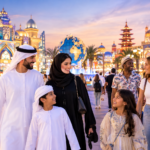
Tourism itself has become one of the UAE’s strongest success stories. Millions of visitors continue to arrive every year, helping hotels, restaurants, airlines, retail businesses, and entertainment sectors grow rapidly. Dubai remains among the world’s busiest international travel hubs. Major events, luxury tourism, business conferences, and entertainment projects continue attracting global attention and investment.
The UAE is also positioning itself as a future-focused economy. Artificial intelligence, green energy, fintech, digital transformation, and innovation are becoming central parts of national strategy. Government initiatives are pushing both public and private sectors toward advanced technology adoption. The country understands clearly that future economic power will not come only from natural resources, but from knowledge, innovation, and global connectivity.
Importantly, confidence in the UAE economy is not limited to government statements alone. International investors continue pouring billions into the country’s property markets, financial sectors, startups, and infrastructure projects. Foreign trade has also reached historic milestones, with non-oil trade crossing major records in recent years.
The UAE’s economic resilience has become even more remarkable because it managed to maintain strong momentum despite rising geopolitical tensions across the Middle East and growing global uncertainty. While many economies around the world faced inflation shocks, supply chain disruptions, energy instability, and declining investor confidence, the UAE remained calm, stable, and economically active. The country’s leadership moved quickly to protect residents, businesses, and investors from major financial disruptions. Fuel availability, food supply chains, banking operations, tourism activity, and trade flows continued smoothly even during periods of regional tension. Unlike several global markets that witnessed panic and economic slowdown, the UAE ensured that daily life and business confidence remained largely unaffected.
One of the key reasons behind this stability was the UAE’s balanced diplomatic approach and strong financial preparedness. The country maintained its position as a trusted global trade and logistics hub while continuing to attract international investment. Dubai’s airports, ports, and free zones remained highly active, while sectors like tourism, hospitality, aviation, retail, and real estate continued to grow strongly. The UAE also benefited from its reputation as a safe haven for global talent, multinational companies, and wealthy investors seeking economic security in uncertain times. Even during challenging geopolitical developments in the wider region, property investments surged, hotel occupancy remained strong, and consumer spending continued at healthy levels. This ability to shield residents and businesses from external shocks while keeping growth momentum alive has significantly strengthened confidence in the UAE economy and reinforced its image as one of the world’s most stable and future-ready economic destinations.
Of course, no economy is completely immune to global risks. Rising interest rates, geopolitical tensions, and global slowdowns can still create challenges. However, the UAE has repeatedly shown an ability to adapt quickly and respond effectively. That adaptability itself has become one of the country’s greatest strengths.
The reality is simple: confidence in the UAE economy remains exceptionally high because the country has built far more than just oil wealth. It has built trust, infrastructure, ambition, and global relevance. In today’s uncertain world, that combination is rare and investors across the world recognize it.