


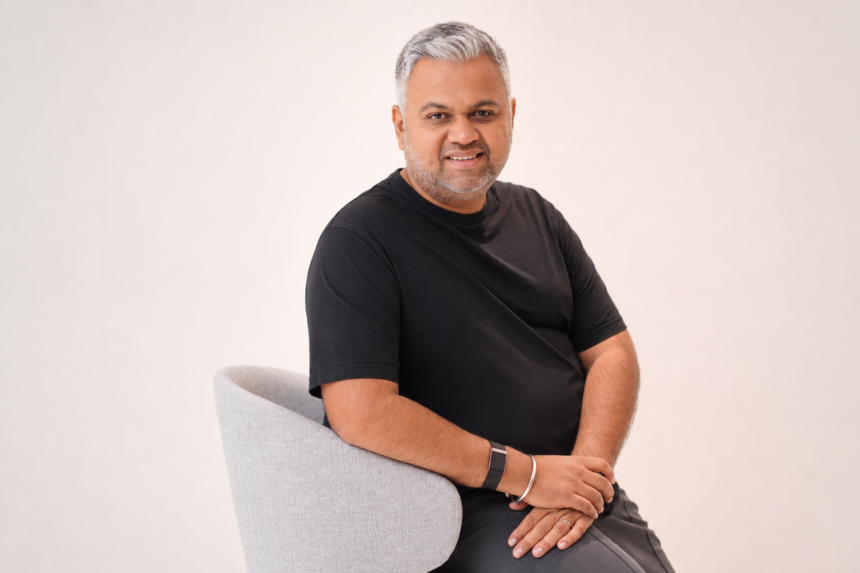
Dubai, UAE- Dubai’s property market is entering a more selective phase after years of strong growth, with changing prices, rising supply and evolving investor sentiment reshaping the landscape. To understand what the current market means for buyers and investors, EmiratesReporter.com spoke exclusively with Tahir Majithia, Managing Partner of Prime Capital Real Estate and a real estate investment advisor with more than two decades of experience. He shares and places on record his views and insights on where Dubai’s property market stands today and where the next opportunity could emerge.
E.R- Are Dubai property prices starting to slow down?
Tahir Majithia– Yes, and I would rather say that plainly than pretend otherwise. After four years of double-digit growth, Dubai has moved into a period of moderation. CBRE’s second-quarter review put residential sales prices just 1.9% higher than a year earlier, and the regional conflict that began at the end of February produced the first quarterly decline in values since 2020. Some indices measured the fall between February and June at close to 10% before the market found its floor.
What matters more than the headline is where the slowdown is happening. Established villa communities, prime waterfront and central apartments, and ready homes in mature districts have held their value or dipped only briefly. The real softening is in off-plan stock launched at peak pricing and in apartment districts where a great deal of similar product is being delivered at once. A slower market is not the same as a falling market, and for anyone who has watched Dubai through several cycles, single-digit growth after the run we have had is a healthy outcome rather than a worrying one.
E.R- What is happening to rental prices across Dubai? (Residential and Commercial)
Tahir Majithia– Residential and commercial rents are moving in opposite directions, and that divergence is one of the most interesting features of the market right now.
Residential rents have come off. CBRE recorded average rents down 6.2% quarter on quarter in the second quarter and 2.6% lower than a year earlier. Roughly 18,000 to 25,000 new homes were handed over in the first half of the year, depending on whose count you use, which is a record for a six-month period. Tenants have more choice than they have had in years and are negotiating harder on both rent and terms. In a handful of heavily supplied apartment communities the softening has been sharper; in established villa communities and prime addresses it has been minimal, because families do not move for a marginal saving.
Commercial is the mirror image. Average office rents in Dubai rose 13% year on year in the second quarter, prime rents rose 16%, and occupancy is sitting around 94% with a genuine shortage of Grade A space in DIFC, DMCC and TECOM. Less than 300,000 square metres of new office stock is expected across 2026 and 2027, so that squeeze is not going away quickly. Industrial and logistics space is equally tight. For investors who have only ever looked at residential, the commercial market deserves serious attention this cycle.
E.R- Why is Dubai’s property market showing signs of cooling?
Tahir Majithia– Three reasons, and it is important to separate them because they have different implications.
The first is the geopolitical shock. The conflict that started on 28 February and the period of uncertainty that followed made buyers pause, and some sellers cut prices to move quickly. Transaction volumes in the second quarter were 29% lower than the same period in 2025. That was sentiment, and sentiment has already largely recovered: June volumes rebounded sharply and August has been running at AED 7 to 9 billion of transactions a week in what is normally the quietest month of the year.
The second is supply. Projects launched in the 2021 to 2023 off-plan boom are reaching handover at the same time, which is why completions in the first half were a record. More homes means more choice, and more choice means less pricing power for sellers and landlords. This is structural, not temporary, and it will be with us through 2027 and 2028.
The third is simple arithmetic. Prices rose faster than incomes and rents for several years, and yields compressed. A market cannot do that indefinitely. Some of what people are calling cooling is the market rebalancing towards a level where rental income justifies the price again. That is not weakness; it is the market becoming investable again on fundamentals rather than on momentum.
E.R- Are buyers becoming more cautious about investing in Dubai?
Tahir Majithia– Buyers are becoming more selective, which is different from cautious. The number of people wanting to own property in Dubai has not fallen. Dubai Land Department recorded 29,312 first-time investors in the first quarter alone, up 14% on the year, and the city added more than 160,000 new residents in the first seven months. What has changed is what those buyers are willing to pay for and how much diligence they do before committing.
At Prime Capital we are having very different conversations than we were two years ago. Clients are asking about the developer’s delivery record, how much identical product is being built within a few kilometres, what the achieved rent is rather than the projected one, and who the eventual buyer of the asset will be. The speculative buyer who wanted to flip an off-plan unit before handover has largely left the market, and I do not miss him. The buyers who remain are family offices, UHNW individuals and overseas allocators from India, the GCC and the UK who have a five-to-ten-year view, are paying largely in cash, and see the current pricing as the opportunity rather than the risk.
E.R- How is the growing supply of new homes affecting the market?
Tahir Majithia– It is the single biggest variable for the next two years, and investors should treat it with respect rather than either fear or denial.
The facts are these. Dubai handed over a record number of homes in the first half of 2026, its residential stock is approaching one million units, and the scheduled pipeline for 2027 is somewhere between 70,000 and 145,000 units depending on the source, with more behind it in 2028. Historically only around half of the scheduled units are actually delivered on time, and that slippage has cushioned the market in every previous cycle. But even at a 50% delivery rate, 2027 will be a heavy year.
The effect is already visible in rents, which have softened citywide and more sharply in the communities receiving the most new stock: Jumeirah Village Circle, Business Bay, Dubai South, Arjan and similar districts. It is far less visible in villa communities, where scheduled supply is a small fraction of the apartment pipeline, and in prime locations where there is simply no land left to build on. Supply does not affect the market evenly. It affects the segment where it lands, and the investor’s job is to buy where it is not landing.
E.R- Could lower prices make it easier for new investors to enter the market?
Tahir Majithia– Yes, and I would go further: this is the most accessible entry point Dubai has offered a new investor since 2021. A year ago a first-time buyer was competing with a queue of investors at every launch and paying whatever the developer asked. Today that same buyer can negotiate on a ready unit, choose between developers who are competing for their business, and buy at a price that a rental yield actually supports. Mortgage lending hit its highest monthly level of the year in April, in the middle of the uncertainty, which tells you that end-users saw the opening and took it.
The caution I would add is that a lower price is only an opportunity if it is the right asset. A discount on a unit in an oversupplied district is not a bargain; it is an early warning. The new investor’s advantage today is not that everything is cheaper. It is that they have the time and the choice to buy well, and that was not true eighteen months ago.
E.R- What should investors look for during a period of market uncertainty?
Tahir Majithia– Four things, in this order.
First, achieved rent rather than projected rent. Underwrite every purchase on what comparable units are actually letting for today, not on the yield printed in a brochure. If the numbers only work on a rent that has not been achieved, walk away.
Second, the supply arriving around the asset over the next 24 months. Look at what is under construction within a few kilometres and ask honestly whether the community can absorb it.
Third, the developer’s track record on delivery and quality, and the building’s service charge history if it is a resale. In a slower market, the difference between a well-run building and a poorly run one shows up quickly in both rent and resale value.
Fourth, the identity of the eventual buyer. If the person who will one day buy the property from you is an end-user, your exit is secure. If it is another investor, your exit depends on sentiment, and sentiment is the one thing this year has proven can change in a week. Uncertainty punishes people who bought on hope. It rewards people who bought on numbers.

E.R- Which types of Dubai properties could offer better long-term returns?
Tahir Majithia– Villas and townhouses in established communities sit at the top of the list. Villa supply is structurally limited, only a fraction of the pipeline for the next two years is villa product, family demand grows with the population, and the segment held its value through this year’s stress test better than any other. The entry price is higher, but the scarcity is real.
Ready apartments in mature, well-connected mid-market communities come next. These are producing gross yields of 7% or more, they are let to end-users rather than to other investors, and they have proven their liquidity when it mattered. Below that, and this is where the best value of 2026 sits, is the secondary market in good buildings in prime and near-prime locations, where individual sellers have priced to sell and units are changing hands at 10 to 15% below where they would have cleared in January.
Commercial deserves a mention. With office rents rising double digits, occupancy above 90% and very little new supply, well-located Grade A and good Grade B office space in the established business districts is offering a combination of income growth and scarcity that residential cannot match right now. The segments I would be most careful with are off-plan launches in the heaviest supply districts, ultra-luxury and branded product where the premium has outrun the rental and resale market, and small-ticket studios sold on a projected yield.
E.R- Is this a good time for investors to buy, or should they wait?
Tahir Majithia– For a long-term investor buying the right asset, this is a good time, and I say that having watched people wait through every previous dip in Dubai and then buy at a higher price once the consensus turned. The combination we have today, prices below the February peak with transaction volumes already recovering, has historically marked the best entry points in this market.
The honest caveat is that this is not a market where you can buy anything and be rescued by the cycle. Prices in oversupplied districts may have further to fall as 2027 handovers arrive, and if the regional situation deteriorates again there will be another sentiment shock. So my advice is not “buy now” in the abstract. It is: buy now if you have found a well-located, correctly priced asset with real end-user demand and you intend to hold it for five years or more. If you are looking for a quick flip, wait, and probably keep waiting, because that market has gone.
E.R- Could today’s market uncertainty create better opportunities for investors over the next few years?
Tahir Majithia– It already is. Uncertainty does two useful things for a serious investor. It removes competition, because speculative capital leaves, and it forces sellers and developers to price realistically. Both of those are happening now, and both are the reason we are transacting some of the best deals of the last four years for our clients.
Over the next two to three years I expect the market to divide even more clearly. Quality assets in supply-constrained locations will resume steady growth as the population keeps expanding and the economy recovers, which CBRE and others expect to be strong in 2027 once regional conditions stabilise. Over-priced, over-supplied stock will keep correcting until it reaches a level the rental market supports. The investor who understands that distinction, and who uses this window to buy on the right side of it, will look back on 2026 the way people now look back on 2020 and 2021. The fundamentals that make Dubai compelling, no tax on property income or gains, a dollar-pegged currency, a government that plans in decades, and a population that keeps choosing to move here, have not changed. What has changed is the price, and that is the opportunity.
- AS TOLD TO AMIT KAKKAR, MANAGING EDITOR, EMIRATESREPORTER.COM. THE VIEWS EXPRESSED ARE SOLELY THOSE OF THE GUEST/INTERVIEWEE.
- Your Skills, Our Spotlight. Email editor@emiratesreporter.com to Get Featured.