


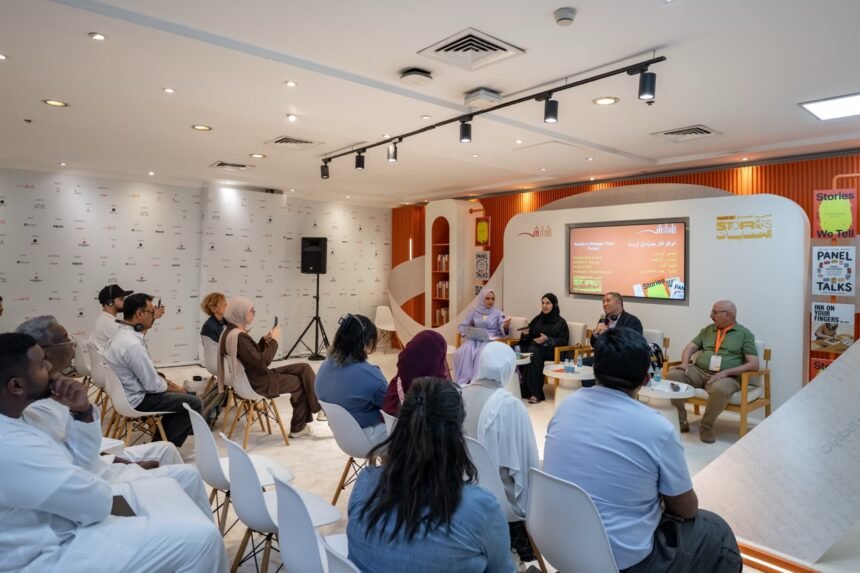
SHARJAH, UAE- Can fiction capture reality, or does reality itself sometimes exceed the limits of imagination? This question shaped a lively discussion at the 45th Sharjah International Book Fair (SIBF 2026), where three literary figures from the UAE, Iraq and the Philippines examined the changing relationship between storytelling and the world it seeks to represent.
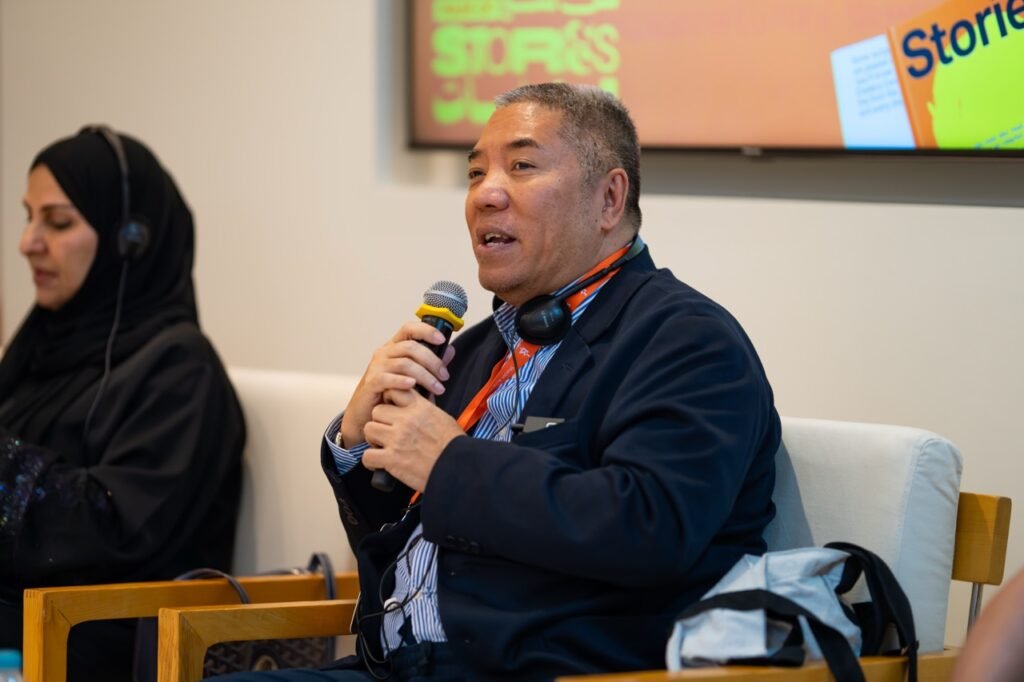
In a session titled ‘Reality Is Stranger Than Fiction’, moderated by Alia Al Mansouri, Emirati novelist Fathia Al Nimr, Filipino historian and researcher Ambeth R. Ocampo, and Iraqi novelist and writer Khudair Fleih Al-Zaidi explored how contemporary realities challenge writers to reconsider the boundaries of imagination and storytelling.
The freedom to imagine beyond reality
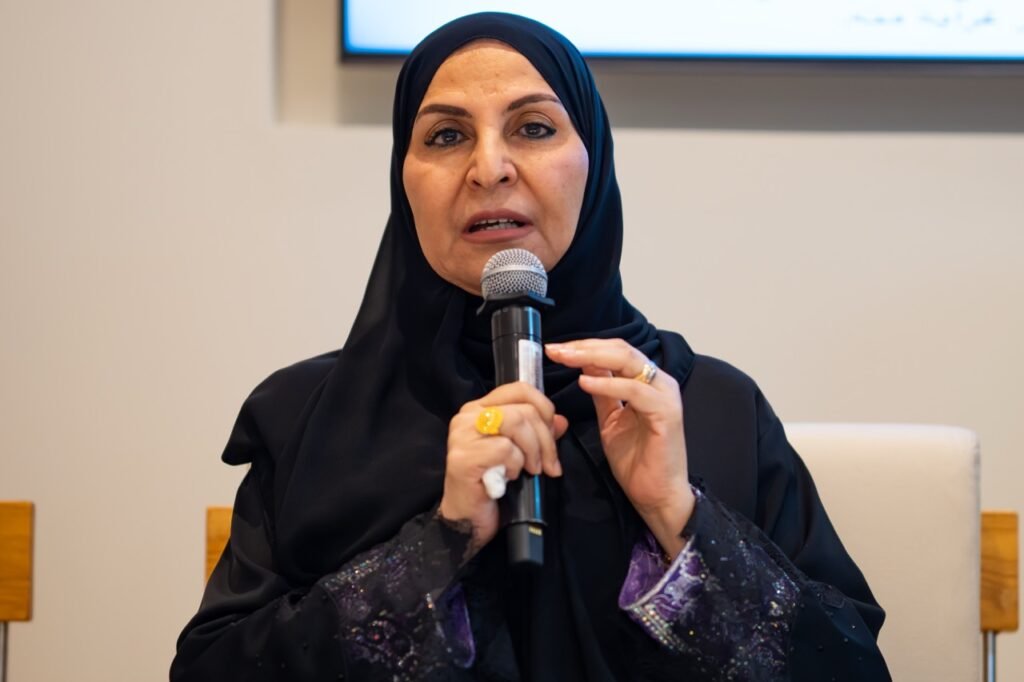
Al Nimr said that fiction offers writers a freedom that reality, with its social expectations and cultural taboos, does not always permit. For her, literature’s imaginative possibilities let authors approach subjects and experiences that might otherwise remain unexplored.
“Writers should not allow reality to become the limit of their imagination. Fiction gives us the freedom to explore what we cannot always express or confront in our everyday lives,” she said.
She highlighted the importance of preserving fiction as an independent creative space, where writers can challenge familiar narratives, question social conventions and imagine possibilities beyond the restrictions of their immediate surroundings.
When reading declines, imagination follows
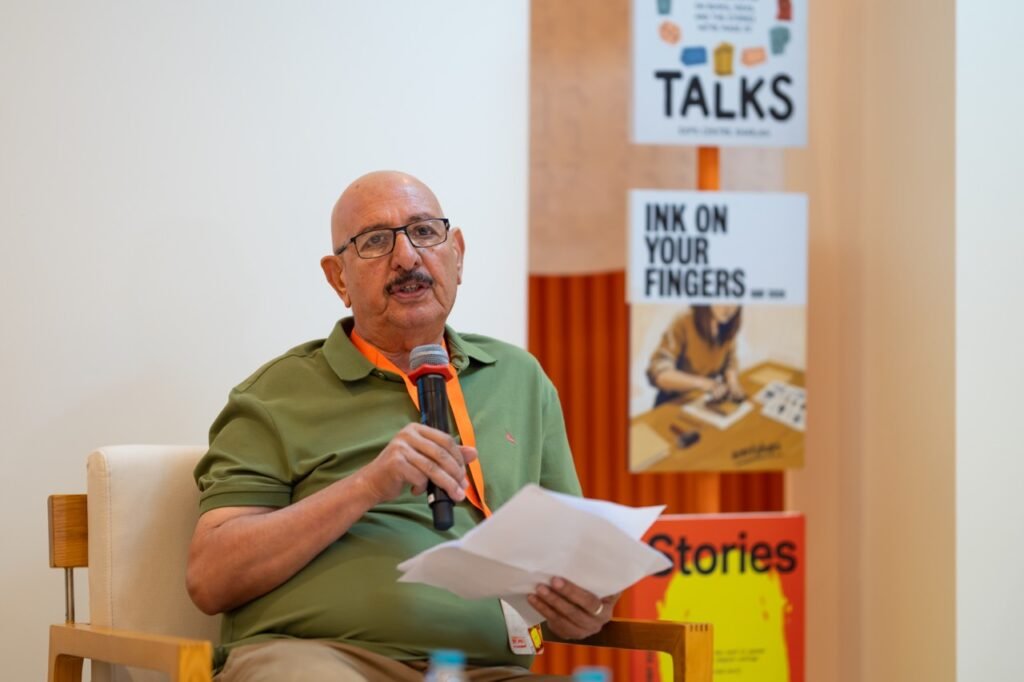
Al-Zaidi approached the question from the perspective of changing literary habits, expressing concern that the creative capacities of younger generations of writers are being weakened by a decline in reading.
He argued that literary imagination develops through sustained engagement with books, language and different ways of understanding the world. However, the growing influence of digital technology and short-form content has contributed to shorter attention spans and reduced opportunities for deep reading.
“Literary writing is losing some of its imaginative strength because the culture of reading is fading. Reading is what feeds the writer’s imagination, and without it, the ability to create rich fictional worlds gradually weakens,” he said.
He suggested that the challenge facing contemporary writers is not simply technological change itself, but the diminishing space for the concentration and intellectual engagement that meaningful literary creation requires.
The historian as a storyteller
Ocampo challenged the conventional separation between fiction and historical writing, suggesting that both depend on reconstructing and interpreting human experience.
Drawing on his work as a historian, he explained that even describing a historical setting from a single photograph requires imagination. The historian must look beyond what is immediately visible to consider the people, places and circumstances that produced the image.
“Sometimes, as a historian, I look at a single photograph and try to describe an entire place from what I can see. In that sense, I am also engaging in an imaginative process. Fiction and history are not as far apart as we might think,” he said.
He added that fiction writers possess a valuable ability to combine imagination with an understanding of the present, allowing them to create stories that are both inventive and reflective of the realities surrounding them.
The conversation highlighted the different ways writers and historians interpret the world, while underscoring the enduring importance of imagination, reading and observation in shaping literary expression.
The session formed part of SIBF 2026’s cultural programme, which brings together writers, researchers and thinkers from around the world for conversations on literature, creativity and the changing role of storytelling.
Organised by the Sharjah Book Authority, the 45th Sharjah International Book Fair is being held at Expo Centre Sharjah from November 4 to 15, 2026.