


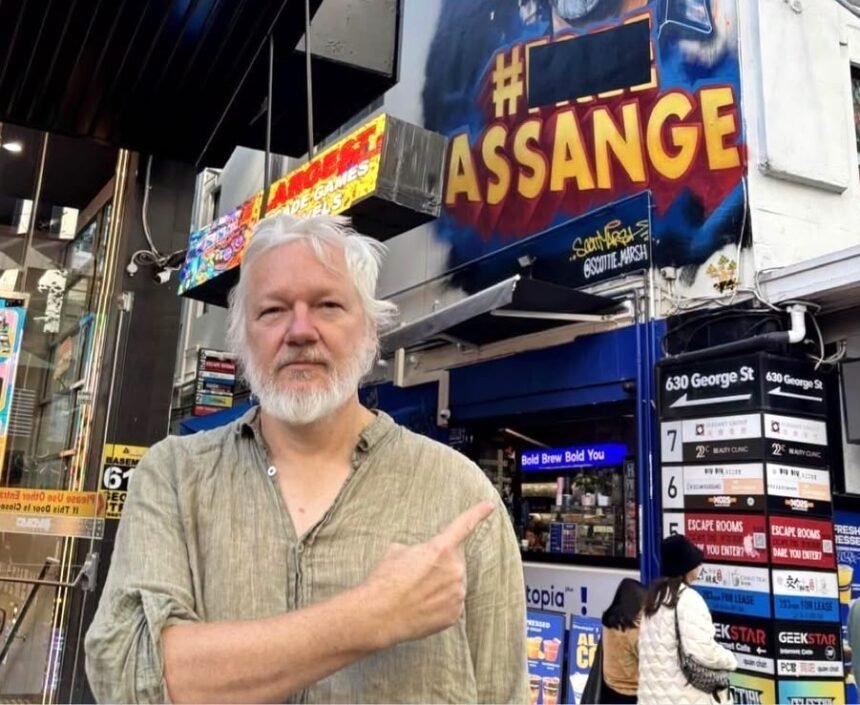
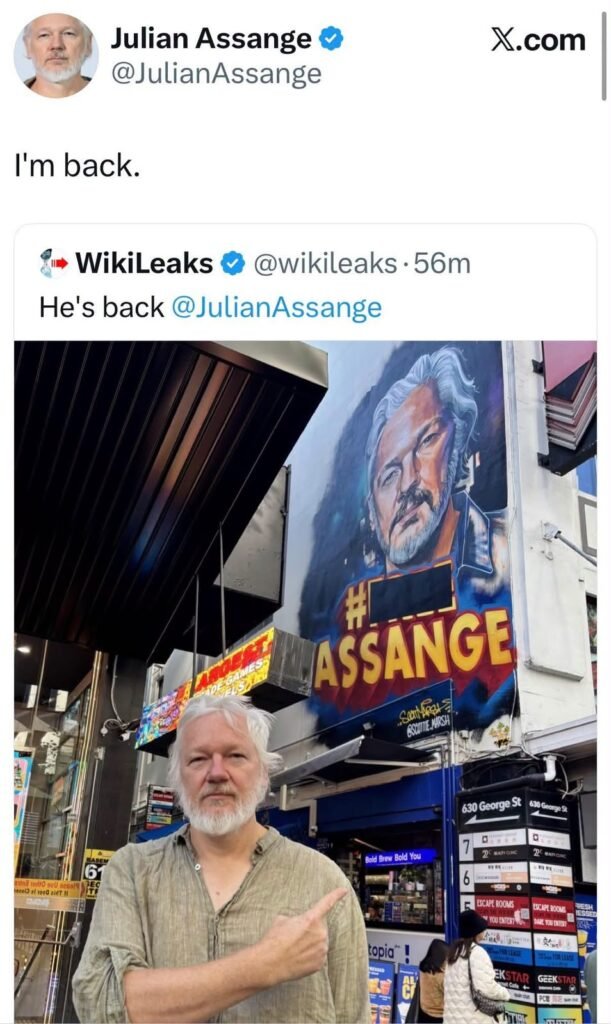
WikiLeaks founder Julian Assange has officially returned to the social media platform X (formerly Twitter), breaking his silence by posting a simple two-word message: “I’m back”
Dubai, UAE- The return of Julian Assange, one of the most prominent and controversial figures in modern journalism and whistleblowing, is significant news on global media map. His reappearance on social media has brought WikiLeaks and its founder back into public discussion after years of legal battles, imprisonment and limited public activity.
Nearly two decades ago, when Assange launched WikiLeaks, the platform attracted worldwide attention for publishing confidential and classified material. Major media organizations collaborated with or reported extensively on material released by WikiLeaks, particularly following its publication of US military and diplomatic documents in 2010.
Assange subsequently became the centre of a prolonged international legal and political controversy. He spent almost seven years inside the Ecuadorian Embassy in London after seeking asylum there, before being arrested by British authorities in 2019 after Ecuador withdrew his asylum. He was subsequently held at Belmarsh prison while fighting extradition proceedings to the United States.
His legal battle with the United States eventually ended in June 2024. Assange reached a plea agreement with US authorities and pleaded guilty to a charge related to obtaining and disclosing classified information. He was sentenced to time already served and subsequently returned to Australia as a free man. Australian Prime Minister Anthony Albanese had been among the political figures who had advocated for Assange’s return home.
The Assange story has always generated sharply different interpretations. Supporters have portrayed him as an important figure in press freedom and government transparency, while critics have raised concerns about the publication of classified information and its potential implications for national security. Those competing views remain part of the wider debate surrounding WikiLeaks.
For many journalists, Assange’s story has therefore been more than a legal case. It has also raised enduring questions about journalism.
The latest development is that Assange has returned to his personal X account after years of inactivity. In a post on September 18, 2026, he indicated that his account had last been used in 2018 by his defence campaign. WikiLeaks also announced his return to the platform.
His reappearance marks another chapter in one of the most closely followed media and legal stories of the past two decades. For those who followed WikiLeaks from its early years, Assange’s return to the public conversation is undoubtedly a significant moment.
Julian Assange, born in Australia in 1971, is a computer programmer, publisher and the founder of WikiLeaks, the organization he established in 2006 to publish confidential and classified material. He became internationally known in 2010 when WikiLeaks released large quantities of classified US documents. The publications generated intense global debate about government secrecy, national security, journalism and the public’s right to access information.
Assange’s life changed dramatically as his international profile grew. In 2010, Swedish authorities issued an arrest warrant in connection with allegations of sexual offences, which Assange denied. The Swedish investigation was eventually discontinued in 2019. Assange had meanwhile argued that the Swedish proceedings could ultimately lead to his extradition to the United States. In 2012, he entered the Ecuadorian Embassy in London and was granted political asylum by Ecuador. He remained inside the embassy for almost seven years, making his stay one of the most unusual episodes in modern international legal history.
In April 2019, Ecuador withdrew his asylum and British police arrested him inside the embassy. He was subsequently held at Belmarsh prison in London while fighting extradition proceedings connected with US charges. The United States accused him of conspiring to obtain and disclose classified national-defence information in connection with the WikiLeaks disclosures. Supporters described the case as having wider implications for press freedom, while US authorities argued that the disclosure of classified material had created serious security risks.
In June 2024, Assange reached a plea agreement with US authorities. He pleaded guilty to one count of conspiring to obtain and disclose classified national-defence information and received a 62-month sentence counted as time already served. He was released and returned to Australia, bringing to an end more than a decade of legal battles involving Britain, Sweden, Ecuador and the United States.
His return to public activity has once again brought his work and the wider questions surrounding WikiLeaks into international attention.
THIS ARTICLE IS BASED ON PUBLICLY AVAILABLE INFORMATION AND PUBLISHED SOURCES.