
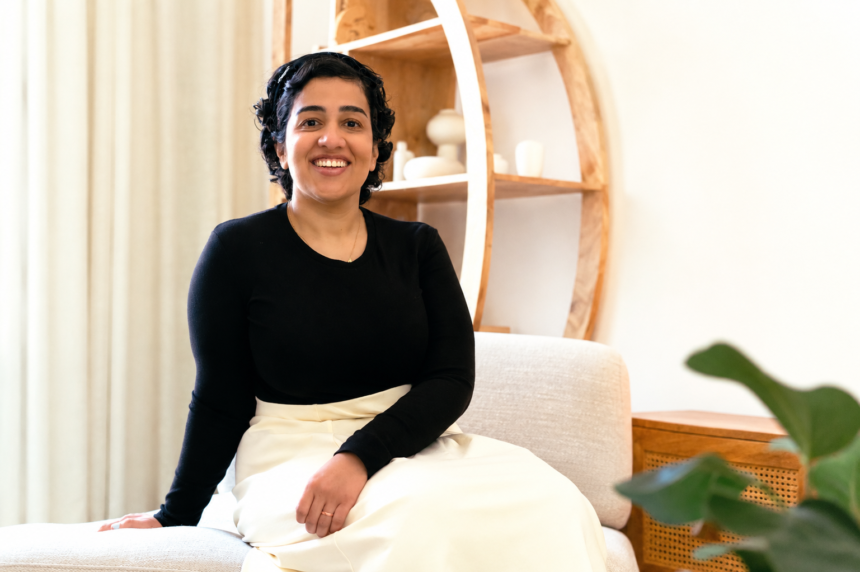
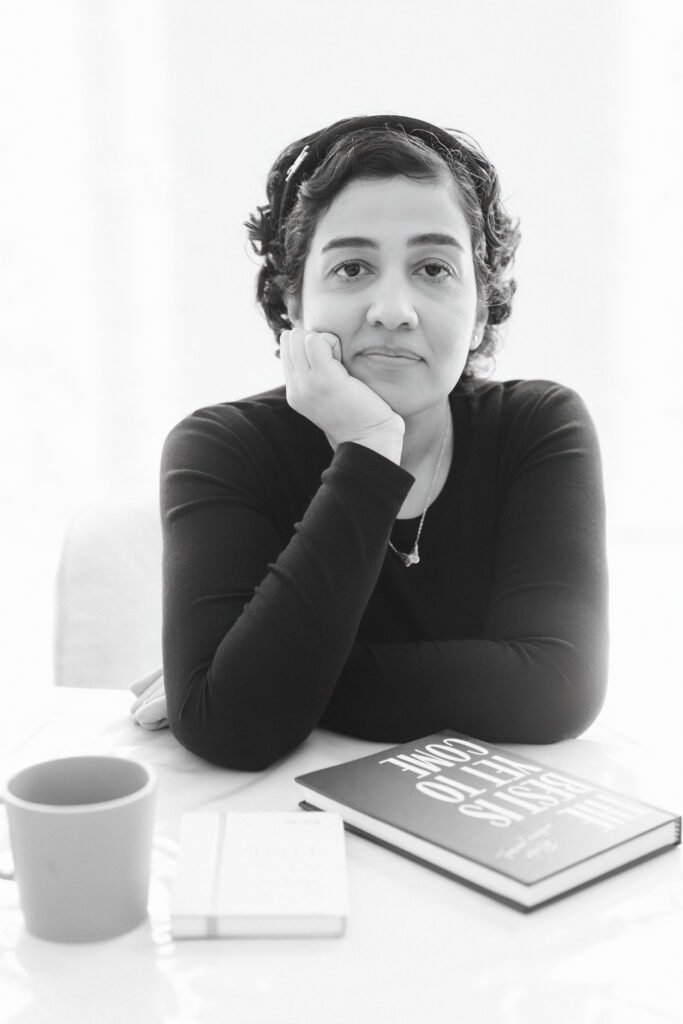
Dubai, UAE- Rucha Daryani is a mother, founder and author, and the founder of The Second Act, a platform supporting women through major life transitions. Drawing from her own journey of rebuilding after a life-changing setback, Rucha advocates “soft courage” and the belief that you don’t go back, you build forward. In an Exclusive conversation with EmiratesReporter.com, she opens up about her journey, The Second Act, and her vision for empowering women across the Middle East.
E.R- Can you tell our readers a little about yourself and the journey that brought you to where you are today?
Rucha Daryani- I am a mother, founder, author and, more recently, someone who has had to completely rethink what I thought my life was going to look like.
My path here wasn’t a straight line. I studied in the UK, where I also earned my master’s, then worked in talent management in India. Marriage brought me to Dubai, where I moved through a string of marketing roles. If I’m honest, none of it ever fit. Then came my children, and seven years at home raising them.
Before The Second Act, I founded The Mum Identity Project, a community for women navigating motherhood and trying to find their way back to themselves. Over time it grew into workshops and events, and I spent years talking to women about identity, work, ambition and what happens when motherhood changes the way you see yourself.
I never imagined that I would one day find myself having to answer many of those same questions in a very different context.
In 2024, I had a stroke. I was 38. What came after taught me that transition isn’t a phase you pass through and move on from. It’s something you’re in, often for a long time. The Second Act grew from that. It exists for women in the middle of change, whatever form that change takes.
This October, I’m also publishing my first children’s picture book, The Light Never Left. It’s a story close to my heart, and in many ways it carries the same message as everything else I do. The light doesn’t leave us. Sometimes we just need help finding it again.
E.R- You say, “You don’t go back, you build forward.” What does this mean to you?
Rucha Daryani- For a long time, everything about recovery pointed backwards. The appointments, the therapy, the questions people asked. When will you be back to normal? Back to work? Back to yourself? The whole language of recovery is about return.
I spent almost two years working toward that. Trying to reach the woman I was before the stroke. And the honest truth is that I couldn’t, not because I wasn’t trying hard enough, but because I wasn’t that woman anymore. My body is different, my abilities are different, my priorities are different. That life ended.
Building forward doesn’t mean being grateful for what happened, or pretending it was meant to happen, or turning it into a lesson. Some things are simply hard and unfair. It means acknowledging that your life has changed and giving yourself permission to change with it.
For one woman, that might mean returning to work differently after an illness. For another, it might be discovering who she is after divorce, or after motherhood. It might mean living with a disability other people can’t see, or realising the things that mattered before don’t matter in quite the same way anymore.
I won’t pretend I’ve mastered this. I still catch myself measuring my days against the person I used to be. But I don’t want to spend the rest of my life trying to get back to who I was. I want to see what I can build from who I am now.
That, to me, is building forward.
E.R- At the age of 38, you suffered a stroke after a medical error. How was it a turning point for you, and how did it change your life?
Rucha Daryani- Before April 2024, my life was moving at full speed. I was raising two young children, building The Mum Identity Project, and thinking about what the next stage of my life might look like. I had a clear sense of who I was and what I was doing.
Then, at 38, following a medical error, I had a stroke. Overnight, the woman planning her next chapter became a woman whose only questions were whether she would walk again, use the left side of her body again, live independently again.
People imagine a turning point as a single moment. A realisation in a hospital bed, a question that changes your life. It wasn’t like that for me. The crisis itself came with its own momentum; everyone around you knows their role, including you. The turning point came afterwards, when the urgency faded and I was left alone with what remained.
Because I couldn’t simply pick my life back up. My body had changed. My abilities had changed. The way I moved through the world had changed. If you had asked the woman I was before what she wanted next, she would have answered from inside the life she had. I no longer had that life to answer from. The only question left was: who am I now? And for a long time, I didn’t have an answer.
Here is what humbled me. I had spent years helping women answer almost exactly that question. The Mum Identity Project was built on the idea that women lose parts of themselves in motherhood and can find their way back. Then I found myself facing a far bigger version of it, and I discovered I wasn’t trying to find my way back at all. I wasn’t even sure the woman I was before was where I wanted to go.
The Second Act came from living with that question. Not from answering it, because I couldn’t, not for a long time. It came from realising how many other women were living with the same question, each of them thinking she was the only one.
E.R- After your physical recovery, people thought you were fine because you looked well. What did they not see, and what did this experience teach you about people?
Rucha Daryani- I think what people didn’t see was how much work was still going on beneath the surface. I could walk, I could go out, I could hold a conversation, and to anyone who didn’t know my story, I looked completely fine. But looking fine and being fine are not the same thing.
I had lost my peripheral vision, so in a room full of people I could only see the person directly in front of me, everyone else just voices arriving out of nowhere. My left side was still affected. If I sat down to play Mahjong, my hand couldn’t arrange the tiles. At breakfast, I couldn’t manage a knife and fork. Small things, invisible things. But a life is made of small things, and every one of mine had become effort. And underneath all of it there was the emotional work of understanding what had happened to me and what my life was now.
One of the strangest parts of recovery is that the better you look, the less anyone realises you might still need support.
What did it teach me about people? Something gentler than I expected. Most people aren’t unkind, they’re literal. They believe what they can see. A wheelchair, a visible injury, and they understand instantly. When you look well, they assume the hard part is over. The people who hurt me most weren’t cruel; they were people who loved me and had no map for an illness they couldn’t see.
It also changed how I think about the word recovery. We treat it as a project with an end. You get sick, you get better, you move on. For many people there’s a much longer chapter, the one where you learn to live with what has changed, and it happens after everyone has stopped watching.
That’s why hidden disability has become such an important part of The Second Act. Not everything that shapes a person’s life is visible from the outside, and I want us to be slower to assume we know how someone is doing just because of how they look.
E.R- What made you start The Second Act, and what do you want it to give women going through difficult changes in their lives?
Rucha Daryani- The Second Act started with a very specific kind of loneliness.
In the long stretch after my stroke, once the crisis had passed and everyone had gone back to their lives, I went looking for the conversation I needed. Something about what happens after you survive. Not the medical part, there’s plenty about that, but the living part. Who are you now, how do you sit at a dinner table, what do you do with a life that no longer matches its plans. I found almost nothing. There were inspiring comeback stories on one side and clinical information on the other, and in between, where I actually lived, there was silence.
I knew what that silence costs, because I’d spent years watching it from the other side. With The Mum Identity Project I sat with so many women who thought they were the only one who felt lost inside a life that looked fine from the outside. They weren’t the only ones. They were the majority. Whatever the change is, a diagnosis, a divorce, a career ending, a body that no longer cooperates, the pattern is the same: the world shows up for the event and disappears for the aftermath, and women are left to rebuild in private, quietly convinced they’re behind.
So The Second Act is my answer to the silence I couldn’t find my way out of alone.
What do I want it to give women? Company, before anything else. The physical relief of hearing another woman describe your exact experience and realising you’re not failing, you’re in transition, and transition is a place, not a flaw. I want it to give language, because so much of what these women carry has never been said out loud, and things without words are so much heavier. And I want it to be steady. Not cheerleading, not pushing anyone to be inspiring on a schedule.
I can’t hand anyone a map. I’m still drawing mine. But nobody should have to do this part alone, and with The Second Act, they won’t have to.
E.R- The Second Act focuses on illness, burnout, motherhood, divorce, and career changes. What do you think women need most when they are going through such major changes?
Rucha Daryani- People assume those five things are five different experiences, and on the surface they are. But I’ve come to believe it’s one woman at different doors. The details change; the ground underneath doesn’t. Whether it’s a hospital bed, a marriage ending, or a career that stops, the same question is waiting: who am I now?
So when I’m asked what women need most, I don’t think first about advice or plans. I think about the two things I couldn’t find when it was me.
The first is the expectation to bounce back, and how badly women need it lifted. It’s everywhere. Come through it intact. Go back to the person you used to be. Reassure everyone that nothing has really changed. The words sound encouraging, resilient, strong, inspiring, but underneath them is a demand: don’t let this change you. I spent almost two years trying to meet it. What I actually needed was for someone to say: you don’t need to bounce back. You are somebody else now. It sounds small, but it changes everything.
The second is time without a deadline. Every transition comes with an invisible timeline, and women feel it acutely: the point at which grief should be finished, the divorce processed, the career restarted, the recovery complete. But rebuilding a life doesn’t follow a schedule, and the pressure to be done is often heavier than the change itself. What women need is somewhere the clock isn’t running. Where two years in, still figuring it out, is not behind. It’s just where you are.
Everything The Second Act does grows from those two things. Not fixing women, because women in transition aren’t broken. And not handing out plans, because sometimes what you need most isn’t someone telling you how to rebuild. It’s someone helping you believe that rebuilding is possible.
E.R- You use the words “soft courage.” What does soft courage mean, and how can women find it in their everyday lives?
Rucha Daryani- After the stroke, everyone I met kept calling me brave. I know it was kindly meant, but honestly, it used to make me angry. I didn’t feel brave. I felt frightened and slow and nothing like the word they were handing me. Brave was for the dramatic version of my story, and I wasn’t living the dramatic version. I was living the one where getting dressed took planning.
It was my therapist who changed the word for me. He started pointing at things I’d dismissed. Going to a gathering knowing I could only see the person in front of me. Sitting down to breakfast knowing my hands might embarrass me. Saying “I’m not fine” to someone who assumed I was. He told me courage doesn’t have to look the way we’ve been shown it. It can be quiet, daily, invisible. For the first time, the word fitted, and courage finally felt like something that could belong to me. That’s what I’ve come to call soft courage.
E.R- What is the one message you would like to give a woman who is trying to start again but is afraid, tired or unsure about her future?
Rucha Daryani- First, I’d want her to know that feeling afraid, tired and unsure is normal. I felt it too. I still feel it. Every woman I’ve met who has started again began exactly there, scared, tired and unsure, and from the outside you’d never know, because other women’s new beginnings always look confident and clean. From the inside, every single one of them was fog.
The message itself is this: you don’t have to figure out your whole future. You only have to take the next step. I say that as someone still living it. Even now, I can’t describe the life I’m building, because honestly, I don’t know. If someone asked me for my five year plan today, I would probably cry. I’m scared plenty of the time. But I’ve stopped believing that’s a reason to wait, because most of us can’t see what the future holds. Nobody gets the whole picture upfront. It arrives one step at a time, and each step shows you a little more than you could see before you took it.
So she doesn’t need to be fearless, and she doesn’t need a plan, and she doesn’t need to hurry. The fear doesn’t disappear before you begin. It walks with you, and I can tell her from experience that it gets quieter as you go, even if it never fully leaves. Mine hasn’t.
And she’s already further along than she thinks. If she’s reading this and something in her is asking whether she could start again, that asking is the start. Everything I’ve built exists to make sure that when she takes her next step, she doesn’t take it alone.
E.R- Describe the road ahead for you. What are your hopes and plans for The Second Act?
Rucha Daryani- I’ll be honest, the road ahead and my plans look different to me now. I know where the work is going. Where I’m going is still unfolding, and I’ve made peace with that.
The nearest milestone is the one closest to my heart: this October I publish my first children’s picture book, The Light Never Left. After that, the road for The Second Act runs in three directions.
The first is the conversation itself. I want to keep writing and speaking about what happens to women after survival, recovery, hidden disability, identity, starting again, until these subjects stop being whispered and start being ordinary. In this region especially, so much of this is carried in silence, and silence is the thing I’m most determined to break.
The second is the community. I want The Second Act to become the place a woman in the middle of change finds within days of her life turning, not years later, the way I found nothing. Gatherings, conversations, women a few steps ahead reaching back for women a few steps behind. Growing it carefully matters more to me than growing it fast, because trust is the entire product.
The third is the rooms where decisions get made. Workplaces lose women in transition constantly, after illness, after maternity, after burnout, not because those women stopped being capable, but because nobody built the bridge back. I want to work with organisations on those bridges. That’s where the conversation turns into changed policies and changed lives.
And underneath all of it, one ambition I’ve stopped being shy about: I want The Second Act to become the leading voice for women in transition in the Middle East. Not for the title. Because when a voice becomes impossible to ignore, the women behind it become impossible to ignore too.
As for me, I’m two years into a life I couldn’t have predicted, building forward one step at a time. Ask me again in five years. I might even have an answer by then.
- AS TOLD TO AMIT KAKKAR, MANAGING EDITOR, EMIRATESREPORTER.COM. THE VIEWS EXPRESSED ARE SOLELY THOSE OF THE GUEST/INTERVIEWEE.
- Your Skills, Our Spotlight. Email editor@emiratesreporter.com to Get Featured.